


 April 19, 2022BirdCast welcomes a new era in Spring 2022: the Migration Dashboard!
In Spring 2018 the BirdCast team unveiled two new migration monitoring tools: 1) our migration forecasts based on models trained on the last 23 years of bird movements in the atmosphere; and 2) our real-time analysis maps based on additional research showing intensities of actual nocturnal bird migration.
 April 19, 2022BirdCast welcomes a new era in Spring 2022: the Migration Dashboard!
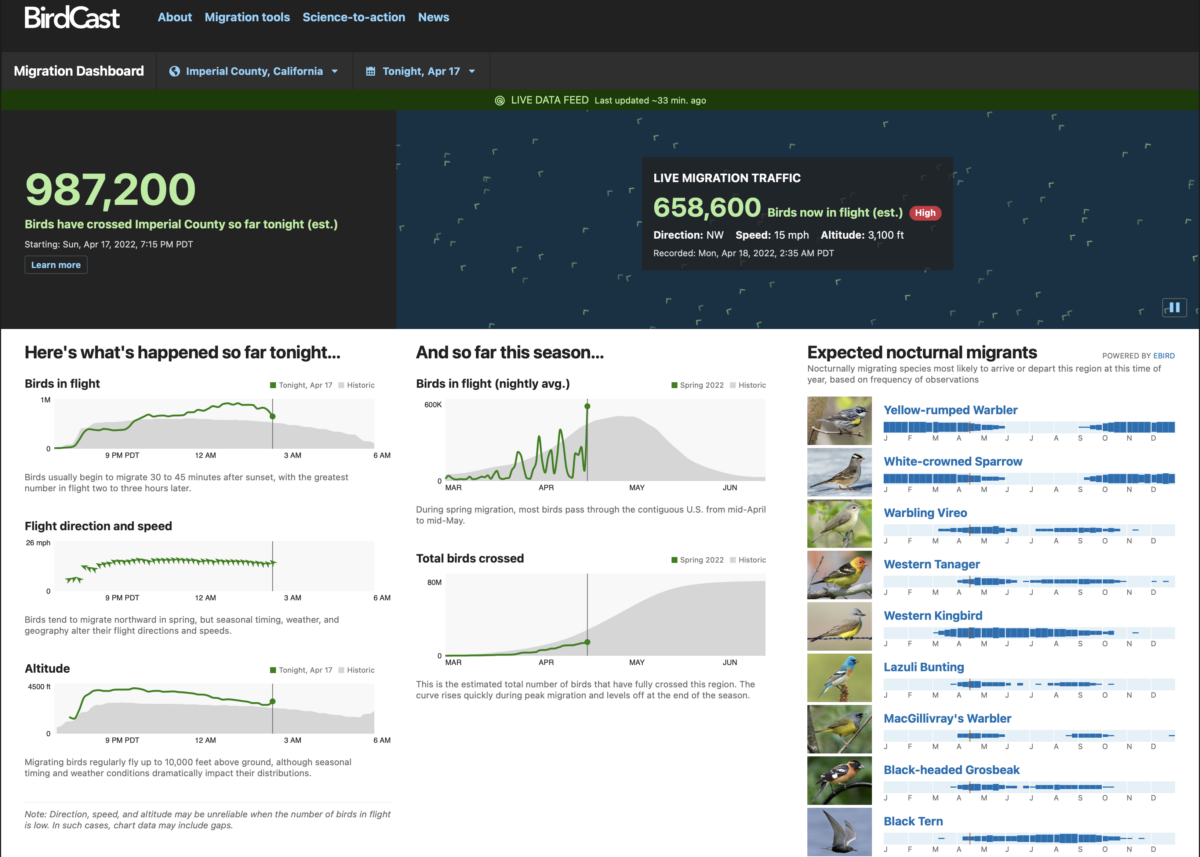
The new BirdCast Migration Dashboard is here, providing nocturnal bird migration data for counties and states in the contiguous US! This tool offers new capabilities to investigate birds’ movements in detail and at scales that complement our existing national forecast and live migration maps. Try it out today to explore patterns of nocturnal bird migration in your area!
- October 15, 2021Waterbirds on the move in the eastern US and Canada
This weekend’s change in temperature will harken the first big flocks of Brant, and numerous other species, arriving in the northeastern US.
 September 16, 2021Mass mortality events in Manhattan on 13-14 September 2021
The BirdCast team is saddened and deeply disturbed by the mass bird collision events that occurred on Monday night and Tuesday morning in Manhattan. Intense urban light pollution (and an abundance of tall buildings) together with poor flying conditions (this map shows the frontal boundary associated with the strong storms and poor visibility conditions) on a night of intense and low altitude migration contributed to these events.
- September 16, 2021Mass mortality events in Manhattan on 13-14 September 2021
BirdCast is deeply disturbed by the mass bird collision events that occurred earlier this week in Manhattan. Light pollution and poor flying conditions on a night of intense migration contributed to these events. There are essentials actions we can take to prevent these types of events: turning off all non-essential lights, especially during migration periods, to reduce birds’ attraction to and disorientation by them, and making buildings bird friendly. See our recommendations for turning off lights below.
- September 8, 2021A picture is worth 500 million birds
The BirdCast forecast model predicts just over half a billion birds to be flying during peak flight hours tonight! Turn out your lights! Go birding!
- August 30, 2021Birds in Ida’s wake
Hurricane Ida made landfall in Louisiana as a category 4 storm, and its remnants continue to move north and east through the US. Numerous seabirds entrained and displaced by this storm are occurring far inland, and our live map of these observations highlights their distributions.
- August 21, 2021The arrival of Henri in the Northeast US
On Sunday Tropical Storm/Hurricane Henri will make landfall in southern New England with dangerous storm surges, strong winds, and heavy rainfall. The storm is then slated to move north up the Connecticut River valley before departing east into the Gulf of Maine. This system will bring numerous seabirds ashore, in many coastal and inland waterbodies in and east of its path.
- June 7, 2021A new publication on drivers of fatal bird collisions in Chicago
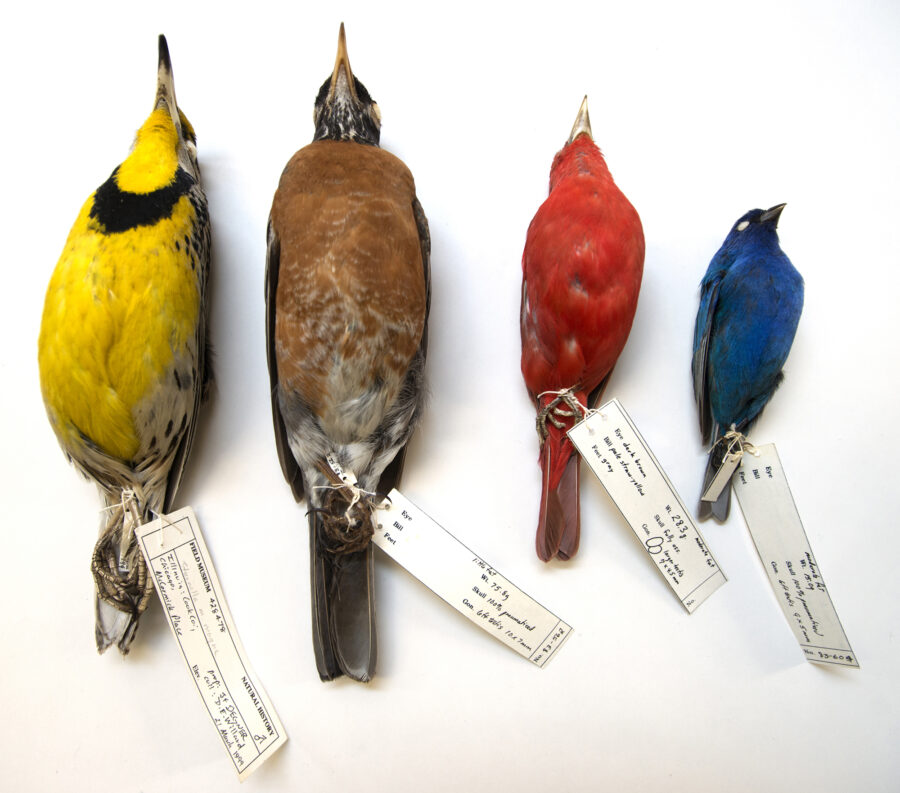
The BirdCast team led a study published today that uses two decades of data to show that migration magnitude, light output, and wind conditions are important predictors of collisions at a high-profile building in Chicago. This research has global implications for conservation action campaigns aimed at eliminating an important cause of bird mortality: light pollution and resulting collisions with structures.
 June 7, 2021A new publication on drivers of fatal bird collisions in Chicago
The BirdCast team led a study published today in PNAS that uses two decades of data to show that migration magnitude, light output, and wind conditions are important predictors of collisions at a high-profile building in Chicago.
- June 1, 2021Migration update: the top 5 flights in spring 2021
The spring of 2021 offered many migration highlights, and here we showcase the top 5 mega-flights of this soon-to-be-in-the-books season.
- May 22, 2021Migration analysis: flight altitudes of nocturnally migrating birds in late May
During the past week, enormous numbers of birds have been migrating through the US. But birders seeking massive concentrations of birds in their favorite habitats may not have experienced the fallouts of their dreams. A new visualization depicting the altitude of migration, when viewed in conjunction with the distribution of migration traffic, highlights an explanation.
News
Scientific Team
BirdCast is made possible by the participating scientists at the below institutions, and many other contributors.