


For Meteorologists
Why meteorologists should use BirdCast
- Bird migration and weather are inextricably linked. Birds’ decisions to migrate intimately depend on the weather. Discussing bird migration patterns is a natural complement to conversations about synoptic weather.
- Engage and educate audiences: Share our migration and forecast maps to spark curiosity, connect viewers to nature, and highlight how weather influences wildlife.
- Provide actionable information: Help communities reduce light pollution during peak migration nights, protecting birds and supporting conservation.
- Enhance your coverage: Add a unique, science‑backed layer to daily forecasts, blogs, or social media posts that sets your weather reporting apart.
We now know that in the U.S, at least 80% of migratory bird species migrate at night. An estimated 3-5 billion birds may be migrating, depending on the season. At times, more than one billion birds can be aloft in a single night. Bird migration is deeply connected and responsive to weather patterns
Migratory birds prefer weather conditions that include supportive tailwinds that give birds a “free ride”. They also prefer calm skies with minimal precipitation. When the weather is quiet for meteorologists, chances are a fascinating story is unfolding in the form of a mass bird migration.
Not only can sharing information about bird migration inform the public about an interesting phenomenon during a dryer weather forecasting spell- it can also serve as a platform to encourage people to protect birds during critical migration periods.
BirdCast aims to help the meteorological broadcast community share these stories with a wide audience. Our data products and tools are freely available for use on social media and TV, with proper attribution.
Information Provided By BirdCast Tools

Migration Forecasts. Get a 3-day estimate of how many birds will be on the move across the Lower 48 states each night.

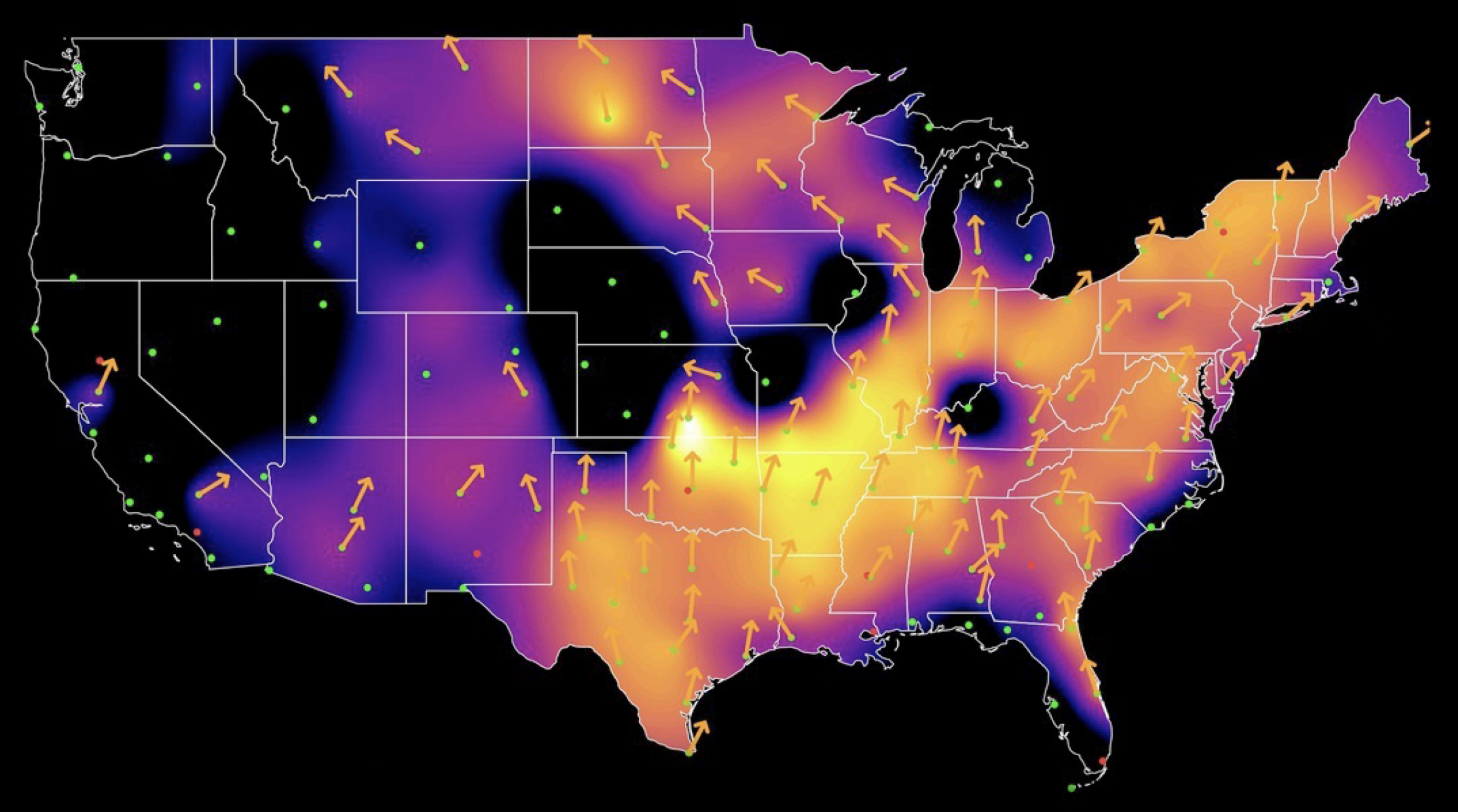
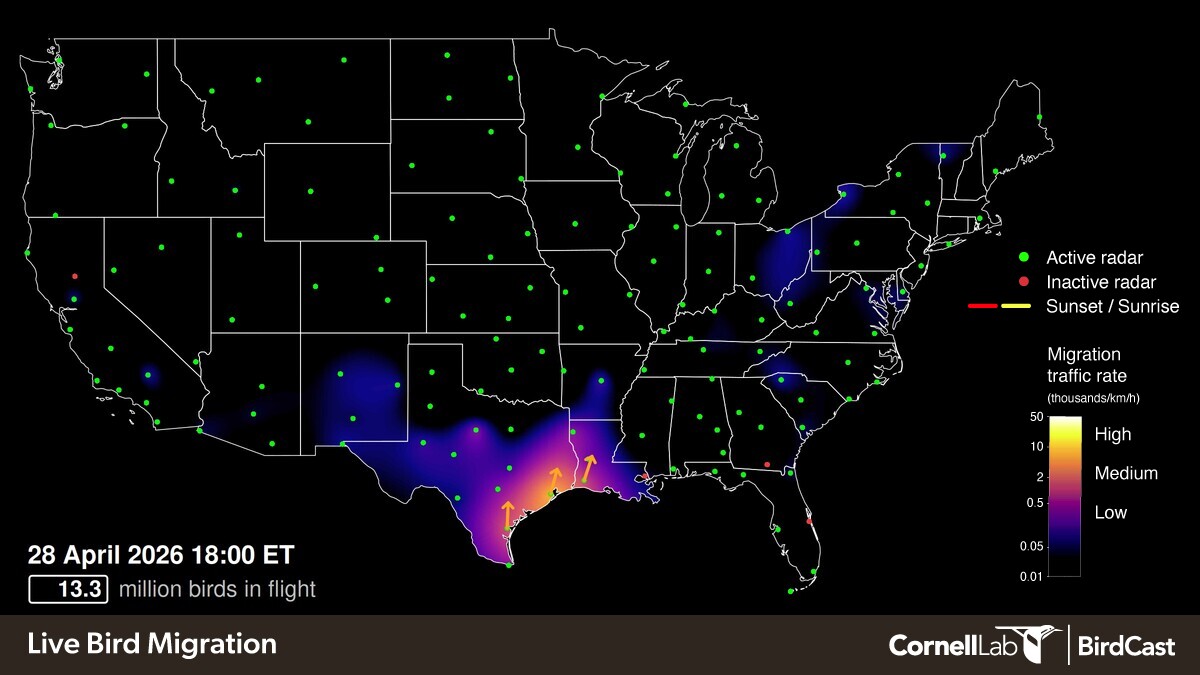
Live Migration Maps. View current migration traffic, updated every 10 minutes through the night.

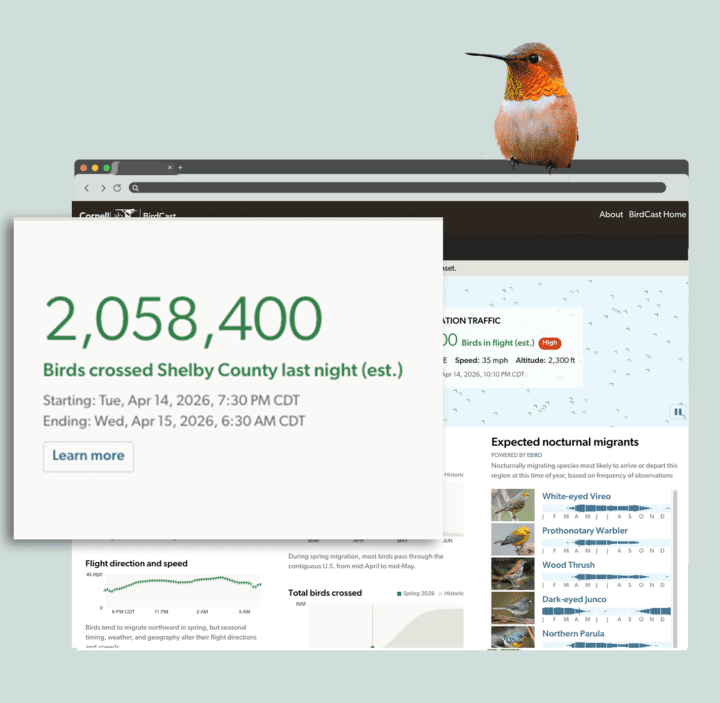
Migration Dashboard. See county- or state-level stats for total migration traffic, direction, and speed each night. A data archive lets you see stats from previous nights/years, too.

Expected Species. Find out which species are on the move in your area right now.

Local Migration Alerts. Sign up for emails to know when waves of migrants are on their way to you.
How to Use BirdCast’s Migration Tools
1. Check the 3-Day Forecast
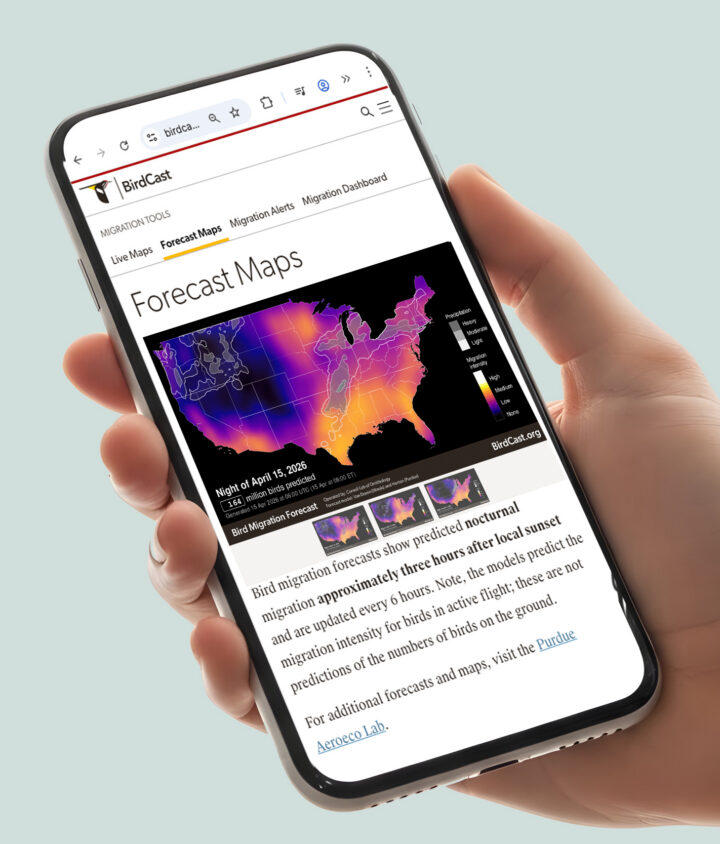
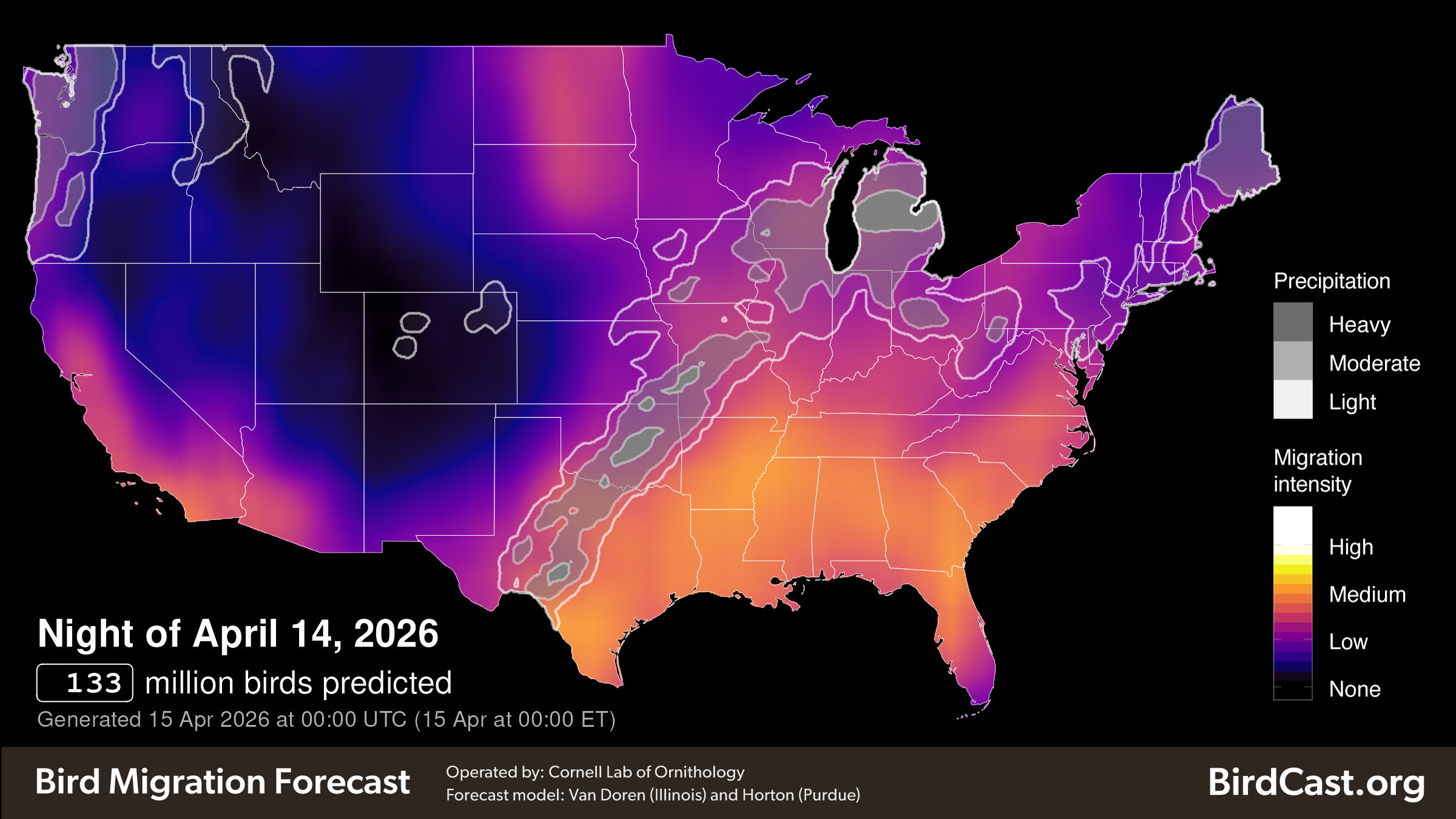
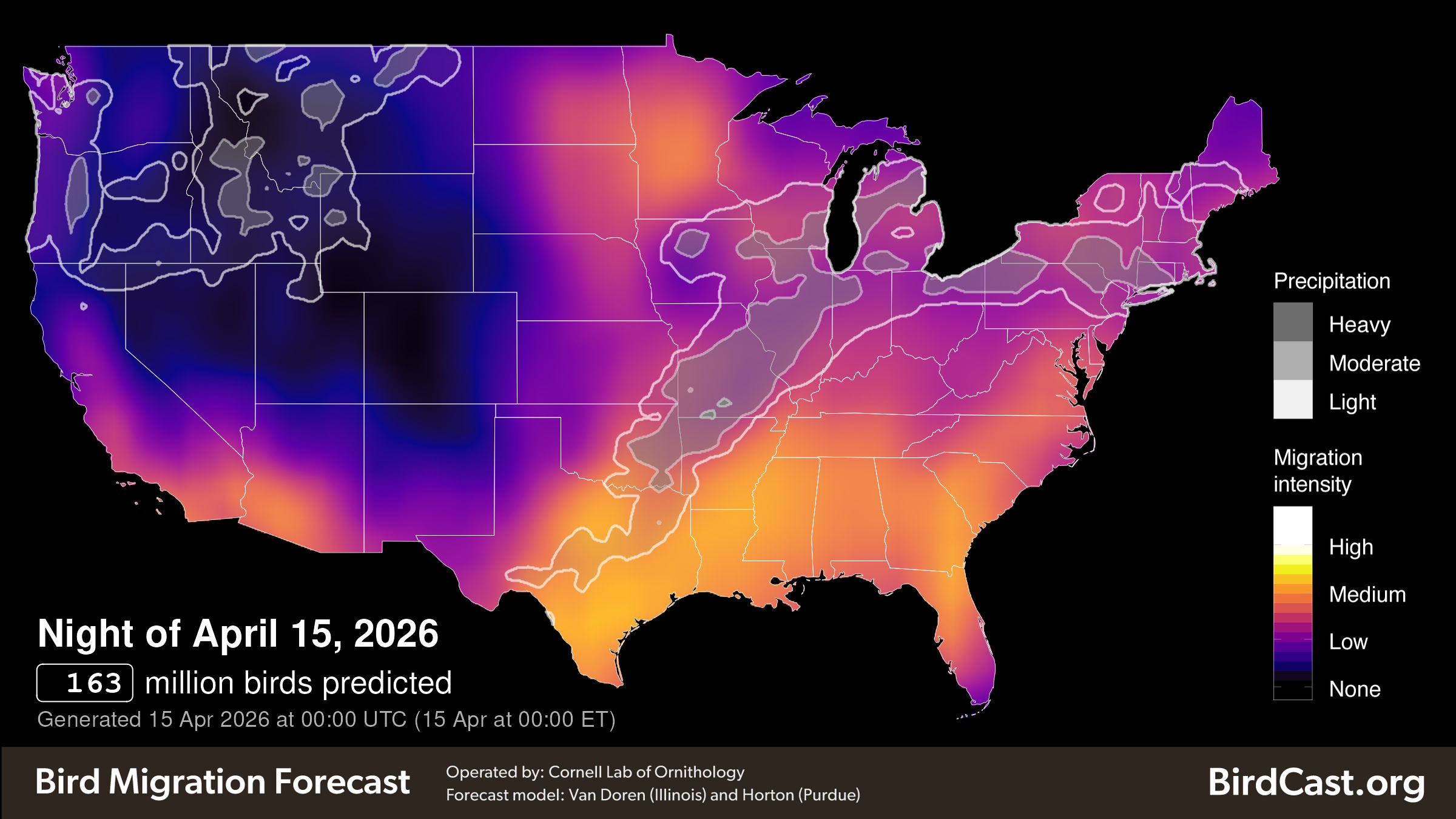
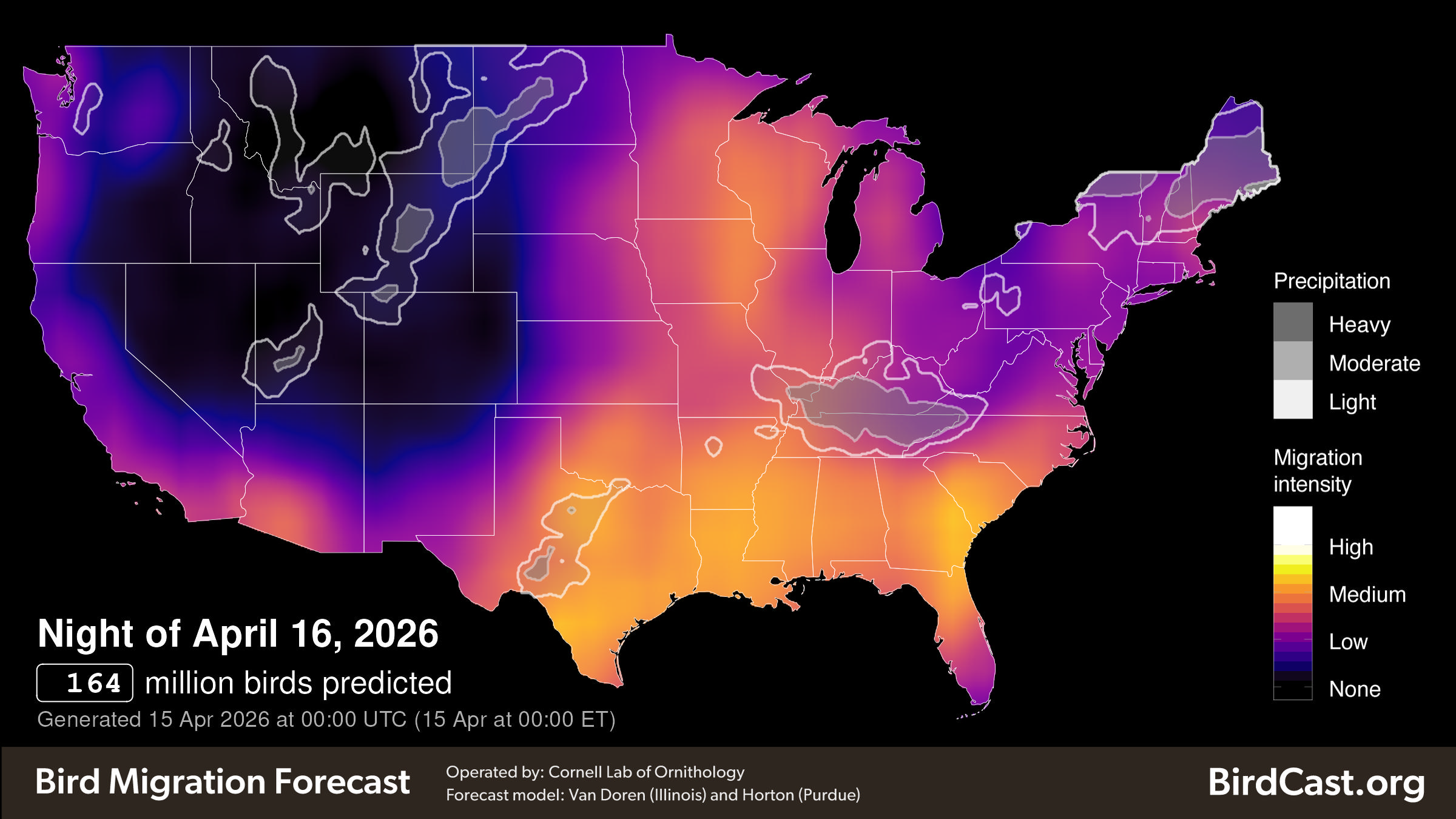
BirdCast’s Migration Forecasts tell you how much nocturnal migration is predicted to occur in the next few days.
These forecasts are generated from a prediction model trained on 25 years of radar observations, which is built on the same numerical weather prediction data (GFS) powering weather forecasts.
Below the main forecast map there are thumbnails of predictions for the next three nights (click or tap to see full images). You can also subscribe to Migration Email Alerts to receive an email alert whenever big migration is predicted for the next night in your locations of interest.
Our forecast information is helpful for highlighting the intimate connection between weather patterns and patterns of bird migration. It helps nature enthusiasts plan their birding trips. Importantly, they can be used to issue alerts for when to take important conservation actions at their home or business, such as turning off night-time lights.
2. Monitor Local Activity
Like a weather forecast, a migration forecast is a prediction that is not always completely accurate. To see real-time observational data of what migration is actually occurring or has occurred in a specific area, use Live Maps for a US-wide overview and Migration Dashboard for local details.
The Migration Dashboard provides estimates of migration traffic for every county in the Lower 48 states. Just enter your county or state in the main search bar to bring up your local results.
You can check migration data during the night—they’re refreshed every 10 minutes—or look at them first thing in the morning to get an idea of where bird numbers are highest in your local area. To see information for previous nights, just select a different date at the top of the screen.
The Migration Dashboard also tells you which bird species are expected to migrate for a region in any given night.
Bird migration and weather are inseparably linked—it’s one story told two ways.
3. Share With Others
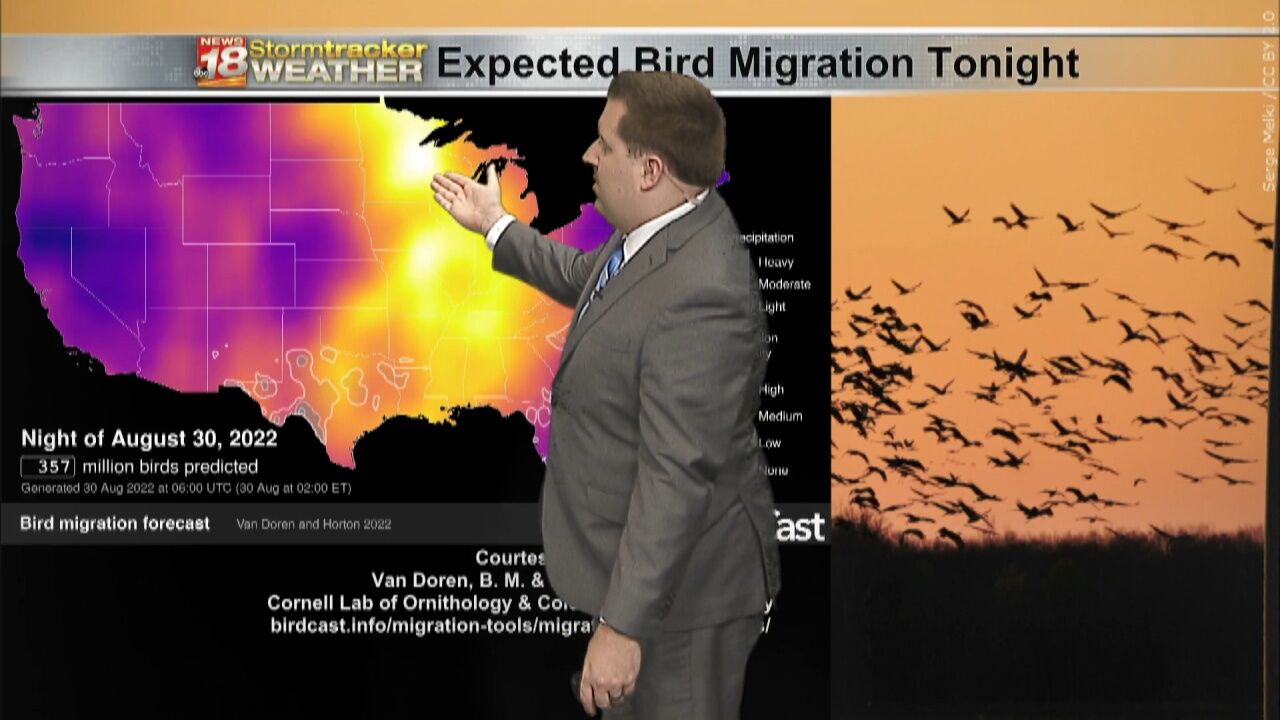
BirdCast data and images are publicly available and free to share on social media, TV or weather broadcasts with proper citation.
When sharing our products, we encourage meteorologists to highlight simple actions people can take to give migratory birds safe passage through our night skies.
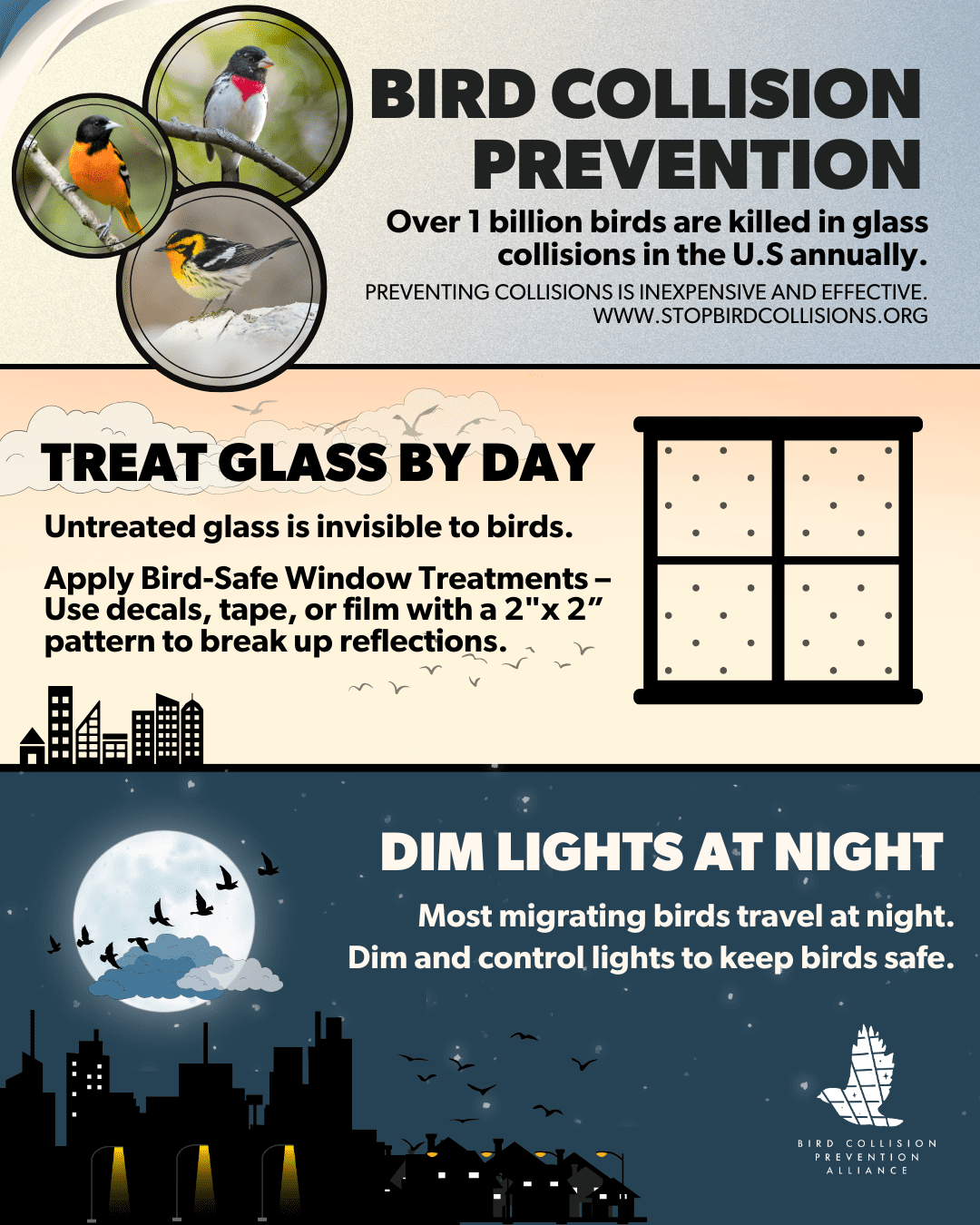
The two key steps you can take to help birds are to turn out nonessential lighting and make your windows visible to birds. Detailed recommendations can be found on the BirdCast Protect Birds page as well as at the Bird Collision Prevention Alliance.
Collisions with glass are a major cause of bird death. The majority of migrants come through on just a few nights each year, meaning that a few fairly easy adjustments could save huge numbers of birds.
BirdCast provides a helpful map view of peak migration dates at the county level for the entire Lower 48. Hover over any county on the maps to view peak spring and peak fall migration dates—these are the times when it’s most beneficial to dim your outside lights and take steps to make glass visible to birds.
BirdCast users can also sign up for Migration Alerts in their area to be alerted by email when high migration is expected for the next night.
4. Stay in touch
To receive news and updates specifically for meteorologists about BirdCast, please join our email list:
You can unsubscribe at any time using the link found at the bottom of the news emails.
Accessing Forecast and Live maps images:
Download links for Forecast maps:
https://is-birdcast-predicted-prod.s3.us-east-1.amazonaws.com/images/day1.jpg
https://is-birdcast-predicted-prod.s3.us-east-1.amazonaws.com/images/day2.jpg
https://is-birdcast-predicted-prod.s3.us-east-1.amazonaws.com/images/day3.jpg
Downloads links for Live Maps:
For year YYYY, month MM, day DD, hour HH, minute MM (rounded to 10 mins intervals):
https://is-birdcast-observed-prod.s3.us-east-1.amazonaws.com/mosaic/YYYY/MM/DD/mosaic_YYYYMMDDHHmm.jpg
Example for 28 Apr 2026 22:00 UTC:
https://is-birdcast-observed-prod.s3.us-east-1.amazonaws.com/mosaic/2026/04/28/mosaic_202604282200.jpg
Please follow our citation guidlines when referencing these images online.
Scientific Team
BirdCast is made possible by the participating scientists at the below institutions, and many other contributors.