

 August 18, 2023Seabirds in the desert (and the mountains): Hilary moves quickly through California and into Nevada
Hurricane Hilary may bring a significant diversity of entrained and displaced birds to California and Nevada, with impacts as far reaching as Oregon and Idaho.
- August 1, 2023The return of migration tools: Fall 2023!
BirdCast is ready to kickoff its fall 2023 migration season! It’s time to check out our migration tools to see what’s on the move in your area.
- March 1, 2023The return of migration tools for Spring 2023
The BirdCast team is pleased to welcome you back to our suite of migration tools for the Spring 2023 season as of today! Stay tuned and visit our migration tools page to explore the season’s unfolding movements!
 September 16, 2022Eyes on the skies: Does Tree Swallow foraging give insight to airspace usage?
I sit on a secluded bench to take in the mid July views of Colorado State University’s Mountain Campus at Pingree Park, a remote site dedicated to field courses, conference retreats, and mountain research. As the evening sun bathes the valley in its warm, golden light, a gentle breeze carries calls of Ruby-crowned Kinglets, Wilson’s Snipe, and Mountain Chickadees to where I sit.
- September 16, 2022Eyes on the skies: Does Tree Swallow foraging give insight to airspace usage?
Aeroecological research is more than simply studies of bird migration. Victoria Simons is studying how Tree Swallow foraging behavior relates to their usage of airspace as habitat.
- September 16, 2022Fall Seminar Series: Transdisciplinary perspectives on artificial-lights-at-night and achieving sustainable night skies
To inform the public on threats from light pollution to migrating birds, Colorado State University’s Dr. Kyle Horton and his collaborators are hosting a virtual seminar series this fall entitled, “Transdisciplinary perspectives on artificial-lights-at-night and achieving sustainable night skies.”
- August 1, 2022The return of migration tools for the Fall 2022 season
With much anticipation, the BirdCast team welcomes you to our Fall 2022 season! Our migration tools are now live, so please feel free to explore!
 June 6, 2022Reports from the field: Monitoring migration with the BirdScan MR1
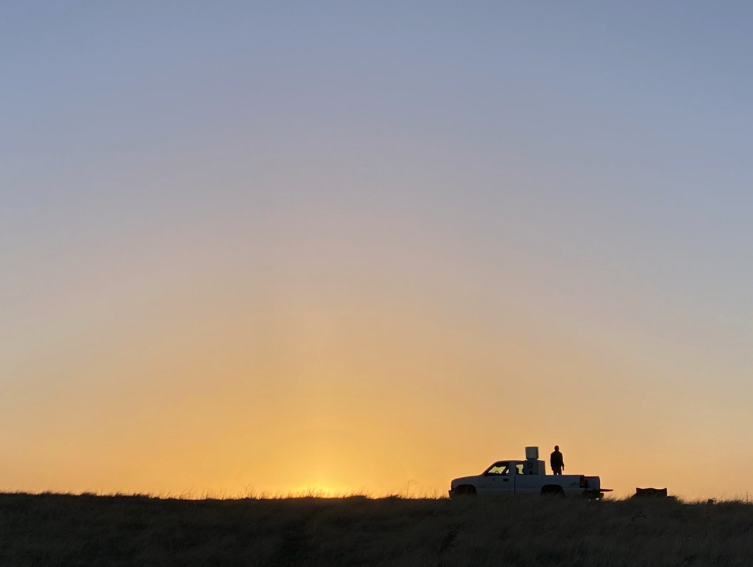
The BirdCast team loves a report from the field, and today we have one from Colorado – the home of our western base of operations, Colorado State University, where Dr. Kyle Horton directs the AeroEco Lab. We are especially pleased to introduce Mikko Jimenez, a PhD student in the Lab, to describe his experiences with the amazing and cool BirdScan MR1, a compact radar for monitoring the atmosphere (bird migration in particular, of course!) at resolutions far finer than those we typically discuss for WSR-88D operations.
- June 6, 2022Reports from the field: Monitoring migration with the BirdScan MR1
The BirdCast team loves a report from the field, and today we have one from Colorado – the home of our western base of operations, Colorado State University, where Dr. Kyle Horton directs the AeroEco Lab.
- May 23, 2022Species on the move: Gray-cheeked Thrush arrivals in April
An interesting pattern of Gray-cheeked Thrush arrivals in the central US during April led the BirdCast team to investigate a potential explanation. We looked to the wind.
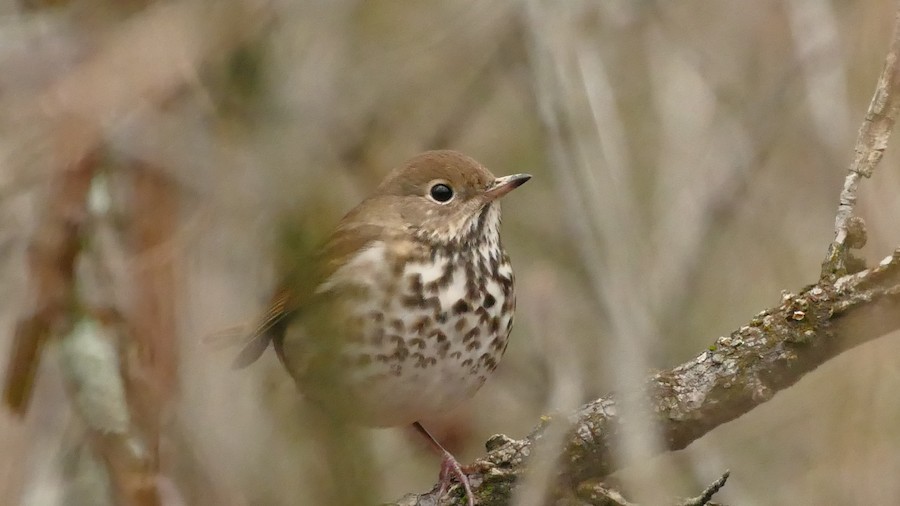 May 16, 2022Tracking Hermit Thrushes in Tennessee: the BirdCast Dashboard, MOTUS, and the potential to relate individuals’ movements to large-scale patterns of migration
The recent release of the BirdCast Migration Dashboard inspired much excitement here at BirdCast Central and among the broad array of collaborators, colleagues, friends, family, and followers. There are many ways to apply the information you can explore with the dashboard, but one intriguing possibility comes to us from Laura Cook of the amazing Warner Park Nature Center in Nashville, Tennessee. Take it away, Laura!
- May 16, 2022Tracking Hermit Thrushes in Tennessee: the BirdCast Dashboard, MOTUS, and the potential to relate individuals’ movements to large-scale patterns of migration
The recent release of the BirdCast Migration Dashboard inspired much excitement in a broad array of team members, collaborators, colleagues, friends, family, and followers. There are many ways to apply the information you can explore with the dashboard, but one intriguing possibility comes to us from Laura Cook in this post about tracking two Hermit Thrushes.
News
Scientific Team
BirdCast is made possible by the participating scientists at the below institutions, and many other contributors.