


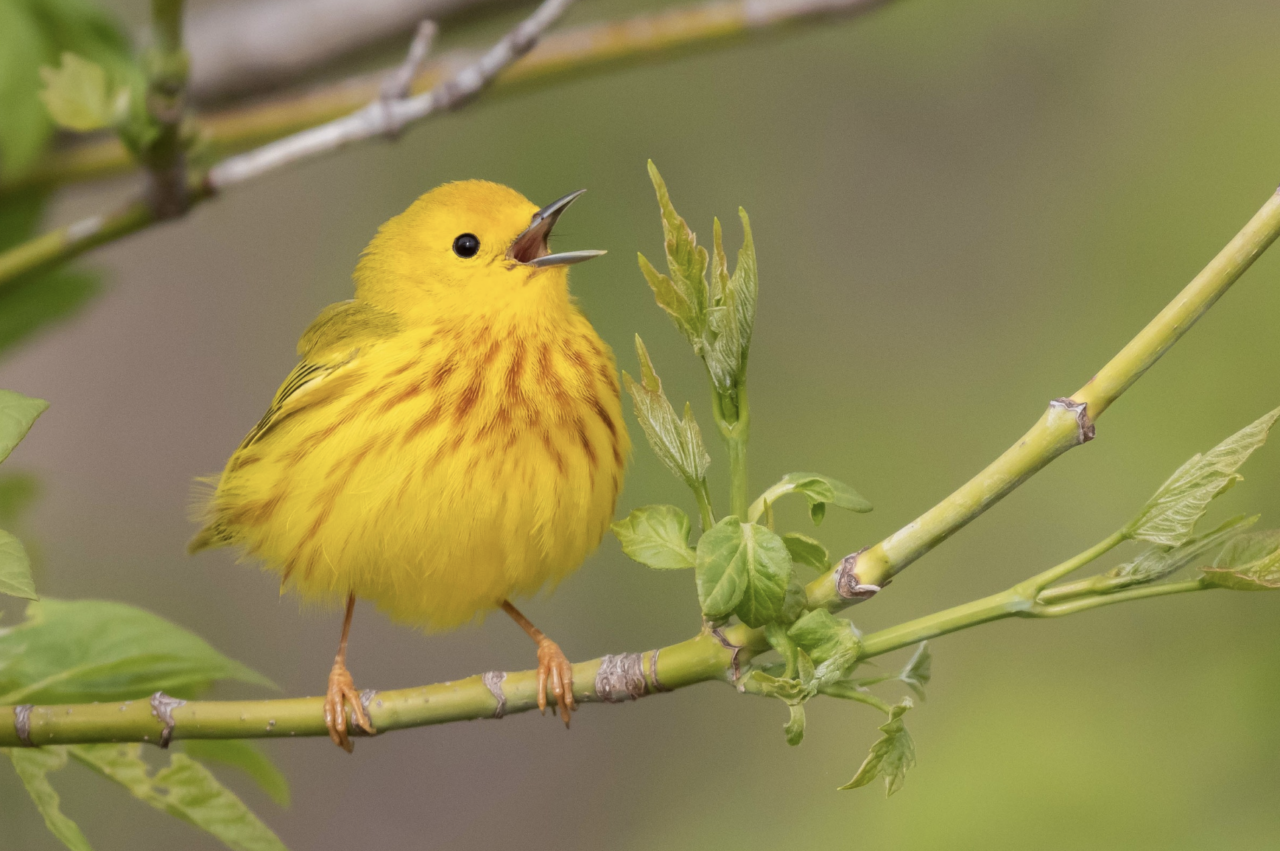
 July 30, 2026Seasonal Recap Spring 2026
Spring migration season is long in the books, with billions of migratory birds now completing their breeding routines and preparing for (and engaging in) their return journeys to nonbreeding grounds. See our summary.
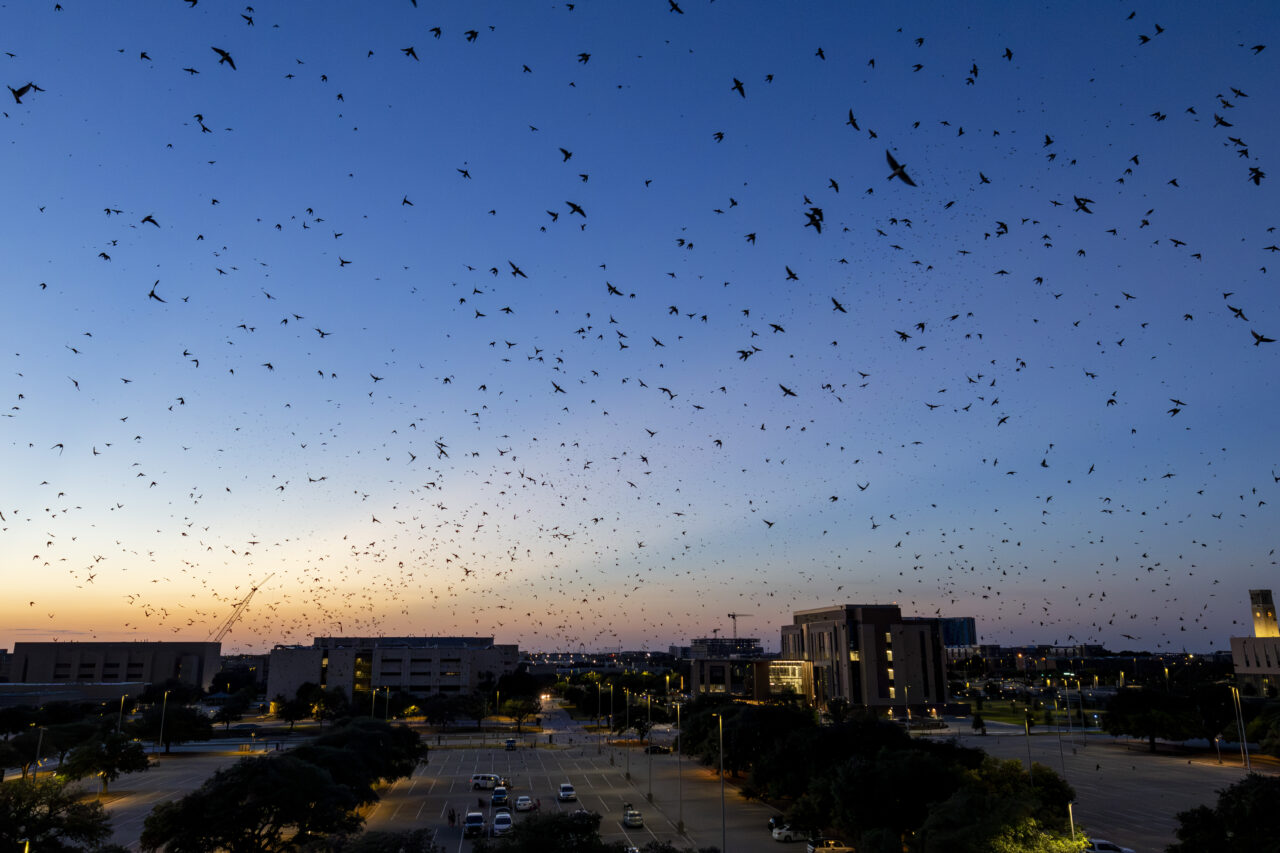 June 18, 2026New Methods Make Tracking Individual Species During Migration Possible
New approaches bridge gap between radar monitoring and species identification, advancing conservation efforts for birds during migration
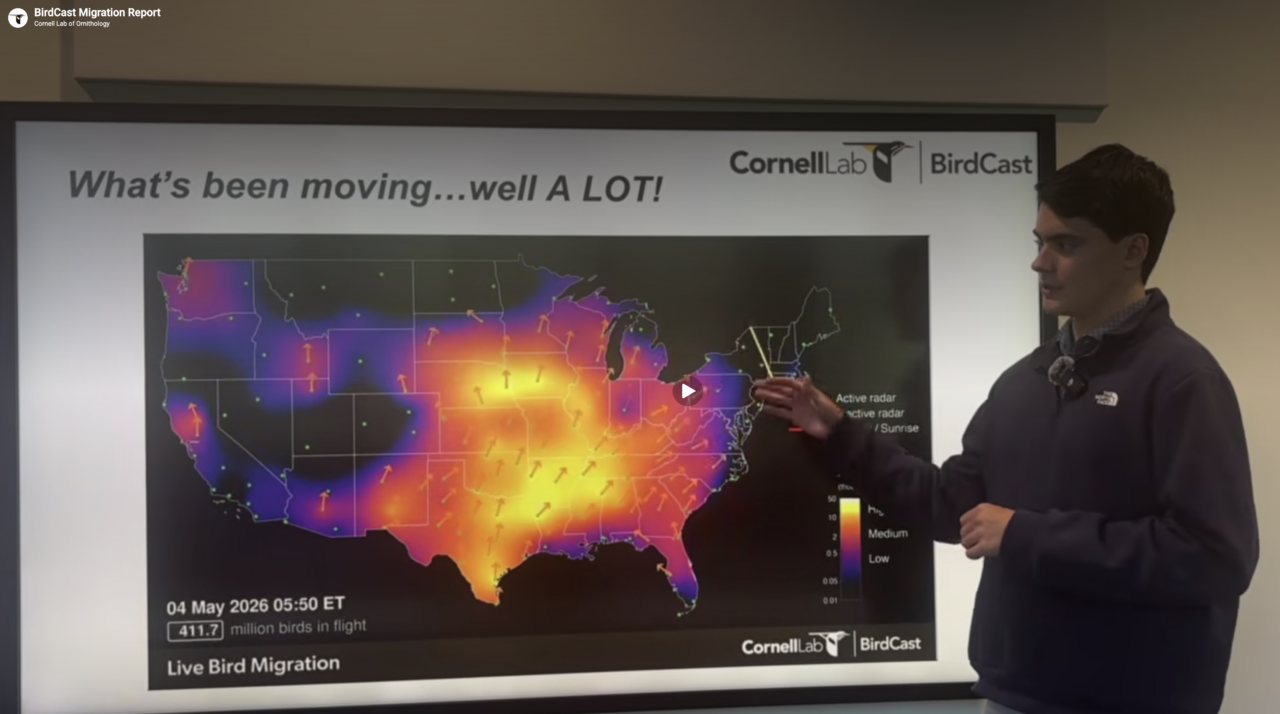 May 4, 2026A migration forecast gets the broadcast treatment!
Broadcast meteorology and BirdCast migration forecasts comes together – watch as we unveil one of the first pilot video forecasts!
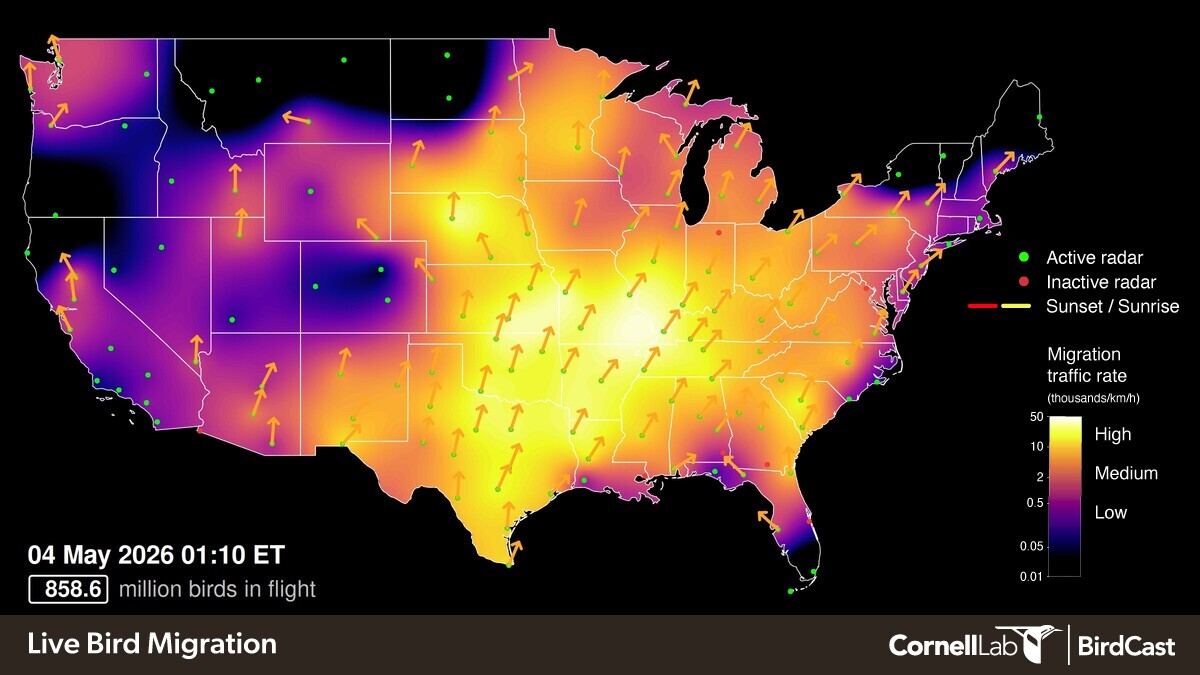 May 4, 2026BirdCast sets a new spring migration record!
An enormous migration event occurred on the night of 3-4 May 2026. Such a large number of birds – nearly 860 million – is unusual for spring, setting a record for the biggest spring night we have so far analyzed.
 March 18, 2026BirdCast Email Migration Alerts now available in 216 cities
Subscribe to automated Migration Alert emails for a city near you
 March 1, 2026Spring Migration 2026 Begins – With a Fresh New Look
The BirdCast Team is pleased to welcome you back to our suite of migration tools for Spring 2026! Frequent visitors may notice that BirdCast has a fresh new look. Over the winter, we’ve worked hard to redesign and improve the…
 February 12, 2026Photometrics AI Integrates Data from Bird Migration Forecasts to Automatically Dim Streetlights to Protect Birds
System uses BirdCast data to enable real-time lighting adjustments during peak migration events and reduce the number of birds colliding with buildings
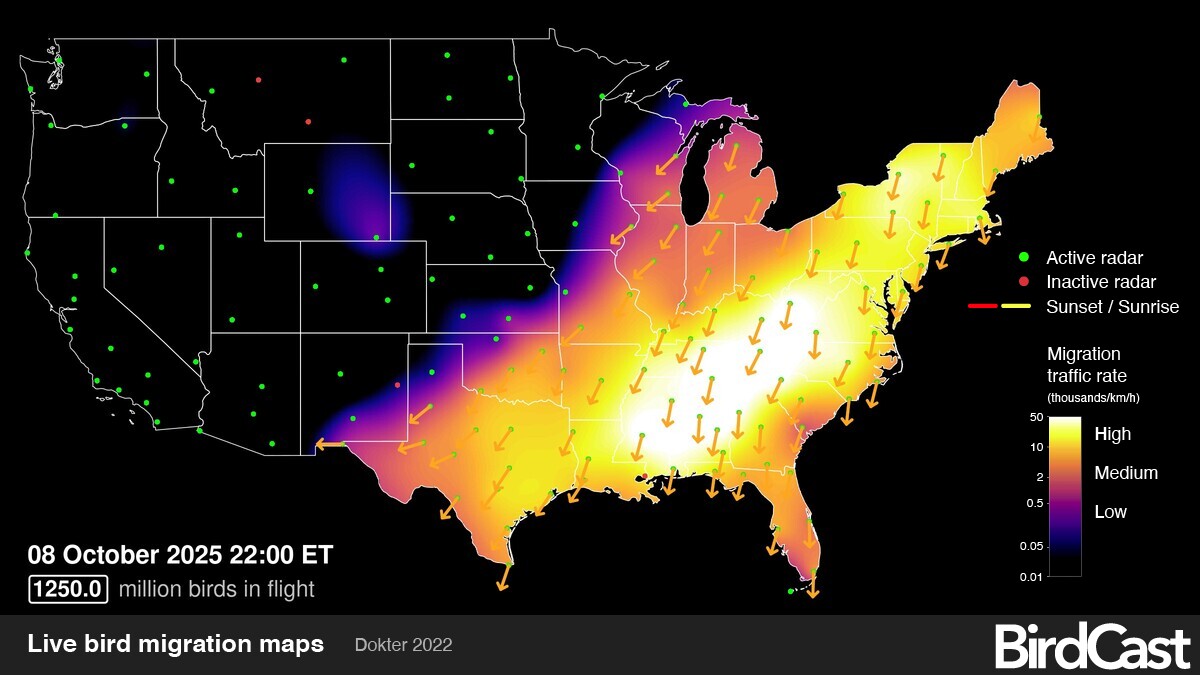 October 8, 2025A new record night of migration for BirdCast! AGAIN!
We said BILLION twice before in BirdCast history, on 6 October 2023 and on 25 September 2025! Amazing! Welcome back to the billion bird night club! Again! For the third time! 8 October 2025! The third epic night did not stop at a billion either: no, it grew beyond that, and beyond 1.1 billion, beyond 1.2 billion, all the way to 1.25 billion, becoming the biggest night of migration yet recorded by BirdCast!
 September 25, 2025Migration Celebration at Cornell Lab: We have a winner!
BirdCast presented at the annual Migration Celebration at the Cornell Lab of Ornithology on September 13. Celebrating the spectacle of bird migration, visitors could learn how to use BirdCast’s Migration Tools, participate in the BirdCast quiz bowl, and learn more about how to stop bird collisions at the table of the Bird Collision Prevention Alliance, a new partnership that BirdCast participates in.
 October 7, 2024Hurricane Milton: an intense and dangerous storm
Hurricane Milton is a powerful and very dangerous storm. Birds have been reported traveling in its eye, and as the storm approaches landfall, bioscattered is visible in proximity to the eye of the storm.
- September 24, 2024Entrained and displaced birds of Hurricane Helene
Hurricane Helene is a dangerous storm predicted to make landfall on Thursday afternoon eastern time in the Florida Panhandle. Its circulation will entrain pelagic birds, displace nearshore species, and down overland migrants in many areas of the southeast and probably as far north as Tennessee and maybe even Kentucky, Indiana, and Illinois. We are following the progress of the storm and posting observations here.
- September 20, 2024Species to watch: Northern Wheatear
Keep your eyes open for Northern Wheatear in northeastern North American in the coming days – go birding and help make us look good by documenting this species! Time of year and prevailing weather appear to be aligning to warrant us donning our prediction hats!
News
Scientific Team
BirdCast is made possible by the participating scientists at the below institutions, and many other contributors.