


Regional Migration Analysis: 15-22 September 2017
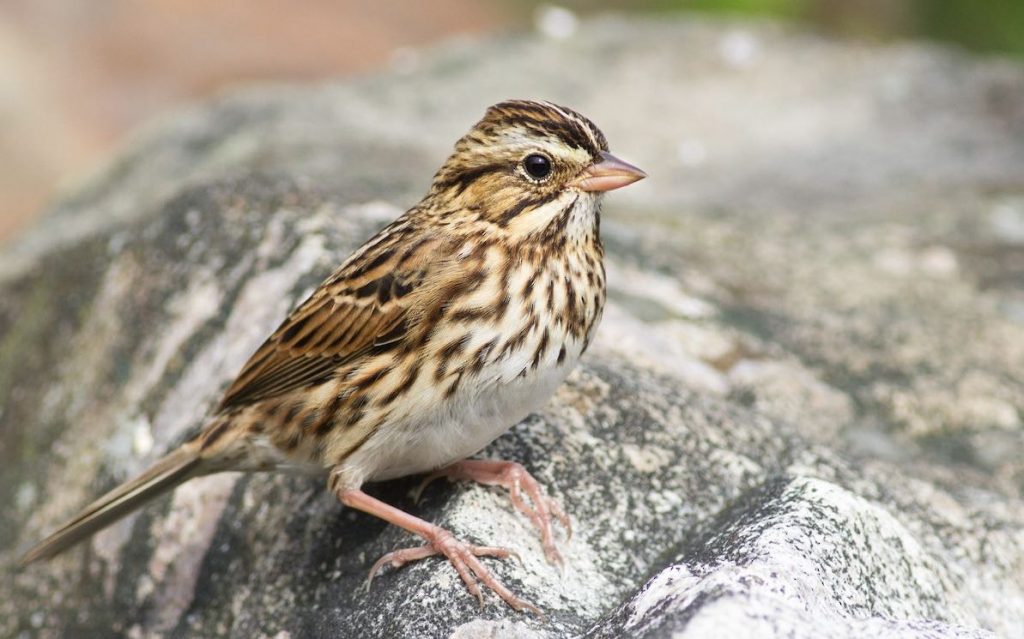
Savannah Sparrow. Fyn Kynd/Macaulay Library. eBird S39302831.
Continental Summary
Moderate to locally heavy flights occurred in many areas of the West this period and featured Cackling Goose, Greater White-fronted Goose, Ring-necked Duck, Merlin, American Pipit, Fox Sparrow, Golden-crowned Sparrow, and Lincoln’s Sparrow, while moderate to locally very heavy flights occurred in the East, featuring Sharp-shinned Hawk, Gray-cheeked Thrush, Ruby-crowned Kinglet, Yellow-rumped Warbler, Palm Warbler, Savannah Sparrow, Harris’ Sparrow, White-crowned Sparrow and White-throated Sparrow.
[animation name=”analysis-15-22-september-2017″]
Need a review of our definitions for regions, species on the move, and migration amounts? Please visit this link.
Quick Links to Regions
Upper Midwest and Northeast |
Gulf Coast and Southeast |
Great Plains |
West |
Upper Midwest and Northeast
Moderate and heavy flights were distributed around the region in favorable migration conditions, with most flights east of the Ohio River Valley to kick off the weekend and more flights to the west of this area to end the weekend. Slightly less intense flights continued for the days that followed into the middle of the work week, with many areas experiencing moderate flights. By Wednesday night an interesting pattern appeared, as a frontal boundary sat over the western Great Lakes and the remnants of Hurricane Jose sat off the Atlantic Coast. To the west of the frontal boundary, typical frontal passage conditions were favorable for migration and moderate to locally very heavy flights were aloft; but to the east of the front, sandwiched between it and the circulation of Jose, conditions were also favorable for moderate and locally heavy flights. The storm’s circulation and high pressure over land to the west created a favorable northerly and northeasterly flow for birds to move. As the tropical system maintained its position off the Atlantic on Thursday night, moderate and locally heavy flights continued in the swath of circulation between it and the Ohio River Valley high pressure center.
Top Movers
[expand title=”Increasing” tag=”h3″]
[table sort=”,desc” tablesorter=”true”]
Species,Increase from Last Week[attr style=”color:green”],% of Checklists Reporting
Ruby-crowned Kinglet,530%,4.5
Sharp-shinned Hawk,169%,5.9
Lincoln’s Sparrow,287%,3.1
White-throated Sparrow,255%,4.8
Palm Warbler,137%,8.7
Savannah Sparrow,111%,5.2
Yellow-rumped Warbler,97%,5.7
American Pipit,274%,1.5
White-crowned Sparrow,987%,0.9
Blue-headed Vireo,102%,3.7
Orange-crowned Warbler,394%,0.7
Northern Flicker,32%,32.9
Gray-cheeked Thrush,92%,2.2
American Kestrel,45%,6.3
Brown Thrasher,48%,6.8
Swamp Sparrow,68%,3.8
Merlin,51%,4.8
Wilson’s Snipe,76%,1.5
Yellow-bellied Sapsucker,49%,2.4
Winter Wren,125%,0.8
Broad-winged Hawk,41%,4.2
American Coot,68%,1.7
[/table]
[/expand]
[expand title=”Decreasing” tag=”h3″]
[table sort=”,asc” tablesorter=”true”]
Species,Decrease from Last Week[attr style=”color:red”],% of Checklists Reporting
Barn Swallow,-100%,0
Blue-gray Gnatcatcher,-84%,1.4
Great Crested Flycatcher,-93%,0.4
Ruby-throated Hummingbird,-57%,11.2
Warbling Vireo,-69%,2.6
Tree Swallow,-64%,3.8
Eastern Wood-Pewee,-49%,10.7
Baltimore Oriole,-87%,0.6
Least Flycatcher,-75%,1
Least Sandpiper,-63%,2.5
Canada Warbler,-87%,0.4
Semipalmated Sandpiper,-58%,3.1
Common Nighthawk,-64%,1.9
Chestnut-sided Warbler,-52%,4.2
Blue-winged Warbler,-92%,0.1
Red-eyed Vireo,-34%,13.1
Eastern Kingbird,-81%,0.7
Blackburnian Warbler,-65%,1.6
Veery,-70%,1
Olive-sided Flycatcher,-88%,0.2
Semipalmated Plover,-47%,3.8
American Redstart,-28%,15.5
Northern Rough-winged Swallow,-72%,0.7
Caspian Tern,-49%,2.4
Osprey,-28%,9.1
[/table]
[/expand]
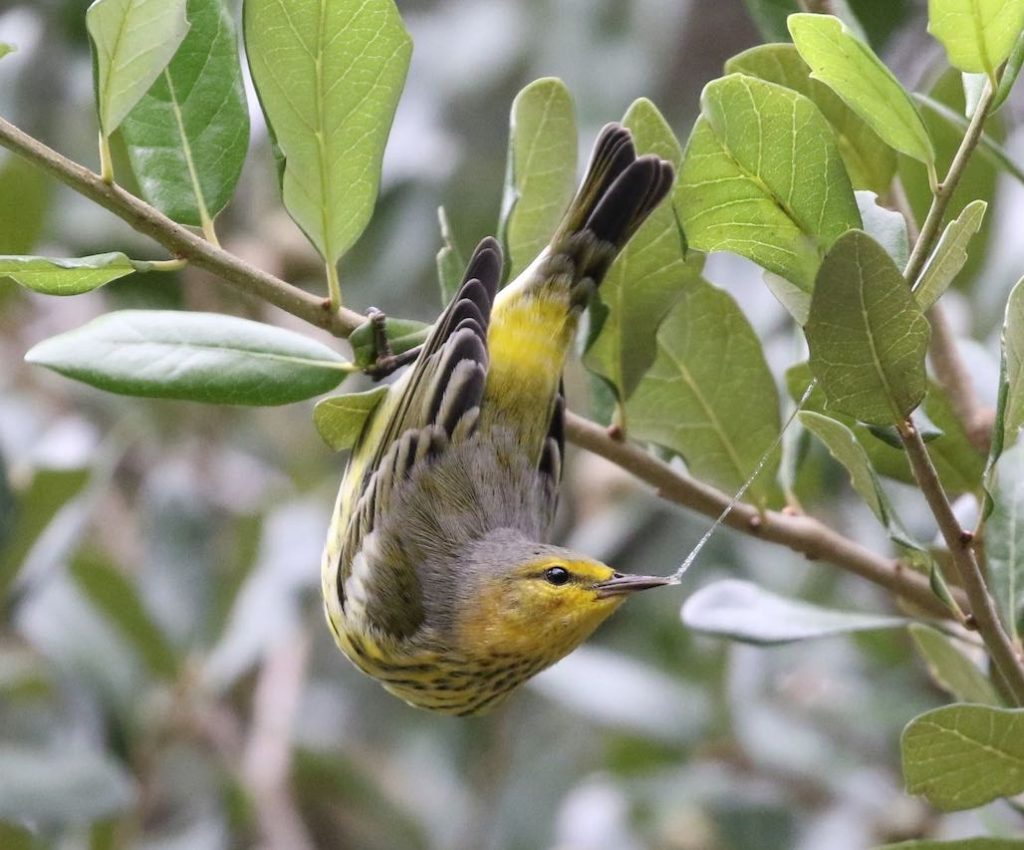
Cape May Warbler. Steve Calver/Macaulay Library. eBird S39187405.
Gulf Coast and Southeast
Moderate and locally heavy flights were the norm in many areas of the region during this period. The distribution of these flights was skewed primarily to areas east of the Mississippi for much of the period, as favorable wind conditions in these areas associated with the offshore and slow northward passage of Hurricane Jose facilitated movements. One exception was Wednesday night – conditions in the western reaches of the region improved with the arrival of a frontal boundary in north and west Texas, while conditions in the remainder of Texas and areas to the west of the Mississippi River were largely marginal or unfavorable and under the influence of high pressure to the northeast. As the frontal boundary passed through the Texas Panhandle, moderate to heavy flights occurred; but between the frontal boundary and the more favorable conditions east of the Mississippi River, flights were light and local at best.
Top Movers
[expand title=”Increasing” tag=”h3″]
[table sort=”,desc” tablesorter=”true”]
Species,Increase from Last Week[attr style=”color:green”],% of Checklists Reporting
Swainson’s Thrush,486%,5.4
Magnolia Warbler,162%,8.2
Palm Warbler,653%,4.1
Rose-breasted Grosbeak,664%,3.2
Gray Catbird,78%,12.2
Common Yellowthroat,93%,10.5
Scarlet Tanager,171%,5.1
Northern Flicker,89%,8.6
Brown Thrasher,58%,15.7
Tennessee Warbler,160%,5.1
Merlin,380%,1.8
Cape May Warbler,225%,2.6
Gray-cheeked Thrush,1760%,1.2
Northern Mockingbird,22%,42.7
Eastern Phoebe,35%,16.6
Philadelphia Vireo,542%,1
House Wren,98%,2.6
American Redstart,35%,13.8
Chestnut-sided Warbler,60%,5.3
Black-throated Green Warbler,73%,3.4
Ruby-crowned Kinglet,354%,0.7
Tufted Titmouse,17%,33
[/table]
[/expand]
[expand title=”Decreasing” tag=”h3″]
[table sort=”,asc” tablesorter=”true”]
Species,Decrease from Last Week[attr style=”color:red”],% of Checklists Reporting
Great Crested Flycatcher,-59%,3.3
Eastern Kingbird,-57%,2.6
Purple Martin,-79%,0.6
Bank Swallow,-73%,0.7
Spotted Sandpiper,-47%,3.4
Pectoral Sandpiper,-58%,1.8
Black Tern,-70%,0.9
Barn Swallow,-40%,10.7
Least Sandpiper,-40%,5.4
Semipalmated Sandpiper,-52%,1.9
Blue Grosbeak,-48%,2.6
Solitary Sandpiper,-64%,0.9
Lesser Yellowlegs,-48%,2.5
Cliff Swallow,-58%,1.2
Least Tern,-85%,0.3
Mississippi Kite,-77%,0.4
Green Heron,-33%,5.9
Northern Rough-winged Swallow,-44%,2.2
Stilt Sandpiper,-52%,1.2
Blue-winged Teal,-39%,3.4
Semipalmated Plover,-38%,3.1
Bullock’s Oriole,-95%,0
White-winged Dove,-19%,10.6
[/table]
[/expand]
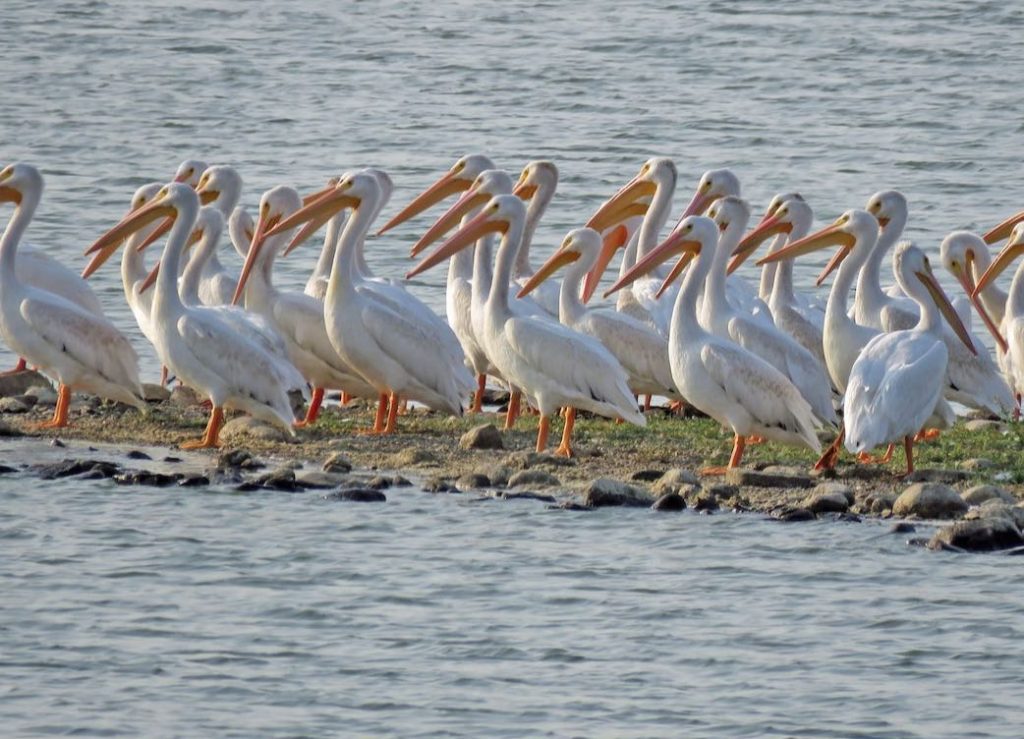
American White Pelican. Kelly Preheim/Macaulay Library. eBird S39118167.
Great Plains
A pulse of moderate to locally very heavy flights graced parts of the region on Saturday night, especially over the central Plains. Several days of relative quiet followed this intense movement, as conditions became generally less favorable for migrants to take flight. Another frontal passage arrived on Tuesday night, but its impacts were again more local than regional; moderate to locally heavy flights occurred in the northern and central Plains. Note that this frontal boundary was actually represented by two fronts, a more easterly and more intense line of storms, and then a more westerly line of precipitation; both spawned movements. With the movements of this system to the east, moderate to locally very heavy flights shifted to the central and southern Plains by Wednesday night. By Thursday most flights associated with this passage had moved out of the region, but a new pulse of moderate to heavy flights was aloft locally in the northern Plains in reasonably favorable migration conditions in the Dakotas.
Top Movers
[expand title=”Increasing” tag=”h3″]
[table sort=”,desc” tablesorter=”true”]
Species,Increase from Last Week[attr style=”color:green”],% of Checklists Reporting
White-crowned Sparrow,664%,6.2
Yellow-rumped Warbler,194%,8.6
Western Meadowlark,97%,14.3
Orange-crowned Warbler,112%,10.2
Ruby-crowned Kinglet,117%,7
Osprey,109%,7.5
Vesper Sparrow,129%,5.5
Savannah Sparrow,136%,4.7
Sharp-shinned Hawk,145%,3.4
Northern Flicker,43%,28.3
Ring-billed Gull,52%,15
Harris’s Sparrow,2887%,1.2
Franklin’s Gull,50%,15.2
Townsend’s Solitaire,693%,1.2
White-throated Sparrow,89%,3.9
American White Pelican,45%,9.6
Rock Wren,218%,1.5
Merlin,89%,3.3
Dark-eyed Junco,207%,1.6
American Coot,44%,8.4
Spotted Towhee,60%,4.4
Red-winged Blackbird,30%,15.1
Wilson’s Snipe,71%,2.8
Ruddy Duck,70%,3.3
[/table]
[/expand]
[expand title=”Decreasing” tag=”h3″]
[table sort=”,asc” tablesorter=”true”]
Species,Decrease from Last Week[attr style=”color:red”],% of Checklists Reporting
Warbling Vireo,-92%,1
Great Crested Flycatcher,-99%,0.1
Eastern Kingbird,-89%,1.1
Least Flycatcher,-82%,1.5
Yellow Warbler,-77%,2.2
Olive-sided Flycatcher,-90%,0.5
Baltimore Oriole,-84%,1.3
Blue-gray Gnatcatcher,-78%,1.7
Red-eyed Vireo,-73%,3.1
Yellow-billed Cuckoo,-87%,0.6
American Redstart,-75%,1.6
Barn Swallow,-45%,14.8
Ovenbird,-98%,0
Black-and-white Warbler,-79%,0.8
Little Blue Heron,-83%,0.5
American Goldfinch,-31%,20.4
Tree Swallow,-75%,0.9
Ruby-throated Hummingbird,-38%,9.1
Eastern Wood-Pewee,-45%,5.3
Cedar Waxwing,-42%,5.6
Semipalmated Sandpiper,-82%,0.5
Red-headed Woodpecker,-38%,8.3
Northern Mockingbird,-49%,4.2

American Pipit. Mary Rumple/Macaulay Library. eBird S39285120.
West
Moderate to locally heavy flights were scattered across the region for the weekend, particularly over the Central Valley of California and portions of the Rockies. Increasing precipitation in the northern half of the region shut down most movements to begin the work week, while light to moderate flights continued in California and the Desert Southwest. Local moderate to heavy flights took off from the Rockies on Tuesday and Wednesday nights, while movements in California and the Desert Southwest continued. By period’s end a disturbance moving east through the Great Basin brought favorable migration conditions in its wake in the Pacific Northwest, with moderate to locally heavy flights ensuing in the northerly flow.
Top Movers
[expand title=”Increasing” tag=”h3″]
[table sort=”,desc” tablesorter=”true”]
Species,Increase from Last Week[attr style=”color:green”],% of Checklists Reporting
White-crowned Sparrow,102%,20.7
Golden-crowned Sparrow,1653%,4.8
Violet-green Swallow,127%,9
Yellow-rumped Warbler,83%,15.8
Lincoln’s Sparrow,132%,8.4
Fox Sparrow,533%,4.3
Vaux’s Swift,127%,6.2
Townsend’s Warbler,109%,7.4
Northern Flicker,35%,27
Say’s Phoebe,72%,10.1
Black-throated Gray Warbler,89%,7.8
Ruby-crowned Kinglet,119%,6.4
American Pipit,140%,4
Orange-crowned Warbler,52%,16.7
Spotted Towhee,41%,19.8
Red-tailed Hawk,34%,23.7
Turkey Vulture,30%,27.6
Cackling Goose,4199%,1.8
Greater White-fronted Goose,469%,1.6
Merlin,159%,1.9
Sharp-shinned Hawk,97%,3.7
Red-shouldered Hawk,45%,7.4
Ring-necked Duck,145%,1.8
Pacific-slope Flycatcher,61%,5.1
Black Phoebe,22%,25.4
[/table]
[/expand]
[expand title=”Decreasing” tag=”h3″]
[table sort=”,asc” tablesorter=”true”]
Species,Decrease from Last Week[attr style=”color:red”],% of Checklists Reporting
Caspian Tern,-59%,3.2
Western Kingbird,-72%,1.2
Black-chinned Hummingbird,-54%,2.7
MacGillivray’s Warbler,-51%,2.3
Heermann’s Gull,-50%,2.4
Semipalmated Plover,-52%,1.7
Brown Pelican,-42%,3.9
Rufous Hummingbird,-50%,2.1
Western Sandpiper,-37%,4.4
Western Gull,-30%,7.4
Black-headed Grosbeak,-46%,2.5
Brandt’s Cormorant,-45%,1.8
Wilson’s Phalarope,-70%,0.5
Hooded Oriole,-62%,0.8
Spotted Sandpiper,-35%,3.9
Cliff Swallow,-57%,1
Elegant Tern,-46%,1.3
Swainson’s Thrush,-44%,1.6
Baird’s Sandpiper,-48%,1.3
American Avocet,-37%,2.3
Black-necked Stilt,-34%,3.1
Least Sandpiper,-29%,5.7
Lesser Yellowlegs,-43%,1.7
Barn Swallow,-17%,17.5
Western Tanager,-21%,7.9
[/table]
[/expand]
–––––––––––––––––––––––––––––––––––
Farnsworth and Van Doren
Scientific Team
BirdCast is made possible by the participating scientists at the below institutions, and many other contributors.