


Regional Migration Analysis: 4-11 March 2016
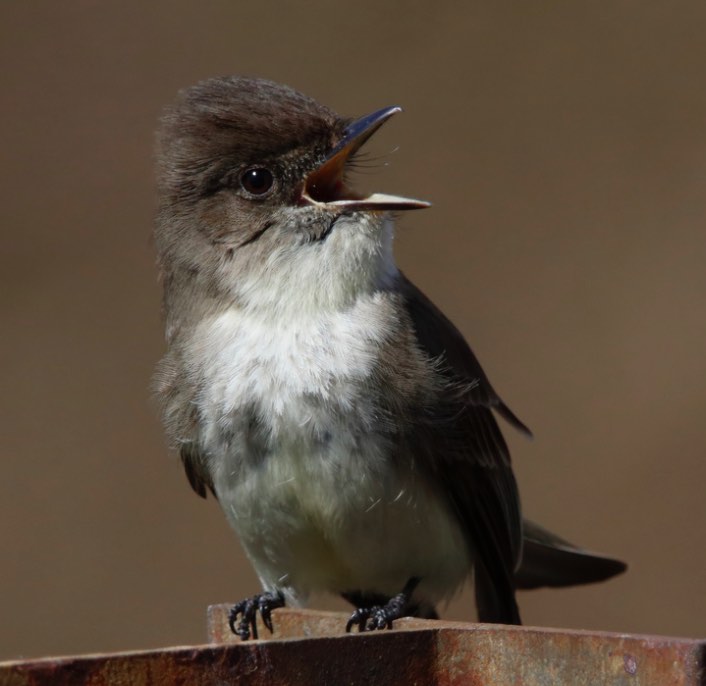
Eastern Phoebe. Dave Kerr/Macaulay Library. 11 March 2016. eBird S28096826, ML 25574371
Continental Summary
Conditions in the West were more unfavorable than favorable this week, with only light movements early in the weekend and late in the work week, while localized light to moderate movements in the Great Plains and Texas and parts of the southeast were there highlights of migration in the East.
[animation name=”4-11-march-2016-analysis”]
Wondering what species will be migrating through this week? Check out our forecast for the next 7 days.
Need a review of our definitions for regions, species on the move, and migration amounts? Please visit this link.
Quick Links to Regions
Upper Midwest and Northeast |
Gulf Coast and Southeast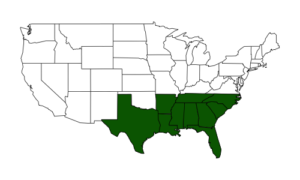 |
Great Plains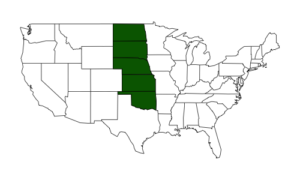 |
West |
Upper Midwest and Northeast
A quiet weekend of cool conditions kept most birds on the ground. The first signs of movement occurred Sunday night, with light migration in the central Mississippi River and Ohio River valleys. The Ohio River valley, northern and central Appalachians, and mid Atlantic saw continued, scattered flights of this intensity for much of the remainder of the work week. However, the week ended with a strong frontal passage with extensive and intense rain, leaving only localized light flights to the south and east of the frontal boundary.
Top Movers
[expand title=”Increasing” tag=”h3″]
[table sort=”,desc” tablesorter=”true”]
Species,Increase from Last Week[attr style=”color:green”],% of Checklists Reporting
Killdeer,140%,22.8
Eastern Phoebe,533%,5.1
Tree Swallow,343%,4.6
Common Grackle,79%,32.7
American Robin,59%,52.2
Wood Duck,101%,11.6
Song Sparrow,63%,38
Sandhill Crane,139%,6.8
Red-winged Blackbird,54%,49.1
Eastern Meadowlark,108%,4.2
Northern Shoveler,78%,8.3
Brown-headed Cowbird,70%,7.7
Green-winged Teal,67%,8.1
American Woodcock,95%,4.2
Eastern Bluebird,43%,16.4
Blue-winged Teal,413%,0.9
Field Sparrow,87%,2.4
Pine Warbler,101%,1.7
Ring-necked Duck,38%,12.9
Northern Flicker,31%,10.3
Fox Sparrow,49%,4.1
Wilson’s Snipe,104%,1.1
Mallard,28%,43
Pied-billed Grebe,54%,3.6
Rusty Blackbird,65%,2.7
[/table]
[/expand]
[expand title=”Decreasing” tag=”h3″]
[table sort=”,asc” tablesorter=”true”]
Species,Decrease from Last Week[attr style=”color:red”],% of Checklists Reporting
Harlequin Duck,-54%,0.2
Purple Finch,-38%,1.9
Common Eider,-36%,0.8
Snowy Owl,-59%,0.1
Lesser Black-backed Gull,-32%,0.5
Common Murre,-75%,0.1
Surf Scoter,-26%,1.2
Pine Siskin,-21%,4.3
White-winged Crossbill,-61%,0
Razorbill,-35%,0.3
White-crowned Sparrow,-30%,1
Black Scoter,-26%,0.9
Common Loon,-20%,2.4
Iceland Gull,-37%,0.4
Bonaparte’s Gull,-20%,0.7
White-winged Scoter,-22%,1.3
Northern Harrier,-11%,3.3[/table]
[/expand]
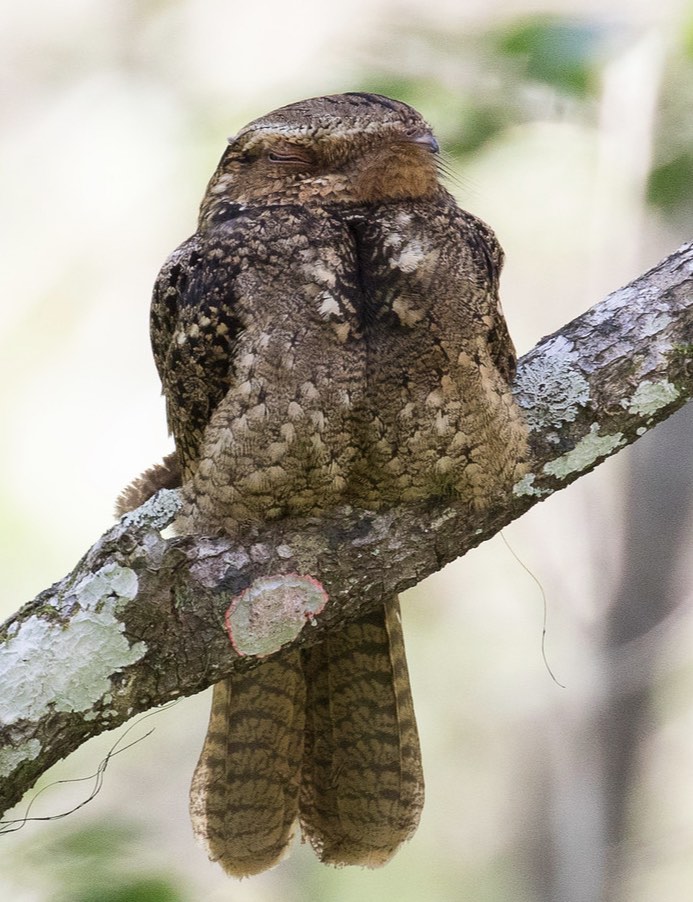
Chuck-will’s-widow. Jim and Melba Funk/Macaulay Library. 12 February 2016. eBird S27693549, ML 24661591
Gulf Coast and Southeast
Scattered light to moderate flights kicked off the period in Texas, followed by more widespread light flights from Texas to the southern Appalachians and then Florida and the southeastern US. By Tuesday night strong storms moved through the region and across the Mississippi River valley, stopping movements in these areas. Light movements continued ahead of this system, from Tuesday night through the remainder of the period, in the southern Appalachians and coastal Plain from the Carolinas through the Florida Keys.
Top Movers
[expand title=”Increasing” tag=”h3″]
[table sort=”,desc” tablesorter=”true”]
Species,Increase from Last Week[attr style=”color:green”],% of Checklists Reporting
Swallow-tailed Kite,103%,3.5
Northern Rough-winged Swallow,92%,2.5
Barn Swallow,68%,2.7
Pectoral Sandpiper,145%,0.7
Northern Parula,31%,8.8
American Golden-Plover,127%,0.7
Chuck-will’s-widow,252%,0.4
Cattle Egret,27%,6.9
Tree Swallow,28%,13
Eastern Towhee,14%,16.4
Glossy Ibis,22%,6.4
Eastern Whip-poor-will,180%,0.2
Peregrine Falcon,64%,1.3
Black-chinned Hummingbird,57%,0.8
Couch’s Kingbird,38%,1.3
Swainson’s Hawk,194%,0.1
Brown-headed Cowbird,12%,8.6
Cliff Swallow,67%,0.3
Black-and-white Warbler,21%,5.2
Black-necked Stilt,40%,2.7
[/table]
[/expand]
[expand title=”Decreasing” tag=”h3″]
[table sort=”,asc” tablesorter=”true”]
Species,Decrease from Last Week[attr style=”color:red”],% of Checklists Reporting
Red-tailed Hawk,-26%,8.5
Lincoln’s Sparrow,-30%,2.8
Ring-necked Duck,-27%,4.9
Long-billed Curlew,-41%,0.7
Orange-crowned Warbler,-20%,6.1
Burrowing Owl,-59%,0.2
White-crowned Sparrow,-27%,2.6
American Bittern,-40%,0.9
Hermit Thrush,-25%,3.7
Fox Sparrow,-34%,0.9
Vesper Sparrow,-30%,1.5
Red-headed Woodpecker,-29%,2.4
Great Cormorant,-79%,0.1
Harris’s Sparrow,-32%,0.8
Northern Pintail,-30%,1.1
Ruddy Duck,-20%,3.3
[/table]
[/expand]
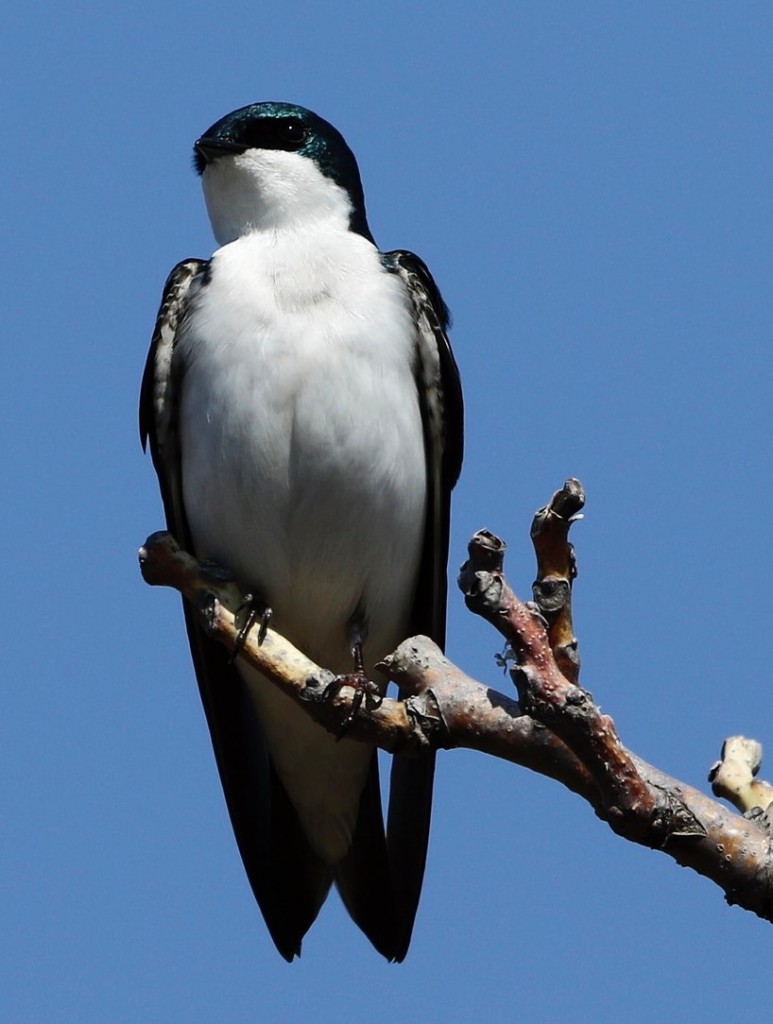
Tree Swallow. Dennis Cheeseman. 9 March 2016. eBird S28064075, ML 25504821.
Great Plains
Localized light to moderate flights highlighted the beginning of the weekend in the southern Plains, with some continuation of this flight through the weekend in the central Plains. These movements represented the most of the movement occurring in the region for the period. The days that followed these flights saw a frontal boundary shut down flights, with precipitation, cooler temperatures, and unfavorable winds. Highly localized light migration was scattered across the region to end the period, as ameliorating temperatures allowed some birds to take flight.
Top Movers
[expand title=”Increasing” tag=”h3″]
[table sort=”,desc” tablesorter=”true”]
Species,Increase from Last Week[attr style=”color:green”],% of Checklists Reporting
Blue-winged Teal,153%,5.2
Western Meadowlark,85%,12.8
Brown-headed Cowbird,93%,7.5
Eastern Meadowlark,68%,14.7
Killdeer,42%,32.6
Red-winged Blackbird,39%,42.1
Common Grackle,50%,16.2
Tree Swallow,396%,1.2
Eastern Phoebe,42%,11.5
Great Egret,365%,1.2
American White Pelican,127%,4.1
Northern Shoveler,27%,10.5
Hermit Thrush,191%,1.5
Great Blue Heron,33%,12.5
Baird’s Sandpiper,105%,1.3
Wood Duck,23%,5.3
American Woodcock,104%,2
Long-billed Dowitcher,110%,0.8
Sandhill Crane,35%,4.2
Green-winged Teal,22%,11.1
Belted Kingfisher,40%,4.8
Mallard,16%,34.2
[/table]
[/expand]
[expand title=”Decreasing” tag=”h3″]
[table sort=”,asc” tablesorter=”true”]
Species,Decrease from Last Week[attr style=”color:red”],% of Checklists Reporting
Northern Saw-whet Owl,-85%,0.2
Smith’s Longspur,-80%,0.1
American Goldfinch,-29%,13.5
Pine Siskin,-36%,2.9
Northern Harrier,-27%,6.5
Prairie Falcon,-75%,0.2
Common Merganser,-24%,3.9
White-crowned Sparrow,-25%,3.9
Common Raven,-57%,0.4
Chipping Sparrow,-50%,0.6
Red-tailed Hawk,-13%,22.2
Ross’s Goose,-25%,2.1
Bald Eagle,-14%,10.5
Snow Goose,-14%,8.1
Eastern Towhee,-81%,0.1
Northern Shrike,-26%,1.1
Herring Gull,-18%,2.5
Field Sparrow,-37%,1.8
Long-tailed Duck,-62%,0.1
Ferruginous Hawk,-71%,0.1
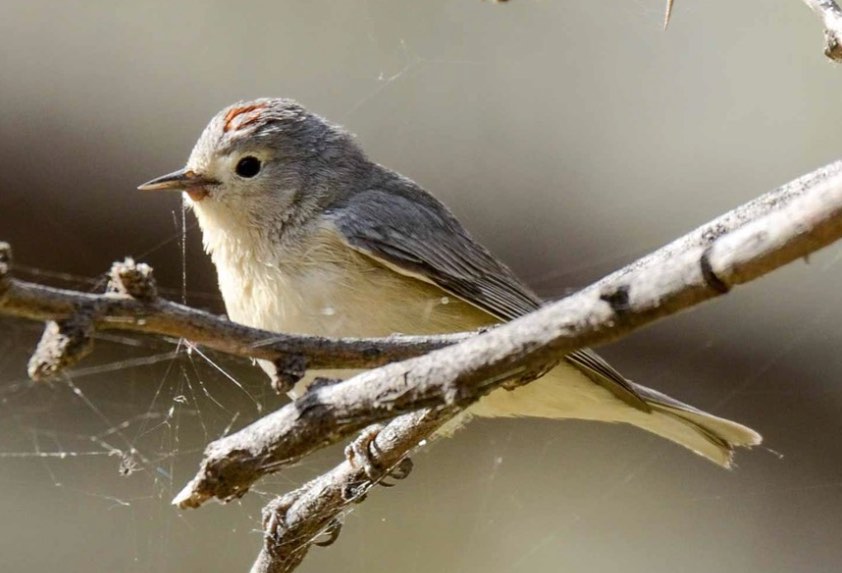
Lucy’s Warbler. Barry McKee/Macaulay Library. 8 March 2016. eBird S28057349, ML 25487771
West
Precipitation, particularly along the coast and in the mountains, and unfavorable conditions kept most migration very light at best for the first half of the period. By mid week, particularly Wednesday night, movements were more apparent, with light flights in the Central Valley and in some portions of the Desert Southwest. Flights in these areas continued through the end of the period, with some expansion to the north along the eastern front of the Rockies.
Top Movers
[expand title=”Increasing” tag=”h3″]
[table sort=”,desc” tablesorter=”true”]
Species,Increase from Last Week[attr style=”color:green”],% of Checklists Reporting
Lucy’s Warbler,354%,1.3
Northern Rough-winged Swallow,47%,6.7
Violet-green Swallow,72%,4.5
Hooded Oriole,118%,1.1
Common Black Hawk,180%,0.8
Bell’s Vireo,335%,0.6
Wilson’s Warbler,247%,0.6
Black-throated Gray Warbler,141%,1
House Wren,49%,3.8
Black-chinned Hummingbird,325%,0.4
Vermilion Flycatcher,31%,3.7
Cliff Swallow,41%,2
Swainson’s Hawk,104%,0.5
Mountain Bluebird,29%,2.9
Orange-crowned Warbler,25%,5.8
Cooper’s Hawk,17%,8
Wandering Tattler,227%,0.3
Cedar Waxwing,27%,5
Painted Redstart,58%,0.7
[/table]
[/expand]
[expand title=”Decreasing” tag=”h3″]
[table sort=”,asc” tablesorter=”true”]
Species,Decrease from Last Week[attr style=”color:red”],% of Checklists Reporting
American Avocet,-41%,2
White-faced Ibis,-40%,0.8
Greater White-fronted Goose,-31%,1.2
Snow Goose,-30%,1.5
Cackling Goose,-27%,3.2
Northern Harrier,-23%,6.9
Brown Pelican,-32%,1.9
Lesser Yellowlegs,-83%,0.1
Long-billed Curlew,-32%,1.5
Redhead,-22%,2.4
Eurasian Wigeon,-41%,0.8
Northern Pintail,-17%,6.3
Canvasback,-16%,3.1
Black-necked Stilt,-26%,2.4
Sandhill Crane,-20%,2.3
Merlin,-25%,1.3
Northern Shoveler,-16%,10.8
Black-bellied Plover,-29%,1.2
Ring-billed Gull,-13%,8.4
Brown Creeper,-16%,3.5
Black Skimmer,-69%,0.1
Red-breasted Nuthatch,-16%,4.5
[/table]
[/expand]
–––––––––––––––––––––––––––––––––––
Farnsworth and Van Doren
Scientific Team
BirdCast is made possible by the participating scientists at the below institutions, and many other contributors.