


Regional Migration Analysis: 3-10 November 2017
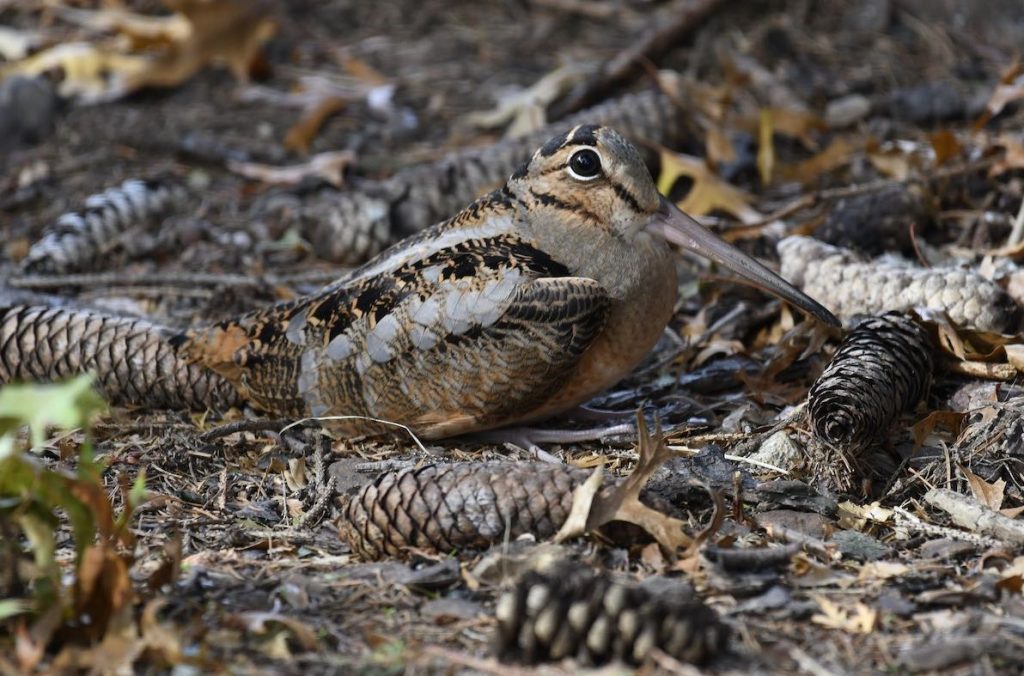
American Woodcock. Richard Evon/Macaulay Library. eBird S40330645.
Continental Summary
Local light and moderate flights were the norm in the West featuring Common and Barrow’s Goldeneyes, Trumpeter Swan, Bonaparte’s Gull, Snowy Owl, American Kestrel, and Horned Lark, while moderate and heavy flights occurred in numerous areas of the East featuring Canvasback, Common Goldeneye, Hooded, Red-breasted and Common Mergansers, Tundra Swan, Bonaparte’s Gull, Snow Bunting, and American Tree Sparrow.
Curious what birds will move next? Check out our forecast.
[animation name=”analysis-3-10-november-2017″]
Need a review of our definitions for regions, species on the move, and migration amounts? Please visit this link.
Quick Links to Regions
Upper Midwest and Northeast |
Gulf Coast and Southeast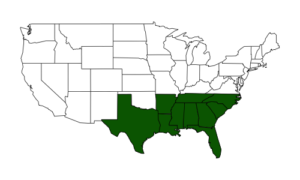 |
Great Plains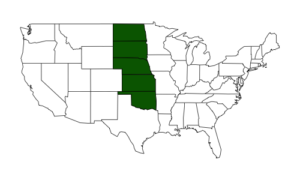 |
West |
Upper Midwest and Northeast
Widespread moderate to locally heavy flights kicked off the weekend. These extent of these flights quickly collapsed to isolated coastal flights by Saturday, but then expanded again in portions of the Upper Midwest following the passage of a frontal boundary there on Sunday night. As the frontal boundary moved east, locally moderate to heavy flights followed on Monday night. And the remainder of the week saw similarly restricted moderate and heavy flights around the region, particularly in its southern reaches. Note some local coastal activity persisted on many nights of the period, typical of this time of the migration season.
Top Movers
[expand title=”Increasing” tag=”h3″]
[table sort=”,desc” tablesorter=”true”]
Species,Increase from Last Week[attr style=”color:green”],% of Checklists Reporting
Bufflehead,567%,18.1
Tundra Swan,1843%,4.8
Hooded Merganser,248%,10.5
Common Goldeneye,414%,4.1
Common Loon,76%,10.6
Red-breasted Merganser,99%,5.5
Horned Grebe,127%,4.8
Bonaparte’s Gull,71%,7.7
Lesser Scaup,119%,4.6
Long-tailed Duck,137%,3
Common Merganser,96%,5.3
Ruddy Duck,53%,8.7
American Tree Sparrow,71%,6.2
Snowy Owl,1743%,0.5
Snow Bunting,75%,2.2
White-winged Scoter,34%,3.6
Pied-billed Grebe,15%,12.2
Greater Scaup,42%,1.8
Rough-legged Hawk,48%,1.3
Common Redpoll,60%,1.1
Trumpeter Swan,40%,1.4
Brant,17%,3.4[/table]
[/expand]
[expand title=”Decreasing” tag=”h3″]
[table sort=”,asc” tablesorter=”true”]
Species,Decrease from Last Week[attr style=”color:red”],% of Checklists Reporting
White-crowned Sparrow,-73%,2.2
Yellow-rumped Warbler,-53%,12.4
Chipping Sparrow,-63%,3.6
Ruby-crowned Kinglet,-55%,7.3
Red-winged Blackbird,-41%,13.3
Turkey Vulture,-43%,11.5
Savannah Sparrow,-62%,2.7
American Robin,-25%,30.4
Swamp Sparrow,-47%,6.3
Killdeer,-55%,4
Eastern Phoebe,-68%,2.4
Great Egret,-64%,2.2
Field Sparrow,-53%,3.2
Common Grackle,-41%,6.5
Song Sparrow,-22%,26
Lincoln’s Sparrow,-88%,0.3
Orange-crowned Warbler,-80%,0.4
Double-crested Cormorant,-22%,17.4
Eastern Towhee,-45%,3.8
Hermit Thrush,-46%,3.6
Great Blue Heron,-21%,15.1
Greater Yellowlegs,-40%,3.2
White-throated Sparrow,-17%,26.5
Blue Jay,-12%,48.7
Blue-winged Teal,-74%,0.4[/table]
[/expand]
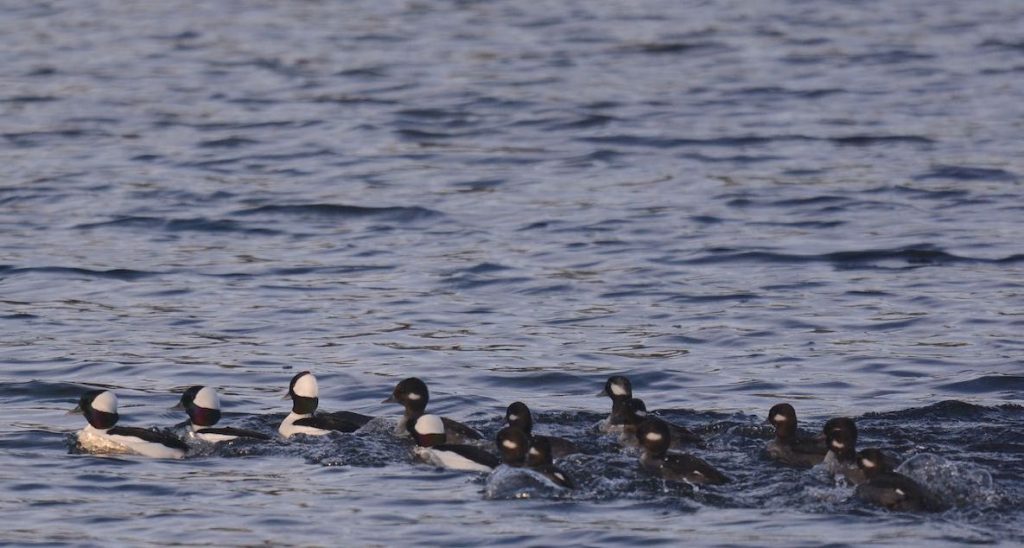
Bufflehead. Jay Wherley/Macaulay Library. eBird S40409298.
Gulf Coast and Southeast
Widespread moderate flights in the region began on Friday night but gradually became increasingly less extensive by Sunday, when they were distributed mostly in coastal areas. Monday and Tuesday nights saw these movements generally intensify, though they remained somewhat less extensive than region wide. With a slow frontal passage ending the period, moderate to locally very heavy flights occurred on Wednesday and Thursday nights in the wake of the boundary’s advances.
Top Movers
[expand title=”Increasing” tag=”h3″]
[table sort=”,desc” tablesorter=”true”]
Species,Increase from Last Week[attr style=”color:green”],% of Checklists Reporting
Hooded Merganser,2173%,3.2
Ring-necked Duck,314%,6.2
Lesser Scaup,484%,3.6
Dark-eyed Junco,182%,5.5
Bufflehead,2381%,2
Northern Pintail,187%,5.4
Northern Shoveler,113%,7.8
Snow Goose,366%,2.7
Redhead,257%,3.3
Canvasback,830%,1.5[/table]
[/expand]
[expand title=”Decreasing” tag=”h3″]
[table sort=”,asc” tablesorter=”true”]
Species,Decrease from Last Week[attr style=”color:red”],% of Checklists Reporting
Gray Catbird,-40%,12.7
Indigo Bunting,-78%,1.1
Blue Jay,-26%,35.3
Brown Thrasher,-47%,5.5
Pine Warbler,-41%,5.9
Palm Warbler,-25%,17.2
Northern Flicker,-25%,13.5
Black-and-white Warbler,-47%,3.6
Black-throated Blue Warbler,-92%,0.2
Barn Swallow,-48%,2.7
Common Yellowthroat,-30%,7.8
Yellow-bellied Sapsucker,-31%,6.7
Yellow-throated Warbler,-50%,2.2
Turkey Vulture,-17%,29
Common Grackle,-23%,10.4
Black-throated Green Warbler,-61%,0.8
Tennessee Warbler,-76%,0.3
American Crow,-15%,27.2
Red-tailed Hawk,-22%,10.4[/table]
[/expand]

Ferruginous Hawk. Colin Croft/Macaulay Library. eBird S40313437.
Great Plains
A slow start for migration on Friday and Saturday finally gave way to scattered moderate to heavy flights in the central and southern Plains on Sunday night. Several small pulses of locally light to moderate flights persisted generally in more southern areas for the remainder of the period, but migration was generally low intensity or nearly nonexistent in other areas.
Top Movers
[expand title=”Increasing” tag=”h3″]
[table sort=”,desc” tablesorter=”true”]
Species,Increase from Last Week[attr style=”color:green”],% of Checklists Reporting
Hooded Merganser,645%,14
Common Goldeneye,1420%,5.6
Snow Goose,421%,10.7
Bufflehead,238%,13.5
Lesser Scaup,209%,15.3
Common Merganser,2385%,3.5
Common Loon,321%,7.2
Red-breasted Merganser,3615%,3.2
Ross’s Goose,748%,3.6
Cackling Goose,176%,8.5
Bonaparte’s Gull,258%,5.9
Mallard,53%,36.3
Canada Goose,52%,37.2
Herring Gull,154%,5
American Kestrel,70%,13.5
Ferruginous Hawk,259%,2.3
Redhead,60%,11.8
Northern Shoveler,49%,14.9
Greater White-fronted Goose,144%,4.4
Golden-crowned Kinglet,94%,4.6
Greater Scaup,219%,2.2
Ring-billed Gull,24%,28.3
Canvasback,68%,6.1[/table]
[/expand]
[expand title=”Decreasing” tag=”h3″]
[table sort=”,asc” tablesorter=”true”]
Species,Decrease from Last Week[attr style=”color:red”],% of Checklists Reporting
Chipping Sparrow,-66%,2.3
Lincoln’s Sparrow,-69%,1.5
Red Crossbill,-78%,0.9
Red-breasted Nuthatch,-57%,2.4
Eared Grebe,-78%,0.5
Franklin’s Gull,-38%,6.6
Common Grackle,-45%,3.9
Black-capped Chickadee,-26%,15.5
Yellow-rumped Warbler,-23%,16.8
Field Sparrow,-48%,2
Red-bellied Woodpecker,-20%,17.2
Blue-winged Teal,-67%,0.7
Long-billed Dowitcher,-91%,0.1
Turkey Vulture,-52%,2.4
Northern Flicker,-17%,19.9
Orange-crowned Warbler,-54%,1.1
Sharp-shinned Hawk,-40%,2.3
Swamp Sparrow,-42%,1.7
Marsh Wren,-54%,0.6
White-throated Sparrow,-18%,9.7
Great Egret,-42%,1.6
American Avocet,-47%,0.9
Carolina Wren,-15%,12.2[/table]
[/expand]
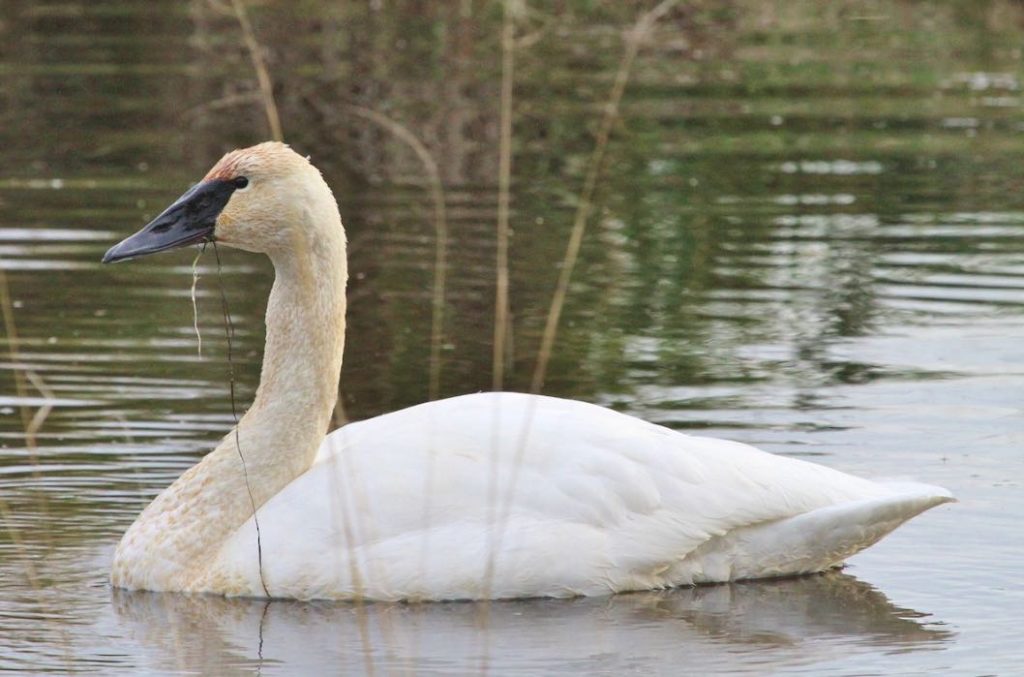
Trumpeter Swan. John Gatchet/Macaulay Library. eBird S40373243.
West
Scattered precipitation and some unfavorable wind conditions kept many remaining migrants in the region grounded for much of the weekend. Moderate flights returned to the most common location for such flights in the region at this time of year, the Central Valley of California. However, disturbances and their associated precipitation returned to fill the remainder of the period in many areas, with generally marginal to unfavorable migration conditions keeping migration localized and light.
Top Movers
[expand title=”Increasing” tag=”h3″]
[table sort=”,desc” tablesorter=”true”]
Species,Increase from Last Week[attr style=”color:green”],% of Checklists Reporting
Common Goldeneye,1767%,6.5
Bufflehead,104%,16.2
Hooded Merganser,112%,6.8
Red-breasted Merganser,179%,3.3
Lesser Scaup,76%,6.6
Barrow’s Goldeneye,226%,1.5
Snow Goose,79%,3.8
Trumpeter Swan,196%,1.4
Bonaparte’s Gull,59%,3
American Kestrel,19%,14.9
Tundra Swan,96%,1.6
Ring-necked Duck,21%,9.8
Canvasback,55%,2.7
California Gull,19%,10.7
Pacific Loon,56%,2.1
Ring-billed Gull,15%,11.6
Horned Lark,33%,3.6
Herring Gull,33%,3.6
Snowy Owl,4692%,0.2
Black Turnstone,44%,2.3[/table]
[/expand]
[expand title=”Decreasing” tag=”h3″]
[table sort=”,asc” tablesorter=”true”]
Species,Decrease from Last Week[attr style=”color:red”],% of Checklists Reporting
Steller’s Jay,-34%,11.1
Red-breasted Nuthatch,-28%,8.7
Golden-crowned Kinglet,-35%,3.9
Savannah Sparrow,-32%,5.3
Red Crossbill,-36%,1.5
Black-capped Chickadee,-15%,15
Green-winged Teal,-16%,7.7
Downy Woodpecker,-17%,6.9
Western Meadowlark,-15%,7.4
Hutton’s Vireo,-21%,2.7
Least Sandpiper,-18%,3.8
Belted Kingfisher,-13%,10.6
Red-breasted Sapsucker,-24%,1.6
House Wren,-18%,4.3
Cedar Waxwing,-17%,5.1
Forster’s Tern,-25%,1.3
Red-necked Grebe,-26%,1.3
Common Grackle,-61%,0.2
Blue-winged Teal,-24%,1.2
Purple Finch,-19%,1.9
American Pipit,-12%,6.6
Greater White-fronted Goose,-19%,1.6[/table]
[/expand]
–––––––––––––––––––––––––––––––––––
Farnsworth and Van Doren
Scientific Team
BirdCast is made possible by the participating scientists at the below institutions, and many other contributors.