


Regional Migration Analysis: 27 March–3 April 2015
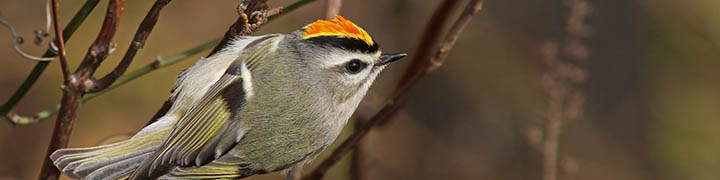
Golden-crowned Kinglet © Ian Davies
Continental Summary
Light to moderate movements, primarily in California and the Desert Southwest, in the first half of the week included Swainson’s Hawk, Franklin’s Gull, Barn Swallow, Cliff Swallow, Nashville Warbler, Common Grackle for the West, while scattered pulses of light to moderate movements reached a peak by the end of the week in the East and included Great Crested Flycatcher, Tree Swallow, Golden-crowned Kinglet, Chipping Sparrow, Swamp Sparrow, and Orchard Oriole.
[animation name=”27-march-3-april-2015-analysis”]
Wondering what species will move next? Check out our forecast.
Need a review of our definitions for regions, species on the move, and migration amounts? Please visit this link.
Quick Links to Regions
Upper Midwest and Northeast |
Gulf Coast and Southeast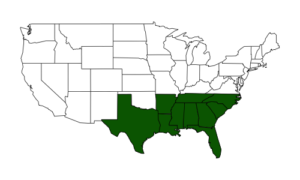 |
Great Plains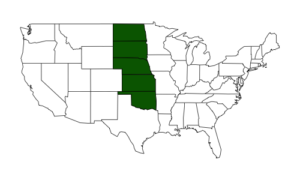 |
West |
Upper Midwest and Northeast
Other than a few bursts of light to moderate movements in the Upper Mississippi River valley, most of the region was quiet until Wednesday night. Moderate movements, with some heavy migration, occurred on this night from the western Great Lakes south and east toward the mid Atlantic coast. These movements occurred in largely favorable conditions in advance of a cold front moving through the Great Plains. This front continued through the region and nearly reached the Atlantic Coast on Thursday night, shutting down movements in its wake and spawning light to moderate coastal flights from Virginia to southern New England.
Top Movers
[expand title=”Increasing” tag=”h3″]
[table sort=”,desc” tablesorter=”true”]
Species,Increase from Last Week[attr style=”color:green”],% of Checklists Reporting
Golden-crowned Kinglet,271%,7.4
Eastern Phoebe,101%,17.2
Tree Swallow,116%,15.4
Double-crested Cormorant,96%,11.4
Great Egret,162%,3.9
Brown-headed Cowbird,67%,15.3
Osprey,76%,7.8
Yellow-bellied Sapsucker,138%,4.0
Chipping Sparrow,82%,4.7
Blue-winged Teal,73%,7.0
Northern Flicker,50%,13.5
Brown Creeper,71%,5.9
Pied-billed Grebe,51%,9.4
Field Sparrow,91%,4.1
Song Sparrow,24%,43.9
Ruby-crowned Kinglet,265%,1.5
American Robin,23%,58.7
Great Blue Heron,28%,17.3
Brown Thrasher,76%,2.4
Killdeer,37%,19.6
Fox Sparrow,40%,7.1
Hermit Thrush,108%,1.7
Belted Kingfisher,42%,5.9
Winter Wren,143%,1.3
Turkey Vulture,19%,28.6
[/table]
[/expand]
[expand title=”Decreasing” tag=”h3″]
[table sort=”,asc” tablesorter=”true”]
Species,Decrease from Last Week[attr style=”color:red”],% of Checklists Reporting
Snow Bunting,-65%,0.1
Harlequin Duck,-36%,0.1
Glaucous Gull,-64%,0.2
Snowy Owl,-45%,0.3
Cackling Goose,-22%,0.3
Red-necked Grebe,-37%,0.5
Greater White-fronted Goose,-26%,0.7
Surf Scoter,-36%,1.0
Long-tailed Duck,-32%,1.2
White-winged Scoter,-21%,1.4
Snow Goose,-27%,2.6
Tundra Swan,-18%,2.9
Horned Lark,-12%,3.4
Canvasback,-19%,3.5
Greater Scaup,-15%,3.5
Northern Pintail,-9%,4.5
Redhead,-14%,6.4
Common Goldeneye,-16%,6.8
[/table]
[/expand]
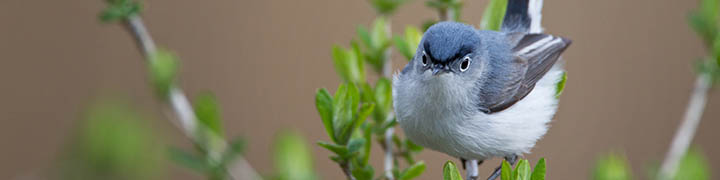
Blue-gray Gnatcatcher © Ian Davies
Gulf Coast and Southeast
For most of the period, scattered light to locally moderate movements were the norm. But by Wednesday and Thursday night, increasingly favorable winds and warmer conditions brought more extensive movements. These were primarily moderate flights, but they extended from Texas to Florida. By Thursday night, some of these movements in central and northern Florida were moderate to heavy.
Top Movers
[expand title=”Increasing” tag=”h3″]
[table sort=”,desc” tablesorter=”true”]
Species,Increase from Last Week[attr style=”color:green”],% of Checklists Reporting
Great Crested Flycatcher,108%,8.8
Prairie Warbler,70%,6.6
Orchard Oriole,192%,1.7
Blue-gray Gnatcatcher,29%,17.9
White-eyed Vireo,29%,19.9
Ovenbird,108%,2.0
Scissor-tailed Flycatcher,44%,5.4
Indigo Bunting,43%,2.6
Barn Swallow,17%,15.7
Ruby-throated Hummingbird,20%,6.7
Gray Catbird,21%,12.6
Northern Rough-winged Swallow,18%,9.0
Brown-headed Cowbird,21%,17.2
Palm Warbler,17%,14.2
Osprey,14%,20.6
Black-throated Green Warbler,55%,1.7
Broad-winged Hawk,45%,2.1
Swallow-tailed Kite,30%,3.4
Northern Parula,14%,15.4
Green Heron,25%,5.9
Cedar Waxwing,20%,13.2
Summer Tanager,67%,1.0
[/table]
[/expand]
[expand title=”Decreasing” tag=”h3″]
[table sort=”,asc” tablesorter=”true”]
Species,Decrease from Last Week[attr style=”color:red”],% of Checklists Reporting
American Kestrel,-22%,6.5
American White Pelican,-16%,4.5
American Wigeon,-37%,1.4
Bufflehead,-28%,2.7
Cinnamon Teal,-49%,0.4
Eastern Phoebe,-9%,12.2
Fox Sparrow,-79%,0.1
Gadwall,-35%,3.6
Green-winged Teal,-36%,2.3
Harris’s Sparrow,-59%,0.4
Hooded Merganser,-33%,1.1
Horned Grebe,-34%,1.5
Lesser Scaup,-37%,2.9
Northern Pintail,-86%,0.1
Northern Shoveler,-20%,6.1
Orange-crowned Warbler,-23%,4.3
Pied-billed Grebe,-12%,13.6
Ring-billed Gull,-21%,9.3
Ring-necked Duck,-49%,1.5
[/table]
[/expand]

Chipping Sparrow © Ian Davies
Great Plains
A few nights of light to moderate movements brought migrants into the region, but none of these movements were widespread. Early period movements were generally in the central and southern Plains. Tuesday night finally saw moderate movements from the northern (and central) Plains, where such flights have been generally understated this spring. But after these flights, conditions deteriorated with the passage of low pressure, keeping flights local, mostly light, and primarily southerly in extent.
Top Movers
[expand title=”Increasing” tag=”h3″]
[table sort=”,desc” tablesorter=”true”]
Species,Increase from Last Week[attr style=”color:green”],% of Checklists Reporting
Tundra Swan,108%,2.2
Swamp Sparrow,235%,3.1
Wilson’s Snipe,188%,3.3
Brewer’s Blackbird,118%,4.3
Field Sparrow,38%,7.4
Chipping Sparrow,324%,8.2
Pied-billed Grebe,29%,11.7
Brown-headed Cowbird,32%,17.5
Double-crested Cormorant,34%,18.0
Eastern Meadowlark,91%,19.1
American Coot,21%,19.1
Song Sparrow,29%,19.2
Great Blue Heron,21%,20.7
Eastern Phoebe,26%,22.3
Northern Flicker,19%,27.5
Blue-winged Teal,42%,29.8
House Sparrow,19%,31.1
Turkey Vulture,81%,33.7
Common Grackle,71%,43.0
American Robin,26%,61.3
[/table]
[/expand]
[expand title=”Decreasing” tag=”h3″]
[table sort=”,asc” tablesorter=”true”]
Species,Decrease from Last Week[attr style=”color:red”],% of Checklists Reporting
Snow Bunting,-71%,0.1
Red-breasted Nuthatch,-55%,0.5
Cackling Goose,-83%,0.5
Ross’s Goose,-70%,0.6
Sandhill Crane,-75%,2.2
Common Merganser,-48%,2.5
Greater White-fronted Goose,-22%,3.3
Herring Gull,-26%,3.4
American Tree Sparrow,-36%,4.5
Common Goldeneye,-27%,4.5
Snow Goose,-37%,5.2
Bald Eagle,-13%,9.5
Bufflehead,-41%,9.5
Northern Pintail,-31%,9.6
[/table]
[/expand]
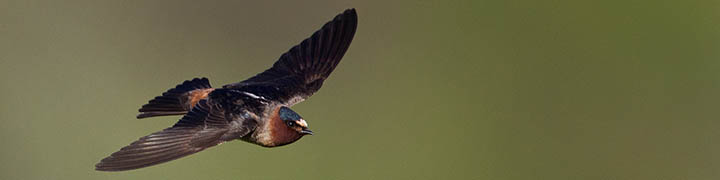
Cliff Swallow © Ian Davies
West
California and the Desert Southwest saw a run of nights that spanned the forecast period on which light to moderate movements occurred. Arizona, as evident from Phoenix and Yuma radars, saw the greatest intensities of these movements. Aside from these parts of the West, scattered and local light movements in parts of the Pacific Northwest, Great Basin, and Montana brought migrant arrivals in small numbers.
Top Movers
[expand title=”Increasing” tag=”h3″]
[table sort=”,desc” tablesorter=”true”]
Species,Increase from Last Week[attr style=”color:green”],% of Checklists Reporting
American Goldfinch,25%,10.1
Ash-throated Flycatcher,48%,2.2
Barn Swallow,61%,6.9
Black-chinned Hummingbird,37%,3.1
Black-throated Gray Warbler,44%,1.4
Broad-tailed Hummingbird,47%,0.8
Brown-headed Cowbird,17%,3.5
Bullock’s Oriole,28%,3.4
Burrowing Owl,48%,1.1
Caspian Tern,51%,2.4
Cliff Swallow,57%,5.4
Common Grackle,322%,2.3
Common Yellowthroat,21%,7.4
Franklin’s Gull,80%,0.6
Hooded Oriole,32%,5.3
Nashville Warbler,151%,0.3
Osprey,23%,4.7
Rufous Hummingbird,19%,5.6
Swainson’s Hawk,90%,2.7
Turkey Vulture,12%,20.4
Violet-green Swallow,16%,8.4
Yellow Warbler,29%,1.9
Yellow-headed Blackbird,26%,2.5
[/table]
[/expand]
[expand title=”Decreasing” tag=”h3″]
[table sort=”,asc” tablesorter=”true”]
Species,Decrease from Last Week[attr style=”color:red”],% of Checklists Reporting
Canvasback,-30%,2.1
Common Goldeneye,-23%,4.7
Common Merganser,-12%,5.4
Dark-eyed Junco,-9%,23.0
Fox Sparrow,-15%,3.2
Hermit Thrush,-27%,3.4
Hooded Merganser,-16%,3.1
Northern Flicker,-17%,22.4
Northern Pintail,-16%,4.8
Rough-legged Hawk,-40%,0.6
Ruby-crowned Kinglet,-20%,11.7
Tundra Swan,-87%,0.1
Varied Thrush,-31%,3.0
[/table]
[/expand]
–––––––––––––––––––––––––––––––––––
Farnsworth and Van Doren
Scientific Team
BirdCast is made possible by the participating scientists at the below institutions, and many other contributors.