


Regional Migration Analysis: 25 March – 1 April 2016

Northern Flicker (Yellow-shafted). Charles Shields/Macaulay Library. 1 Apr 2016. eBird S28677970
Continental Summary
The light to moderate movements featuring Common Loon, Double-crested Cormorant, Pacific-slope Flycatcher, Wilson’s Warbler, and Black-headed Grosbeak along the Pacific Coast and in the Desert Southwest highlighted the period’s migration in the West, while the East featured American White Pelican, Osprey, Least Sandpiper, Solitary Sandpiper, Chimney Swift, Northern Flicker, Eastern Kingbird, Barn Swallow, Chipping Sparrow scattered light to moderate flights, most consistent in the Gulf states.
Curious what birds will move next Check out our forecast.
[animation name=”25-march-1-april-2016-analysis”]
Need a review of our definitions for regions, species on the move, and migration amounts? Please visit this link.
Quick Links to Regions
Upper Midwest and Northeast |
Gulf Coast and Southeast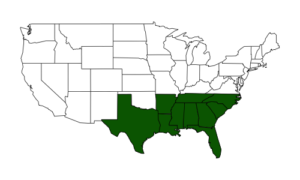 |
Great Plains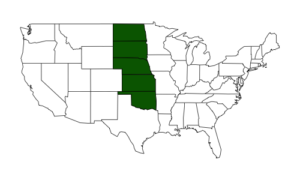 |
West |
Upper Midwest and Northeast
Saturday’s extensive light to locally moderate flights, mostly west of the coast and east of the Mississippi River, were the most obvious migration highlights for the first half of the period. A strong frontal passage that finally moved out of the region by Monday was the primary culprit, keeping most birds grounded in its wake. But by Monday night the next round of more favorable conditions were in place in the Upper Midwest, facilitating locally light to moderate movements. These continued on Tuesday night, and then shifted to the Appalachians and coast by Wednesday night. This shift was a function of another approaching frontal boundary, producing favorable southerly and southwesterly flow as it advanced east. Thursday night saw traces of migration, which were mostly light and scattered and interestingly distributed between the first lines of precipitation moving off the coast and the more organized boundary leading a cool air mass.
Top Movers
[expand title=”Increasing” tag=”h3″]
[table sort=”,desc” tablesorter=”true”]
Species,Increase from Last Week[attr style=”color:green”],% of Checklists Reporting
Blue-gray Gnatcatcher,185%,1.5
Chipping Sparrow,84%,7.8
Blue-winged Teal,57%,9.6
Yellow-bellied Sapsucker,68%,4.3
Louisiana Waterthrush,140%,1.3
Northern Flicker,37%,24.9
Snowy Egret,343%,0.7
Osprey,39%,8.4
Tree Swallow,34%,18.9
Vesper Sparrow,204%,0.8
Great Egret,53%,3.3
Purple Martin,100%,1.2
Brown Thrasher,38%,3.8
Northern Rough-winged Swallow,70%,1.5
Eastern Phoebe,27%,23.4
Caspian Tern,305%,0.3
Barn Swallow,109%,0.7
Brown-headed Cowbird,28%,17.9
Lesser Yellowlegs,64%,1.5
Golden-crowned Kinglet,22%,10.1
Yellow-throated Warbler,93%,0.6
Greater Yellowlegs,41%,2.5
Pine Warbler,37%,4.3
Glossy Ibis,174%,0.2
[/table]
[/expand]
[expand title=”Decreasing” tag=”h3″]
[table sort=”,asc” tablesorter=”true”]
Species,Decrease from Last Week[attr style=”color:red”],% of Checklists Reporting
Tundra Swan,-45%,0.8
Snow Goose,-44%,0.8
Iceland Gull,-59%,0.2
Common Goldeneye,-28%,2.7
American Wigeon,-24%,4.1
Hooded Merganser,-24%,6.6
Ring-necked Duck,-20%,10.1
Redhead,-24%,3
Eurasian Wigeon,-70%,0.1
Canvasback,-25%,1.4
Lesser Scaup,-21%,4.6
Northern Pintail,-25%,1.8
Bufflehead,-18%,12.5
American Tree Sparrow,-16%,7.3
Common Merganser,-15%,7.4
Black Scoter,-30%,0.7
Greater White-fronted Goose,-26%,0.6
Gadwall,-13%,6.5
Ring-billed Gull,-12%,19.4
Ross’s Goose,-45%,0.1
Rough-legged Hawk,-39%,0.4
Greater Scaup,-18%,1.8
[/table]
[/expand]

Eastern Kingbird. Judy Ferris/Macaulay Library. 24 Mar 2016. eBird S28519738
Gulf Coast and Southeast
Light to moderate movements were the norm this period across the region, despite the passage of several rounds of precipitation associated with cold fronts. Earlier flights were generally less intense, particularly on Friday and Saturday nights. However, Wednesday and Thursday nights saw more intense, moderate flights, particularly in Texas and Florida. Note, especially, the inbound migrants over the Florida Keys and Peninsula on Thursday night.
Top Movers
[expand title=”Increasing” tag=”h3″]
[table sort=”,desc” tablesorter=”true”]
Species,Increase from Last Week[attr style=”color:green”],% of Checklists Reporting
Chimney Swift,155%,5.3
Eastern Kingbird,224%,2.8
Least Tern,188%,2.5
Scissor-tailed Flycatcher,93%,5.5
Hooded Warbler,88%,4.2
Sandwich Tern,109%,3.6
Worm-eating Warbler,131%,1.8
Great Crested Flycatcher,56%,5.5
Red-eyed Vireo,55%,2.7
Ruby-throated Hummingbird,34%,6.1
Yellow-throated Vireo,43%,3.9
Blue-gray Gnatcatcher,22%,20.7
Prairie Warbler,36%,5.2
Magnificent Frigatebird,90%,1.9
Solitary Sandpiper,49%,2.5
Swainson’s Hawk,68%,1.5
Franklin’s Gull,147%,0.8
Northern Rough-winged Swallow,23%,9.5
Clay-colored Sparrow,139%,0.9
Black-capped Vireo,848%,0.4
Lark Sparrow,60%,2.2
Brown-headed Cowbird,19%,16.8
Orchard Oriole,143%,0.6
Least Sandpiper,29%,6.5
Royal Tern,25%,7.6
[/table]
[/expand]
[expand title=”Decreasing” tag=”h3″]
[table sort=”,asc” tablesorter=”true”]
Species,Decrease from Last Week[attr style=”color:red”],% of Checklists Reporting
Golden-crowned Kinglet,-43%,1.1
Bufflehead,-35%,1.7
Long-billed Curlew,-58%,0.4
Sandhill Crane,-29%,2.8
American Kestrel,-18%,6.4
Yellow-rumped Warbler,-17%,25.1
Glossy Ibis,-21%,4.2
Dark-eyed Junco,-32%,4.7
Northern Flicker,-17%,7.1
Wood Stork,-25%,3.9
Yellow-bellied Sapsucker,-22%,3.5
Pied-billed Grebe,-15%,12.3
Whooping Crane,-68%,0.1
Rusty Blackbird,-50%,0.2
Winter Wren,-41%,0.6
Song Sparrow,-15%,8.3
Eastern Phoebe,-12%,12.5
Brown Creeper,-36%,0.4
Northern Harrier,-20%,4.1
Horned Grebe,-36%,0.7
[/table]
[/expand]

American White Pelican. Jack Foreman/Macaulay Library. 26 Mar 2016. eBird S28617303
Great Plains
Unfavorable conditions, including a mix of cold temperatures, precipitation, and northerly winds that followed two strong frontal passages, kept a lid on migration for most of the week. Some signs of flight occurred on Monday night after the weekend’s storms and cool, when the northern and central Plains experienced light to locally moderate movements. But these signs were brief, as the remainder of the period saw a return of unfavorable conditions, including unfavorable winds and more precipitation.
Top Movers
[expand title=”Increasing” tag=”h3″]
[table sort=”,desc” tablesorter=”true”]
Species,Increase from Last Week[attr style=”color:green”],% of Checklists Reporting
Blue-winged Teal,60%,30.2
Lesser Yellowlegs,105%,5.2
Baird’s Sandpiper,98%,6.1
Tree Swallow,48%,9.5
Yellow-throated Warbler,280%,1.6
Wilson’s Snipe,66%,6.2
Pectoral Sandpiper,167%,2.9
Franklin’s Gull,78%,2.6
Hermit Thrush,130%,2.2
Barn Swallow,65%,2.8
Osprey,496%,0.7
Common Grackle,18%,32.4
American White Pelican,43%,6.9
Northern Shoveler,19%,28.3
Solitary Sandpiper,-1034%,0.5
Eared Grebe,48%,2.3
Wood Duck,25%,10.5
Mourning Dove,17%,33.4
Double-crested Cormorant,18%,15.8
American Golden-Plover,46%,2.1
[/table]
[/expand]
[expand title=”Decreasing” tag=”h3″]
[table sort=”,asc” tablesorter=”true”]
Species,Decrease from Last Week[attr style=”color:red”],% of Checklists Reporting
Snowy Owl,-86%,0.3
Ring-necked Duck,-41%,9.5
Snow Goose,-36%,4.3
Horned Lark,-34%,9.8
Ross’s Goose,-58%,0.6
Sandhill Crane,-24%,4.3
Bald Eagle,-23%,7.6
Greater Scaup,-42%,1.4
Ruddy Duck,-28%,9.2
Gadwall,-20%,18.8
Common Redpoll,-37%,1.2
Northern Shrike,-58%,0.3
Western Meadowlark,-20%,13.1
Redhead,-15%,9.3
Cackling Goose,-29%,1.6
Greater White-fronted Goose,-20%,3.5
Sprague’s Pipit,-97%,0
American Wigeon,-14%,12.2
Rough-legged Hawk,-26%,1.1
Common Goldeneye,-19%,3.7
Pine Siskin,-23%,3.2
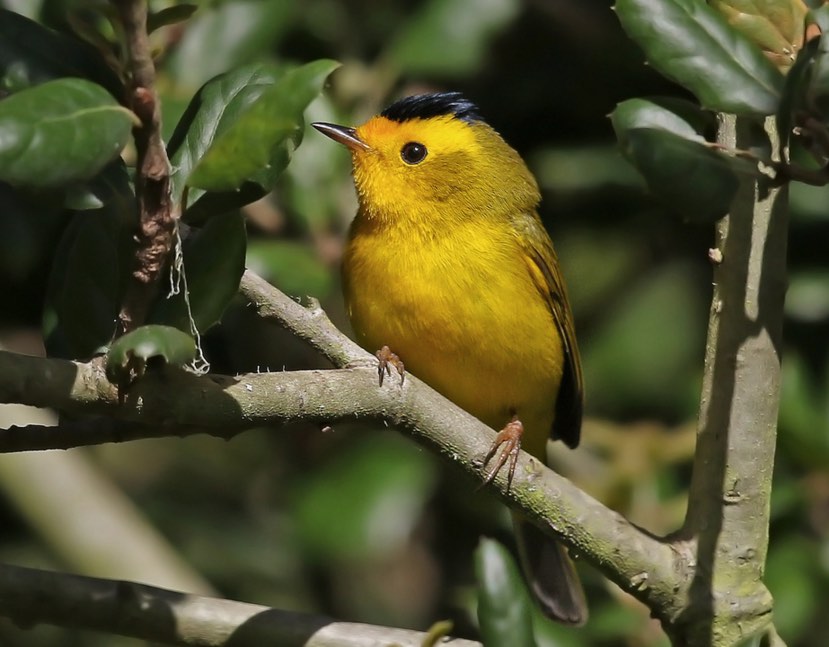
Wilson’s Warbler. Matt Davis/Macaulay Library. 25 Mar 2016. eBird S28542055
West
Light to moderate flights were aloft on the weekend from the Pacific Northwest south and east through California and the Desert Southwest. But a rather strong low pressure system moving across the West, responsible for substantial snow and rain, shut down migration on Monday and Tuesday. With this system’s passage to the east, migration returned along the Pacific Coast as more favorable winds west of the Sierras allowed light to locally moderate flights. Movements were mostly coastal through the end of the period, with birds aloft in particular over western Oregon and Washington and the Central Valley of California.
Top Movers
[expand title=”Increasing” tag=”h3″]
[table sort=”,desc” tablesorter=”true”]
Species,Increase from Last Week[attr style=”color:green”],% of Checklists Reporting
Common Grackle,254%,1.6
Black-headed Grosbeak,313%,1.2
Osprey,51%,6.1
Franklin’s Gull,601%,0.9
Orange-crowned Warbler,35%,11.3
Western Kingbird,47%,3
Bullock’s Oriole,56%,2.4
Violet-green Swallow,32%,10.6
Pacific-slope Flycatcher,39%,3.4
Black-throated Gray Warbler,57%,1.7
Barn Swallow,24%,5.5
Wilson’s Warbler,37%,2.8
Cliff Swallow,25%,4.8
Bonaparte’s Gull,60%,1.3
Brown Creeper,29%,5.5
Common Loon,44%,2.7
Caspian Tern,33%,2
Double-crested Cormorant,17%,17.6
Brant,73%,1.8
Warbling Vireo,37%,1.7
Scott’s Oriole,65%,0.8
Pelagic Cormorant,49%,3
[/table]
[/expand]
[expand title=”Decreasing” tag=”h3″]
[table sort=”,asc” tablesorter=”true”]
Species,Decrease from Last Week[attr style=”color:red”],% of Checklists Reporting
Tundra Swan,-43%,0.5
Heermann’s Gull,-51%,0.2
Mountain Chickadee,-22%,3.6
Greater White-fronted Goose,-26%,1.2
Ruby-crowned Kinglet,-18%,12.6
Canvasback,-21%,2.3
Northern Pintail,-16%,4.4
Cattle Egret,-32%,0.4
Black Vulture,-39%,0.3
Ferruginous Hawk,-35%,0.4
Vesper Sparrow,-24%,1
Pacific Loon,-23%,0.5
Herring Gull,-26%,1.3
Rock Wren,-19%,1.5
Black-tailed Gnatcatcher,-23%,1.5
Loggerhead Shrike,-12%,1.7
Northern Harrier,-11%,7.7
White-faced Ibis,-25%,0.9
American Wigeon,-8%,12.4
Eurasian Wigeon,-21%,0.5
Common Goldeneye,-8%,6.9
[/table]
[/expand]
–––––––––––––––––––––––––––––––––––
Farnsworth and Van Doren
Scientific Team
BirdCast is made possible by the participating scientists at the below institutions, and many other contributors.