


Regional Migration Analysis: 16-23 September 2016
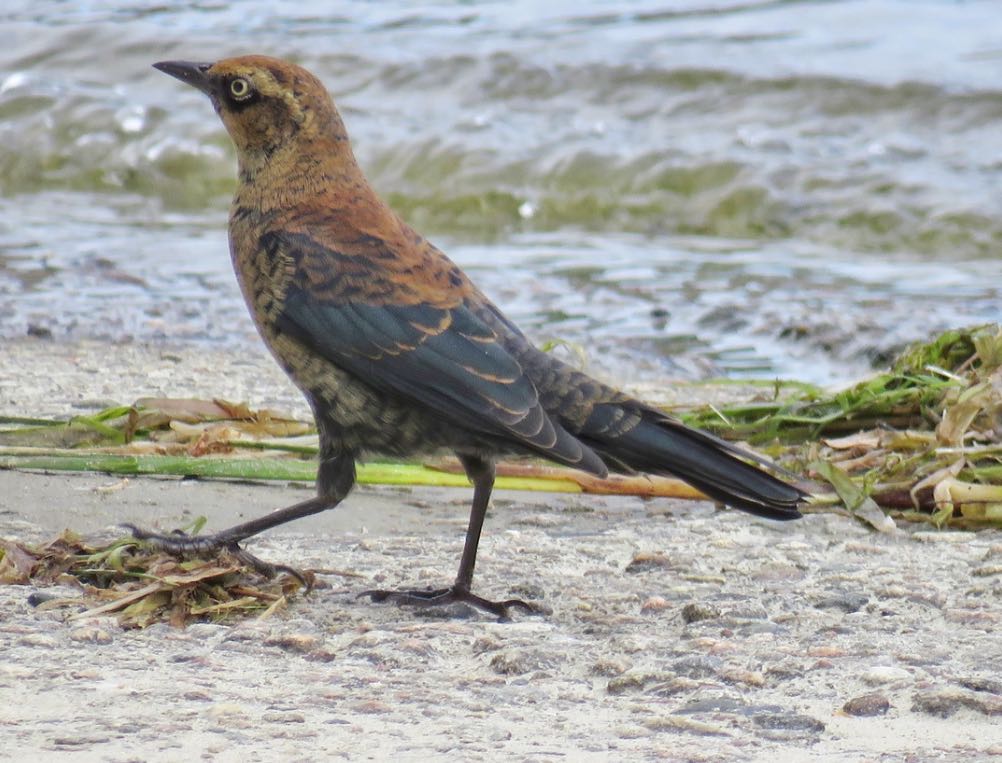
Rusty Blackbird. Lisa Cancade Hackett/Macaulay Library. eBird S31641571
Continental Summary
Moderate to heavy movements were the norm for the East this period, featuring Sharp-shinned Hawk, Merlin, Gray-cheeked Thrush, Swainson’s Thrush, Ruby-crownd Kinglet, Rusty Blackbird, Rose-breasted Grosbeak, Harris’s Sparrow, and Nelson’s Sparrow, while the West experienced moderate movements primarily early in the forecast period that featured Cackling Goose, Greater White-fronted Goose, Hooded Merganser, Dunlin, Herring Gull, Varied Thrush, Ruby-crowned Kinglet, Yellow-rumped Warbler, and Golden-crowned Sparrow.
Curious what birds will move next? Check out our forecast.
[animation name=”analysis-16-23-september-2016″]
Need a review of our definitions for regions, species on the move, and migration amounts? Please visit this link.
Quick Links to Regions
Upper Midwest and Northeast |
Gulf Coast and Southeast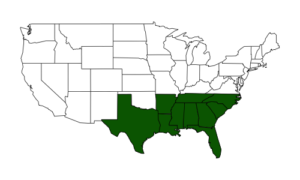 |
Great Plains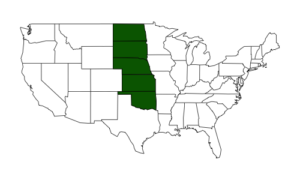 |
West |
Upper Midwest and Northeast
Moderate to heavy movements kicked off the period in the Midwest, while the remainder of the region was mostly quiet. But Monday night saw more widespread moderate flights as more favorable conditions for migration spread across the region. This intensity of movement continued, but became increasingly restricted to the Appalachians and Atlantic Coast by Wednesday night as a significant disturbance moved through the Upper Midwest. With unsettled weather still spread across the region, the period ended with a similar spread variety of migration intensities, the highest of which were in the Upper Midwest and mid Atlantic states.
Top Movers
[expand title=”Increasing” tag=”h3″]
[table sort=”,desc” tablesorter=”true”]
Species,Increase from Last Week[attr style=”color:green”],% of Checklists Reporting
Yellow-rumped Warbler,110%,10
Ruby-crowned Kinglet,108%,3.4
Blue-headed Vireo,66%,3.9
White-throated Sparrow,53%,5.6
Lincoln’s Sparrow,65%,3.1
Palm Warbler,48%,10.7
Swamp Sparrow,47%,4.6
American Pipit,71%,1.8
Yellow-bellied Sapsucker,51%,3.3
White-crowned Sparrow,245%,0.6
Eastern Phoebe,20%,24.1
Gray-cheeked Thrush,41%,2.4
Savannah Sparrow,34%,4
Rusty Blackbird,195%,0.4
Blackpoll Warbler,23%,7.4
Ruddy Duck,90%,0.8
Sora,84%,0.8
Lapland Longspur,331%,0.2
Long-billed Dowitcher,78%,0.7
Parasitic Jaeger,77%,0.7
Eastern Bluebird,14%,12.3
Northern Flicker,12%,34
Brown Thrasher,20%,7.3
Song Sparrow,14%,26.2
Nelson’s Sparrow,168%,0.3
[/table]
[/expand]
[expand title=”Decreasing” tag=”h3″]
[table sort=”,asc” tablesorter=”true”]
Species,Decrease from Last Week[attr style=”color:red”],% of Checklists Reporting
Warbling Vireo,-65%,2.1
Blue-gray Gnatcatcher,-64%,1.4
Great Crested Flycatcher,-65%,1.1
Barn Swallow,-61%,2
Ruby-throated Hummingbird,-35%,12.7
Blue-winged Warbler,-69%,0.3
Forster’s Tern,-44%,2.1
Black Tern,-79%,0.1
Chestnut-sided Warbler,-34%,4.2
Eastern Wood-Pewee,-23%,11.8
Black Skimmer,-70%,0.2
Canada Warbler,-59%,0.4
Common Tern,-43%,1.4
Semipalmated Sandpiper,-37%,2.9
Yellow-throated Vireo,-34%,2.6
Semipalmated Plover,-33%,3.7
Least Sandpiper,-28%,5.6
Eastern Kingbird,-69%,0.4
Red-necked Phalarope,-85%,0
Sanderling,-31%,2.7
Veery,-40%,1.1
Baltimore Oriole,-50%,1
Least Flycatcher,-36%,1.6
Green Heron,-23%,5.8
[/table]
[/expand]
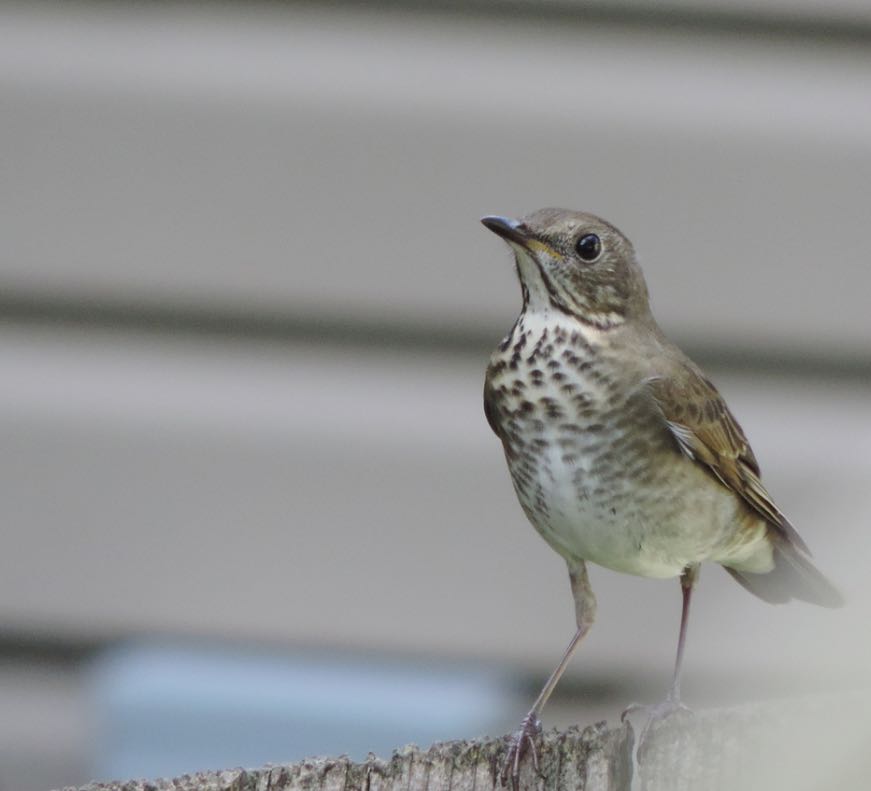
Gray-cheeked Thrush. Marion Miller/Macaulay Library. eBird S31642811
Gulf Coast and Southeast
Increasing but still scattered light to moderate flights started the period. But with the arrival of more favorable migration conditions on Sunday and Monday nights, more intense movements took flight including heavy to very heavy movements between the Mississippi River Valley and the southern Appalachians. Following these large movements intensities waned, despite maintaining their more regional extents, for the remainder of the work week. Generally, the southern Appalachians continued to be the most active areas to end the period.
Top Movers
[expand title=”Increasing” tag=”h3″]
[table sort=”,desc” tablesorter=”true”]
Species,Increase from Last Week[attr style=”color:green”],% of Checklists Reporting
Rose-breasted Grosbeak,307%,5.4
Palm Warbler,184%,5.1
Swainson’s Thrush,109%,7.1
Gray-cheeked Thrush,210%,1.7
Magnolia Warbler,41%,8.7
Common Yellowthroat,30%,13.5
Gray Catbird,35%,11.3
Philadelphia Vireo,164%,1.2
Tennessee Warbler,44%,5.2
Wood Thrush,81%,2.9
Seaside Sparrow,144%,0.8
Song Sparrow,42%,4.3
American Redstart,19%,17
Merlin,49%,2
Scarlet Tanager,29%,5
Blue-headed Vireo,48%,1.9
Bay-breasted Warbler,71%,0.8
Brown Thrasher,17%,17.9
Northern Flicker,19%,7.8
Sharp-shinned Hawk,46%,1.7
Red-breasted Nuthatch,37%,1.4
Ruby-crowned Kinglet,66%,0.5
Eastern Bluebird,13%,17.8
[/table]
[/expand]
[expand title=”Decreasing” tag=”h3″]
[table sort=”,asc” tablesorter=”true”]
Species,Decrease from Last Week[attr style=”color:red”],% of Checklists Reporting
Common Nighthawk,-62%,1.1
Black Tern,-72%,0.4
Eastern Kingbird,-48%,3.4
Baltimore Oriole,-42%,3.8
Great Crested Flycatcher,-32%,4.5
Olive-sided Flycatcher,-64%,0.4
Solitary Sandpiper,-51%,0.9
Pectoral Sandpiper,-41%,1.6
Buff-breasted Sandpiper,-76%,0.1
Semipalmated Sandpiper,-40%,1.6
Barn Swallow,-31%,7.1
American Golden-Plover,-97%,0
Purple Martin,-52%,0.8
White-winged Dove,-22%,9
Lesser Black-backed Gull,-48%,0.6
Least Sandpiper,-21%,5.8
Caspian Tern,-29%,2.3
Prothonotary Warbler,-37%,1.4
American Avocet,-41%,1
Spotted Sandpiper,-25%,3.8
Kentucky Warbler,-37%,0.9
Lesser Yellowlegs,-29%,2.2
Black-necked Stilt,-33%,1.9
Mississippi Kite,-46%,0.8
[/table]
[/expand]
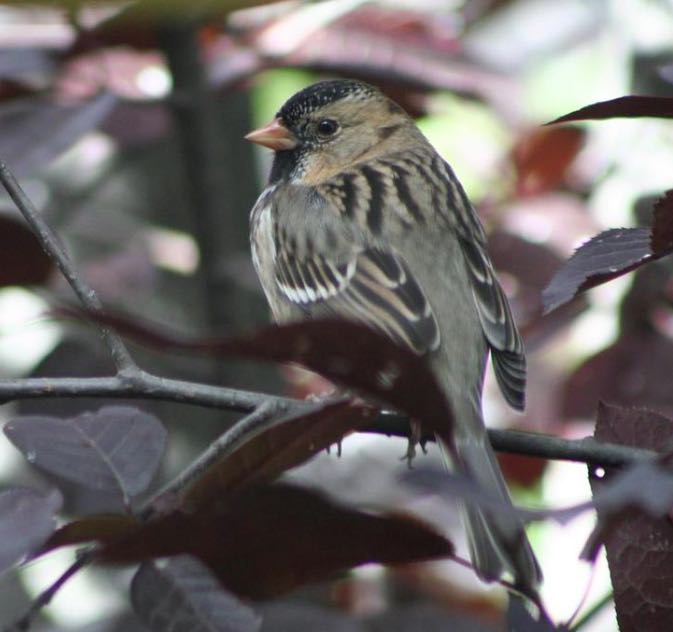
Harris’s Sparrow. John Corden/Macaulay Library. eBird S31583192
Great Plains
A moderate to heavy flight night on Friday and a locally heavy northern Plains flight onSunday were the highlights of the weekend. Locally moderate to heavy flights punctuated the work week, but scattered precipitation that was party to an unsettled atmospheric scene kept movements from reaching regional or even sub-regional extents.
Top Movers
[expand title=”Increasing” tag=”h3″]
[table sort=”,desc” tablesorter=”true”]
Species,Increase from Last Week[attr style=”color:green”],% of Checklists Reporting
Horned Grebe,12281%,1.4
American Wigeon,150%,4.9
American Golden-Plover,-12141%,1.3
Northern Mockingbird,155%,13.5
Chimney Swift,86%,16.5
American White Pelican,45%,23.6
Northern Pintail,79%,5.1
Western Grebe,71%,3.5
Double-crested Cormorant,35%,23.7
Northern Harrier,47%,8
White-crowned Sparrow,63%,2.5
Northern Shoveler,38%,11.2
Ring-necked Pheasant,56%,5
Dark-eyed Junco,70%,2.5
American Kestrel,37%,14.2
Ruddy Duck,42%,5
Great Egret,21%,26.8
Harris’s Sparrow,141%,0.8
Cassin’s Kingbird,1568%,0.5
Common Loon,131%,1.1
[/table]
[/expand]
[expand title=”Decreasing” tag=”h3″]
[table sort=”,asc” tablesorter=”true”]
Species,Decrease from Last Week[attr style=”color:red”],% of Checklists Reporting
Great Crested Flycatcher,-98%,0.1
Warbling Vireo,-67%,2.7
Eastern Wood-Pewee,-66%,3.1
Mississippi Kite,-79%,1.1
Swainson’s Thrush,-75%,1.3
Tennessee Warbler,-88%,0.4
Blue-gray Gnatcatcher,-67%,1.9
Brown Thrasher,-52%,6.7
Olive-sided Flycatcher,-73%,0.8
Red-eyed Vireo,-50%,4.5
Yellow Warbler,-55%,3.6
American Redstart,-62%,1.7
Eastern Kingbird,-74%,1.2
Northern Rough-winged Swallow,-64%,1.4
Semipalmated Plover,-68%,0.7
Hairy Woodpecker,-40%,7
Black Tern,-62%,1.1
Caspian Tern,-62%,1.1
Gray Catbird,-34%,9.7
Downy Woodpecker,-30%,21.8
Least Flycatcher,-45%,3.5
Bell’s Vireo,-75%,0.5
Nashville Warbler,-41%,5.7
White-breasted Nuthatch,-27%,16.8
Red-bellied Woodpecker,-30%,18.5
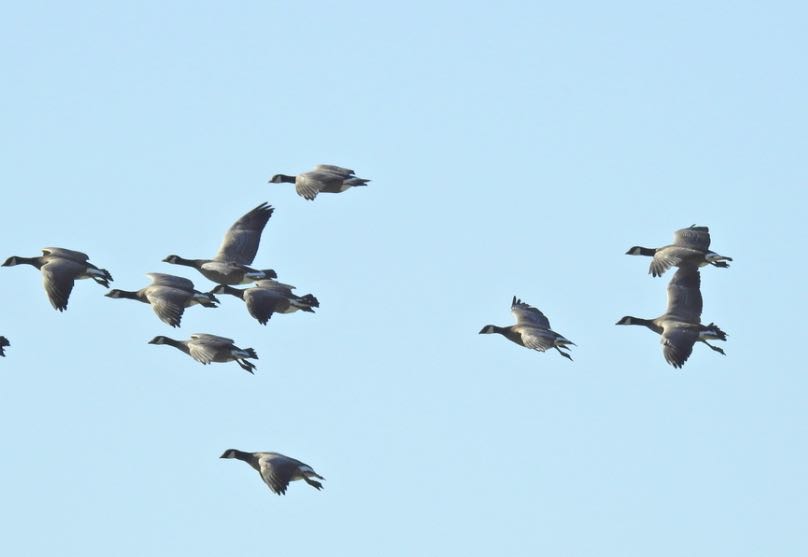
Cackling Goose. Jody Wells/Macaulay Library. eBird S31713652
West
Light to moderate flights were apparent across the region for much of the weekend. This was particularly true for the Central Valley of California, the area around the Great Salt Lake, and parts of the Pacific Northwest and northern Rockies. By the beginning of the work week, intensities and extents of migration had decreased, with most of the action along the Pacific Coast for the remainder of the period. This included nice flights in the Pacific Northwest on Tuesday night and in California on Wednesday and Thursday nights.
Top Movers
[expand title=”Increasing” tag=”h3″]
[table sort=”,desc” tablesorter=”true”]
Species,Increase from Last Week[attr style=”color:green”],% of Checklists Reporting
Golden-crowned Sparrow,126%,8.7
Cackling Goose,227%,1.3
Ruby-crowned Kinglet,35%,8.3
Fox Sparrow,44%,5
American Wigeon,30%,6.6
White-crowned Sparrow,16%,22.8
Greater White-fronted Goose,98%,1.4
Band-tailed Pigeon,35%,4.6
Yellow-rumped Warbler,15%,15.9
Northern Flicker,13%,29.3
Golden-crowned Kinglet,22%,4.9
Horned Grebe,52%,1.8
Hooded Merganser,75%,1.5
Dunlin,89%,0.7
Eared Grebe,19%,4.2
Say’s Phoebe,11%,9.2
Ring-necked Duck,26%,2.1
Lincoln’s Sparrow,12%,7.8
Varied Thrush,71%,0.5
Glaucous-winged Gull,17%,4.4
Herring Gull,38%,0.9
[/table]
[/expand]
[expand title=”Decreasing” tag=”h3″]
[table sort=”,asc” tablesorter=”true”]
Species,Decrease from Last Week[attr style=”color:red”],% of Checklists Reporting
Red-necked Phalarope,-52%,1.4
Willow Flycatcher,-42%,2
Warbling Vireo,-38%,3.1
Bank Swallow,-68%,0.3
Barn Swallow,-32%,12.2
MacGillivray’s Warbler,-40%,1.8
Dusky Flycatcher,-72%,0.2
Baird’s Sandpiper,-59%,0.7
Western Kingbird,-48%,1.4
Gray Catbird,-48%,0.8
Rufous Hummingbird,-51%,0.9
Western Wood-Pewee,-33%,4.2
Black-headed Grosbeak,-48%,1.1
Brewer’s Sparrow,-35%,1.5
Green-tailed Towhee,-37%,1.8
Clay-colored Sparrow,-50%,0.5
Solitary Sandpiper,-58%,0.4
Wilson’s Warbler,-25%,11.4
Swainson’s Thrush,-30%,1.7
Yellow Warbler,-22%,9.8
White-faced Ibis,-24%,3.3
Western Tanager,-20%,6.5
Wilson’s Phalarope,-53%,0.4
[/table]
[/expand]
–––––––––––––––––––––––––––––––––––
Farnsworth and Van Doren
Scientific Team
BirdCast is made possible by the participating scientists at the below institutions, and many other contributors.