


Regional Migration Analysis: 13-20 November 2015
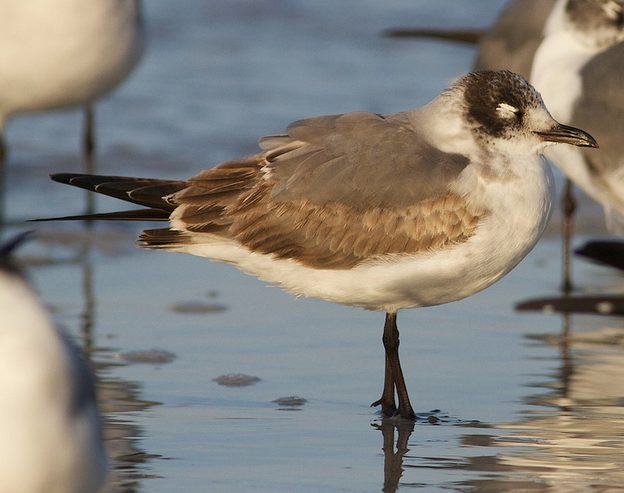
Franklin’s Gull, Tom Johnson
Continental Summary
A quiet late season week in the West saw primarily scattered light movements, while a wild post-frontal passage ride of Franklin’s Gulls and Cave Swallows in the Northeast highlighted the period’s primarily localized light to moderate flights.
Curious what birds will move next? Check out our forecast.
[animation name=”analysis-13-20-november-2015″]
Need a review of our definitions for regions, species on the move, and migration amounts? Please visit this link.
Quick Links to Regions
Upper Midwest and Northeast |
Gulf Coast and Southeast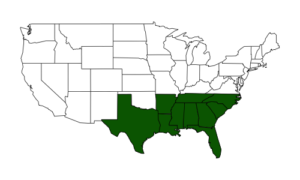 |
Great Plains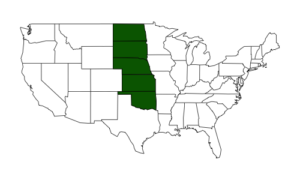 |
West |
Upper Midwest and Northeast
After the passage of a strong cold front on Friday through the region, remaining showers and unsettled weather kept movements primarily local and light to moderate for the weekend. Two localized moderate flights on the coast highlighted the early week, but another strong frontal boundary moving into the region kept most other movements to a minimum. By Thursday night scattered light to moderate flights were aloft primarily west of the Appalachians and south of the Great Lakes; precipitation kept birds farther north and east grounded.
Top Movers
[expand title=”Increasing” tag=”h3″]
[table sort=”,desc” tablesorter=”true”]
Species,Increase from Last Week[attr style=”color:green”],% of Checklists Reporting
Hooded Merganser,30%,10
Fish Crow,43%,4.2
Tundra Swan,46%,2.1
Purple Finch,22%,6
Ross’s Goose,250%,0.3
Snow Goose,68%,1.7
Red-throated Loon,15%,3.7
Great Black-backed Gull,14%,12.2
American Tree Sparrow,13%,11.1
Herring Gull,6%,23.7
Common Eider,20%,2.6
Ring-billed Gull,9%,34.2
Yellow-bellied Sapsucker,32%,4.8
Tufted Titmouse,15%,28.1
Harlequin Duck,41%,0.7
Franklin’s Gull,30%,1.9
[/table]
[/expand]
[expand title=”Decreasing” tag=”h3″]
[table sort=”,asc” tablesorter=”true”]
Species,Decrease from Last Week[attr style=”color:red”],% of Checklists Reporting
Greater Yellowlegs,-40%,1.9
Wilson’s Snipe,-53%,0.5
Lark Sparrow,-89%,0
Tree Swallow,-67%,0.4
Killdeer,-30%,3.3
Red-headed Woodpecker,-35%,1.2
Hudsonian Godwit,-68%,0.1
Black-bellied Plover,-37%,1
Lesser Yellowlegs,-60%,0.2
Wood Duck,-26%,3.3
Osprey,-56%,0.3
Red-winged Blackbird,-14%,13
Nelson’s Sparrow,-81%,0
Great Egret,-35%,1.4
Dunlin,-29%,2.1
Pied-billed Grebe,-16%,7.5
Northern Shrike,-43%,0.2
Savannah Sparrow,-21%,2.3
[/table]
[/expand]
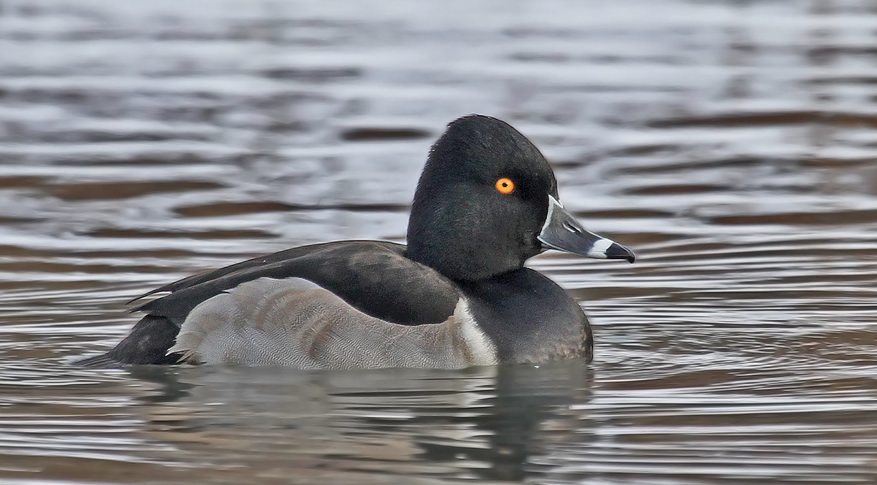
Ring-necked Duck, Ryan Schain
Gulf Coast and Southeast
Light to moderate flights on the weekend became increasingly sparse as the work week approached. And with the arrival of the work week, localized light flights punctuated a mostly quiet region as a new frontal boundary formed and approached in Texas. The low pressure system driving the front sat over the Mississippi River by Tuesday night, with light to moderate flights following in its wake over Texas. And these flights built in extent to end the period, with more widespread moderate flights on Thursday night in most areas away from southern Texas and peninsular Florida.
Top Movers
[expand title=”Increasing” tag=”h3″]
[table sort=”,desc” tablesorter=”true”]
Species,Increase from Last Week[attr style=”color:green”],% of Checklists Reporting
Bufflehead,113%,3.7
Hooded Merganser,86%,4.6
Lesser Scaup,63%,4.8
Ring-billed Gull,40%,10.8
Red-breasted Merganser,94%,1.6
Lesser Black-backed Gull,93%,1.8
American Goldfinch,18%,15.8
Common Loon,38%,2.9
Wood Stork,24%,8.5
Ring-necked Duck,26%,6.9
Canvasback,46%,1.6
Northern Shoveler,24%,8.4
Green-winged Teal,26%,6
Bald Eagle,18%,10.3
Bonaparte’s Gull,39%,1.7
Black Scoter,57%,0.9
Mallard,17%,11.4
Ferruginous Hawk,215%,0.3
Red Knot,52%,1.1
Northern Gannet,26%,1.6
[/table]
[/expand]
[expand title=”Decreasing” tag=”h3″]
[table sort=”,asc” tablesorter=”true”]
Species,Decrease from Last Week[attr style=”color:red”],% of Checklists Reporting
Barn Swallow,-75%,0.9
Black-throated Green Warbler,-64%,0.5
Tennessee Warbler,-91%,0.1
White-eyed Vireo,-45%,3.6
Scissor-tailed Flycatcher,-41%,2.3
Indigo Bunting,-43%,2.1
Wilson’s Warbler,-61%,0.5
Common Yellowthroat,-32%,6.6
Nashville Warbler,-66%,0.4
Magnolia Warbler,-90%,0.1
[/table]
[/expand]
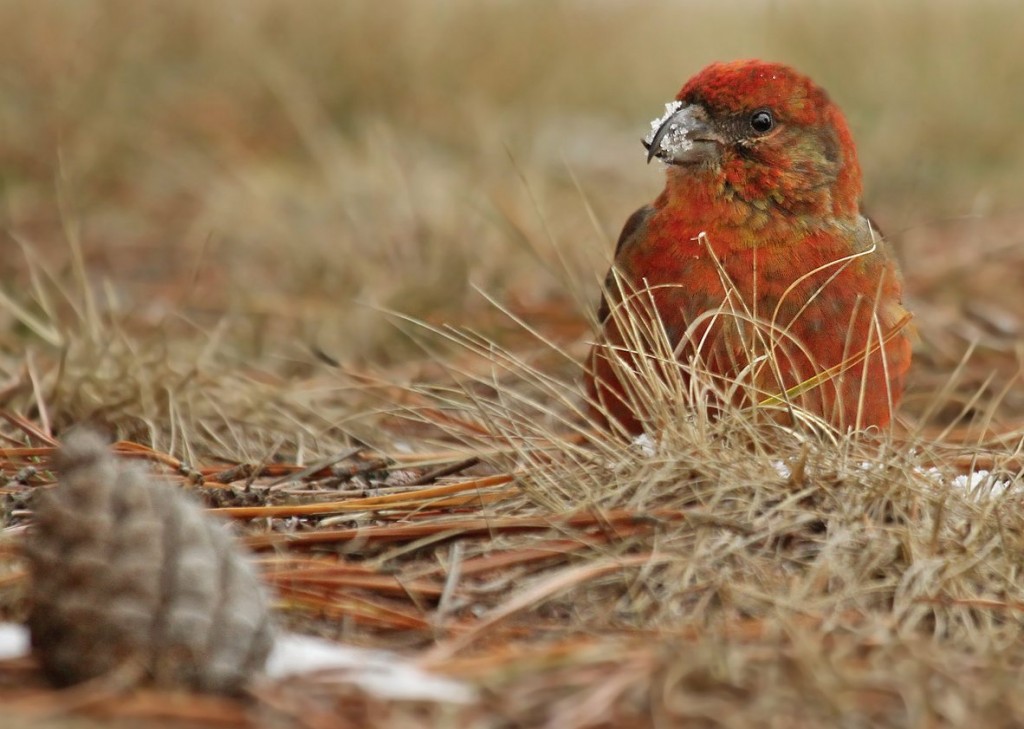
Red Crossbill, Ryan Schain
Great Plains
With the exception of locally moderate flights in the central and southern Plains to end the period, most of the region was quiet during this week. After southerly flow built in early in the week, a substantially passing disturbance moved across the region, both of which contributed to the dearth of passing migrants.
Top Movers
[expand title=”Increasing” tag=”h3″]
[table sort=”,desc” tablesorter=”true”]
Species,Increase from Last Week[attr style=”color:green”],% of Checklists Reporting
Cackling Goose,47%,8.4
Common Goldeneye,75%,5.3
Bufflehead,42%,14.9
Hooded Merganser,34%,12.5
Lesser Scaup,26%,15.8
Snow Goose,27%,10
Purple Finch,34%,4.9
Canvasback,20%,8.4
Red Crossbill,109%,0.6
Rusty Blackbird,44%,2
Prairie Falcon,77%,0.7
Ross’s Goose,32%,3
Red-breasted Merganser,16%,4.8
Eared Grebe,62%,3.3
Snowy Owl,30%,2.1
Bonaparte’s Gull,16%,9
Redhead,13%,18
Pine Warbler,70%,0.5
Red-headed Woodpecker,28%,2.6
Mallard,8%,37.9
Ruddy Duck,10%,17.8
Smith’s Longspur,46%,0.7
[/table]
[/expand]
[expand title=”Decreasing” tag=”h3″]
[table sort=”,asc” tablesorter=”true”]
Species,Decrease from Last Week[attr style=”color:red”],% of Checklists Reporting
Le Conte’s Sparrow,-86%,0.2
Great Egret,-64%,1
Franklin’s Gull,-41%,5.6
White-crowned Sparrow,-40%,4.8
Orange-crowned Warbler,-94%,0.1
Lincoln’s Sparrow,-61%,0.9
Rough-legged Hawk,-48%,1.5
Wilson’s Snipe,-67%,0.4
American Pipit,-46%,1.4
Song Sparrow,-24%,10.9
Osprey,-64%,0.6
Vesper Sparrow,-86%,0.1
White-winged Dove,-69%,0.1
Greater Yellowlegs,-39%,1.5
Yellow-rumped Warbler,-24%,11.6
Blue-winged Teal,-78%,0.2
Ruby-crowned Kinglet,-33%,4.6
Swamp Sparrow,-52%,0.8
Pied-billed Grebe,-16%,15.4
Savannah Sparrow,-34%,3.1
Killdeer,-21%,9.8
Eastern Meadowlark,-28%,4
[/table]
[/expand]
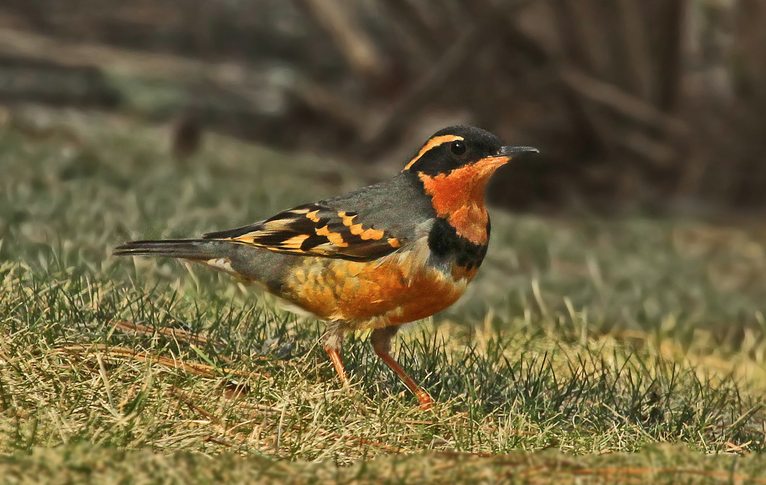
Varied Thrush, Ryan Schain
West
Away from scattered light and locally moderate flights from the Central Valley south and east through the Desert Southwest, the region was mostly quiet for this very late season period. Several areas of precipitation passed through the region, particularly intense in the Pacific Northwest.
Top Movers
[expand title=”Increasing” tag=”h3″]
[table sort=”,desc” tablesorter=”true”]
Species,Increase from Last Week[attr style=”color:green”],% of Checklists Reporting
Common Goldeneye,65%,3.8
White-faced Ibis,53%,2.6
Lesser Scaup,29%,6.6
Varied Thrush,51%,4.5
Tundra Swan,36%,1.9
Loggerhead Shrike,21%,4.7
Bufflehead,17%,18.7
Brant,38%,1.4
Dunlin,23%,3.7
Prairie Falcon,26%,1.6
Sanderling,21%,2.6
Ruddy Duck,11%,13.1
Least Sandpiper,13%,6.1
Brewer’s Blackbird,11%,10.2
Lark Sparrow,19%,2.1
Red-breasted Merganser,14%,5
Hooded Merganser,13%,6.8
Pigeon Guillemot,51%,1.1
Mountain Plover,142%,0.2
[/table]
[/expand]
[expand title=”Decreasing” tag=”h3″]
[table sort=”,asc” tablesorter=”true”]
Species,Decrease from Last Week[attr style=”color:red”],% of Checklists Reporting
Cassin’s Vireo,-95%,0
Snow Bunting,-72%,0
Rough-legged Hawk,-29%,1.2
Cassin’s Finch,-37%,0.3
Mountain Chickadee,-19%,5.5
Black-throated Gray Warbler,-40%,0.5
Harris’s Sparrow,-91%,0
Elegant Tern,-15%,1.9
Common Redpoll,-32%,0.3
Summer Tanager,-89%,0
Bohemian Waxwing,-52%,0.1
[/table]
[/expand]
–––––––––––––––––––––––––––––––––––
Farnsworth and Van Doren
Scientific Team
BirdCast is made possible by the participating scientists at the below institutions, and many other contributors.