


Regional Migration Analysis: 1-8 April 2016
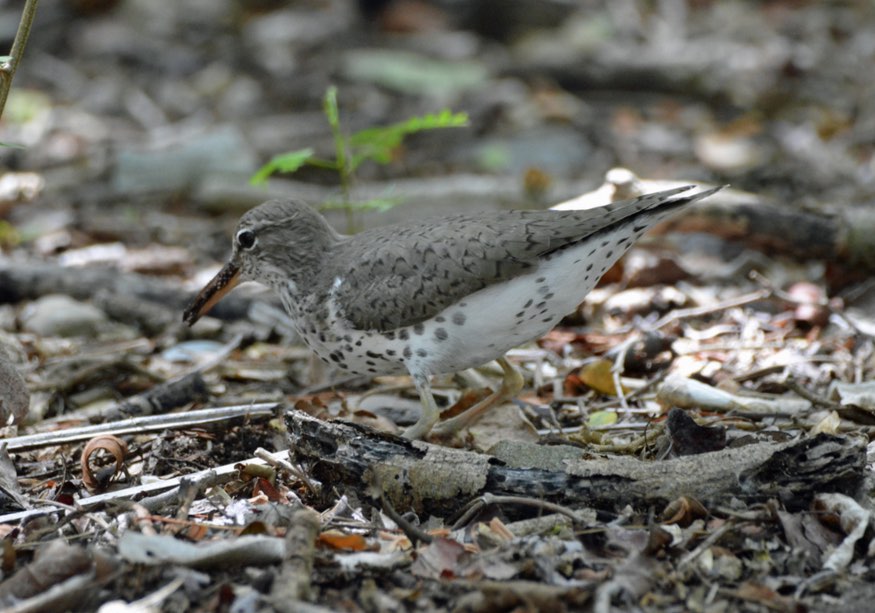
Spotted Sandpiper. Eileen Bennett/Macaulay Library. 5 Apr 2016. eBird S28758385
Continental Summary
Moderate movements including White-faced Ibis, Swainson’s Hawk, Nashville Warbler, MacGillivray’s Warbler, Lazuli Bunting, and Black-headed Grosbeak highlighted the period in the West, particularly along the Pacific Coast and in the Desert Southwest, while moderate to locally heavy movements featuring Spotted Sandpiper, Yellow-billed Cuckoo, Chimney Swift, Red-eyed Vireo, Cliff Swallow, Northern Parula, and Blue Grosbeak graced the southern reaches of the East.
Curious to know what species will be on the move in the coming week? Check out the forecast.
[animation name=”1-8-april-2016-analysis”]
Need a review of our definitions for regions, species on the move, and migration amounts? Please visit this link.
Quick Links to Regions
Upper Midwest and Northeast |
Gulf Coast and Southeast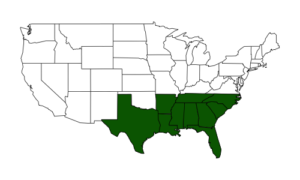 |
Great Plains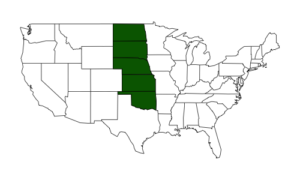 |
West |
Upper Midwest and Northeast
A much cooler than normal air mass took up residence in the region to begin the week, at times associated with precipitation and extensive precipitation at that. This all but shut down migration for most areas, with the only hints of light to locally moderate flights on Sunday night in the Midwest. Similarly distributed movements occurred in the same areas on Tuesday night, again in stark contrast with a generally unfavorable suite of conditions elsewhere in the region. A strong frontal passage ended the period, basically the unfavorable conditions through the work week.
Top Movers
[expand title=”Increasing” tag=”h3″]
[table sort=”,desc” tablesorter=”true”]
Species,Increase from Last Week[attr style=”color:green”],% of Checklists Reporting
Barn Swallow,163%,3.2
Hermit Thrush,119%,4.7
Ruby-crowned Kinglet,106%,6
Northern Rough-winged Swallow,97%,4.3
Common Loon,80%,8.3
Yellow-bellied Sapsucker,57%,7.4
Northern Parula,679%,0.5
Blue-gray Gnatcatcher,71%,3.2
Chipping Sparrow,33%,11.4
Palm Warbler,82%,1.2
Snowy Egret,85%,1.4
Caspian Tern,110%,0.8
American Pipit,101%,1.2
Yellow-rumped Warbler,38%,6.7
Savannah Sparrow,46%,2.4
Yellow-throated Warbler,63%,1.2
Great Egret,35%,4.6
Spotted Sandpiper,396%,0.2
Little Blue Heron,167%,0.2
Chimney Swift,490%,0.1
Bonaparte’s Gull,35%,4.3
Fox Sparrow,32%,7.7
Cliff Swallow,210%,0.2
Double-crested Cormorant,22%,12.1
[/table]
[/expand]
[expand title=”Decreasing” tag=”h3″]
[table sort=”,asc” tablesorter=”true”]
Species,Decrease from Last Week[attr style=”color:red”],% of Checklists Reporting
American Woodcock,-44%,0.8
Eastern Bluebird,-16%,12.2
Canvasback,-36%,0.8
Tundra Swan,-59%,0.3
Eastern Meadowlark,-18%,4.9
American Wigeon,-21%,3.2
Red-shouldered Hawk,-20%,2.9
Harlequin Duck,-77%,0
Gadwall,-17%,5.2
Ring-necked Duck,-13%,8.9
Northern Pintail,-35%,1.2
Killdeer,-13%,14.8
Great Horned Owl,-25%,1.2
Greater White-fronted Goose,-56%,0.3
Common Goldeneye,-27%,1.8
Snowy Owl,-65%,0.1
Eastern Phoebe,-14%,19.5
Sandhill Crane,-16%,3.9
Turkey Vulture,-8%,24.9
[/table]
[/expand]
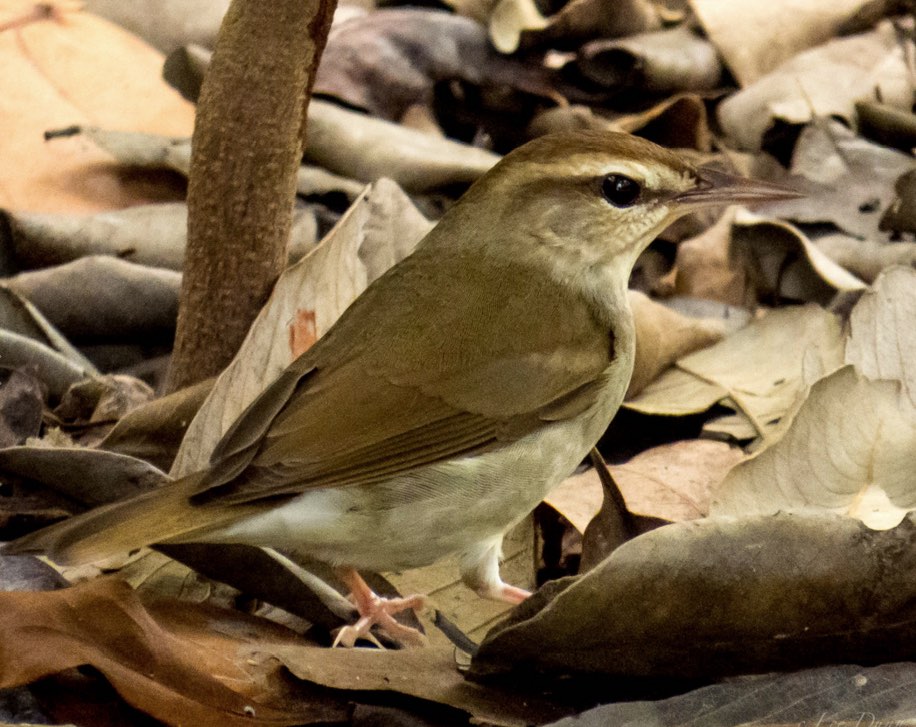
Swainson’s Warbler. Lee Dunn/Macaulay Library. 25 Mar 2016. eBird S28535377
Gulf Coast and Southeast
The passage of a strong cold front kept most of the region on the lighter side of migration intensity for Friday and Saturday nights; however, extensive moderate to locally heavy flights returned on Sunday night from Brownsville north and east through the Florida Panhandle. Similar intensity and extent were apparent for movements in the region through Wednesday night. But Thursday saw the passage of another frontal boundary, significantly restricting the region’s flights to primarily coastal locations and the southeastern coastal plain. These movements in Georgia and Florida were slightly more intense, with birds taking advantage of favorable migration conditions in advance of the approaching frontal boundary. The period ended with scattered light to moderate flights, primarily in Texas and portions of the southern Appalachians.
Top Movers
[expand title=”Increasing” tag=”h3″]
[table sort=”,desc” tablesorter=”true”]
Species,Increase from Last Week[attr style=”color:green”],% of Checklists Reporting
Yellow-billed Cuckoo,160%,2.2
Red-eyed Vireo,87%,6.6
Great Crested Flycatcher,70%,10.8
Orchard Oriole,122%,2.8
Eastern Kingbird,56%,5.8
Summer Tanager,72%,3.7
Chimney Swift,48%,8.7
Indigo Bunting,66%,4.3
Blue Grosbeak,197%,1.1
Swainson’s Hawk,66%,3.1
Tennessee Warbler,77%,1.4
Swainson’s Thrush,146%,1.1
Wood Thrush,89%,1.4
Prothonotary Warbler,44%,4.3
Brown-crested Flycatcher,972%,0.5
Least Tern,36%,4
Swainson’s Warbler,155%,0.7
Black-throated Green Warbler,42%,3.3
Scarlet Tanager,149%,0.7
Solitary Sandpiper,36%,3.9
Upland Sandpiper,52%,1.9
Kentucky Warbler,93%,0.8
Hooded Warbler,17%,6.8
Northern Rough-winged Swallow,19%,11.5
White-eyed Vireo,15%,21.5
[/table]
[/expand]
[expand title=”Decreasing” tag=”h3″]
[table sort=”,asc” tablesorter=”true”]
Species,Decrease from Last Week[attr style=”color:red”],% of Checklists Reporting
American Kestrel,-41%,3.4
Dark-eyed Junco,-34%,3.1
Hermit Thrush,-30%,3.6
Golden-crowned Kinglet,-65%,0.4
American Wigeon,-38%,1.1
Green-winged Teal,-28%,2.4
Northern Flicker,-23%,5.2
Eastern Meadowlark,-23%,6
Black Skimmer,-31%,2.2
Northern Harrier,-23%,3.2
Forster’s Tern,-26%,5.4
Yellow-bellied Sapsucker,-29%,2.3
Herring Gull,-20%,3.5
Ring-necked Duck,-53%,0.7
Tree Swallow,-18%,10.5
Gadwall,-25%,2.7
Ring-billed Gull,-20%,7
American Bittern,-35%,0.7
Swamp Sparrow,-17%,4.4
Eastern Phoebe,-15%,10.6
[/table]
[/expand]
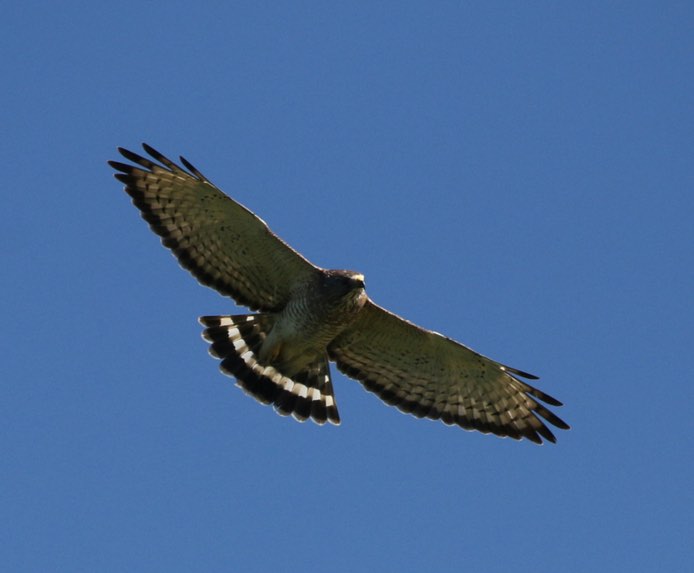
Broad-winged Hawk. James Rieman/Macaulay Library. 5 Apr 2016. eBird S28769302
Great Plains
Locally moderate movements, first on Saturday in the northern Plains and then on Sunday in the souther Plains, were the highlights of the region’s otherwise lackluster weekend migration. Generally cold temperatures associated with the oft-mentioned anomalous polar vortex kept migrants grounded in most places. Monday night saw the first break in conditions, allowing widespread light and locally moderate flights across the Plains. But this break in the doldrums was brief, as another passing low pressure system ushered in a new wave of cool air and northerly flow unfavorable for the season’s movers.
Top Movers
[expand title=”Increasing” tag=”h3″]
[table sort=”,desc” tablesorter=”true”]
Species,Increase from Last Week[attr style=”color:green”],% of Checklists Reporting
Swainson’s Hawk,2086%,3.7
Scissor-tailed Flycatcher,475%,4.1
Blue-gray Gnatcatcher,137%,6.4
Cliff Swallow,223%,3.9
Brown Thrasher,75%,8.4
Chipping Sparrow,67%,7.8
Fish Crow,76%,7.6
Northern Mockingbird,43%,16.3
Northern Rough-winged Swallow,96%,4.2
Cattle Egret,1436%,1.3
Northern Parula,214%,1.6
Barn Swallow,59%,6.1
American Goldfinch,29%,22.4
Franklin’s Gull,61%,4.9
White-faced Ibis,-1687%,0.7
Brown-headed Cowbird,29%,19.5
Forster’s Tern,884%,0.7
Snowy Egret,234%,1
Osprey,94%,2.2
Lark Sparrow,209%,1.3
Broad-winged Hawk,307%,0.8
Baird’s Sandpiper,36%,7.9
Ruby-crowned Kinglet,31%,9
Vesper Sparrow,36%,5.4
American Bittern,435%,0.9
[/table]
[/expand]
[expand title=”Decreasing” tag=”h3″]
[table sort=”,asc” tablesorter=”true”]
Species,Decrease from Last Week[attr style=”color:red”],% of Checklists Reporting
Herring Gull,-68%,1
Ring-necked Duck,-31%,7.8
Pine Siskin,-54%,1.9
Dark-eyed Junco,-21%,27.4
Tundra Swan,-48%,1.2
Bufflehead,-22%,9
Greater Scaup,-52%,0.7
Common Goldeneye,-38%,1.9
American Tree Sparrow,-38%,2.7
Common Redpoll,-63%,0.4
Redhead,-21%,7.4
Red-tailed Hawk,-12%,23.1
Merlin,-40%,1
Snowy Owl,-83%,0.1
American Kestrel,-18%,9.8
Northern Pintail,-20%,6.7
Common Merganser,-30%,2.3
Greater White-fronted Goose,-30%,2.4
Ruddy Duck,-18%,8.7
Lesser Scaup,-16%,10.9
Rusty Blackbird,-66%,0.1
Green-winged Teal,-12%,14.5
Horned Lark,-12%,9.3

Nashville Warbler. Tony Battiste/Macaulay Library. 28 Mar 2016. eBird S28606953
West
Portions of the Pacific Coast and Desert Southwest were quite active during this period, with light to moderate flights in many areas along the coast and in the southern deserts. In particular, the Central Valley of California south and east through Arizona showed consistent movements on the weekend. Many of these flights extended through the period, although Wednesday and Thursday nights saw precipitation shut migration down in some portions of the Desert Southwest. Also of interest were light to moderate movements, first on Tuesday night and continuing and intensifying through Thursday night, in the Pacific Northwest. Additionally, widespread light movements were apparent in many other areas of the West to end the work week, for example in the central and southern Rockies.
Top Movers
[expand title=”Increasing” tag=”h3″]
[table sort=”,desc” tablesorter=”true”]
Species,Increase from Last Week[attr style=”color:green”],% of Checklists Reporting
Black-headed Grosbeak,145%,3.4
Brown-headed Cowbird,88%,5.3
Common Grackle,64%,3
Common Yellowthroat,39%,8.9
Swainson’s Hawk,72%,3.1
Barn Swallow,52%,7.7
White-faced Ibis,98%,2.1
Yellow-headed Blackbird,53%,2.9
Nashville Warbler,194%,0.9
Western Kingbird,39%,4.9
Greater Yellowlegs,28%,6.5
Black-chinned Hummingbird,52%,3.9
American Avocet,34%,5.2
Bullock’s Oriole,34%,3.9
Savannah Sparrow,24%,7.4
Osprey,26%,7.7
Dusky-capped Flycatcher,87%,0.7
Caspian Tern,34%,3.1
MacGillivray’s Warbler,289%,0.3
Killdeer,15%,19.8
Yellow Warbler,36%,2.9
Wilson’s Snipe,29%,3.1
Lazuli Bunting,97%,0.5
Wilson’s Warbler,32%,3.7
[/table]
[/expand]
[expand title=”Decreasing” tag=”h3″]
[table sort=”,asc” tablesorter=”true”]
Species,Decrease from Last Week[attr style=”color:red”],% of Checklists Reporting
Costa’s Hummingbird,-35%,1.5
Hermit Thrush,-28%,2.6
Hooded Merganser,-29%,2.7
Ruby-crowned Kinglet,-23%,9.5
Common Goldeneye,-18%,5
Varied Thrush,-28%,1.3
Dark-eyed Junco,-12%,23.5
Long-tailed Duck,-68%,0.1
Northern Shrike,-73%,0.1
Herring Gull,-29%,0.9
American Tree Sparrow,-90%,0
Tundra Swan,-65%,0.2
Red-shouldered Hawk,-13%,4.1
Black-throated Sparrow,-18%,1.6
Double-crested Cormorant,-11%,14.7
Fox Sparrow,-15%,2.6
Red-tailed Hawk,-5%,24.1
[/table]
[/expand]
–––––––––––––––––––––––––––––––––––
Farnsworth and Van Doren
Scientific Team
BirdCast is made possible by the participating scientists at the below institutions, and many other contributors.