


Regional Migration Forecast: 6-13 November 2015

Black Brant, Doug Gochfeld
Continental Summary
A relatively quiet week of scattered light migration featuring Brant, Common Goldeneye, Barrow’s Goldeneye, California Gull, Chestnut-collared Longspur, and Golden-crowned Sparrow is in store for this late migration period in the West, while the passage of two strong cold fronts spawn the season’s last major moderate to heavy flights featuring Lesser Scaup, Long-tailed Duck, Bufflehead, Hooded Merganser, Great Cormorant, Purple Sandpiper, and Rusty Blackbird in the East.
Check out what birds were on the move this past week in our analysis.
[animation name=”forecast-6-13-november-2015″]
Arrows show wind speed and direction (arrow points in the direction to which wind is blowing) 100 m above ground level. Areas with southerly winds are colored red; northerly winds colored blue. Accumulated precipitation (in 6 hour intervals) is green, outlined by white. Broadly speaking, areas of the map in blue will experience conditions that are favorable for migration, and areas where blue and green (and red and blue) intersect and overlap may experience migrant concentrations and fallouts as migrants interact with precipitation.
We use data collected by eBird users help make more accurate forecasts. If you enjoy the predictions contained in these posts, please consider submitting your own bird sightings to eBird to even further improve the content. Every observation counts, whether it be a single bird at a feeder in your backyard, or an entire day spent in a national park. To get started with eBird, head on over to the site!
Need a review of our definitions for regions, species on the move, and migration amounts? Please visit this link.
Quick Links to Regions
Upper Midwest and Northeast |
Gulf Coast and Southeast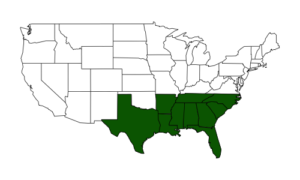 |
Great Plains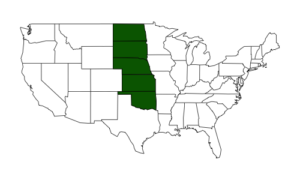 |
West |
Upper Midwest and Northeast
After a prolonged period of southerly and southwesterly flow, a frontal passage brings favorable conditions for moderate to heavy flights to much of the region for the weekend. This flight has the potential to include interesting western vagrants, including Cave Swallow and Ash-throated Flycatcher, in addition to arrivals of later season intercontinental migrants and departures of lingering Neotropical migrants. By Monday, southerly flow returns to much of the region, quieting migration significantly in all areas except perhaps the immediate Atlantic Coast until late in the period; note that several pulses of locally moderate flights are likely along the coast from the Monday to Thursday. The end of the work week, specifically Thursday and Friday, will see another low pressure system approach and enter the region. When this system passes, the last large flight of moderate to locally very heavy intensities will follow.
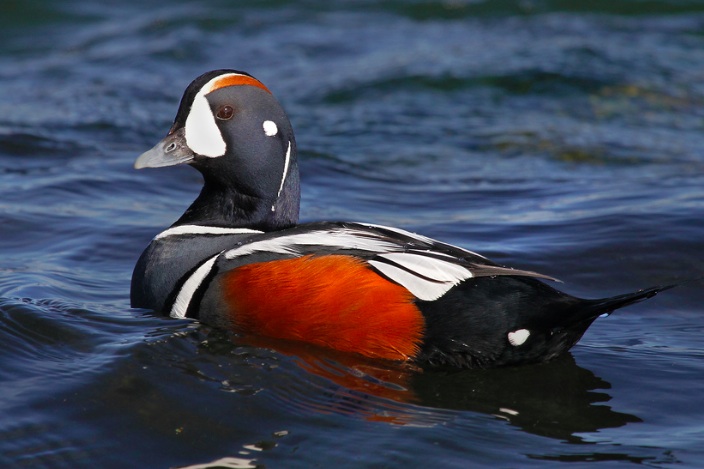
Harlequin Duck, Ryan Schain
Species on the Move
[expand title=”Beginning Arrivals %(%span style=’font-size: 10px; vertical-align: super;’%)%%(%a href=’https://birdcast.org/news/definitions-species-arrivals-regions-and-migration-amounts/#definitions’ target=’_blank’%)%What is this?%(%/a%)%%(%/span%)%” tag=”h3″]
[table sort=”,,asc” tablesorter=”true”]
Species,Noticeability[attr style=”color:orange”],Migrants Begin Arriving[attr style=”color:green”],Rapid Migrant Influx[attr style=”color:green”],Peak,Rapid Migrant Departure,Last Migrants Depart
Iceland Gull,*,7-Nov,30-Dec,After Dec 31,-,-
Snowy Owl,**,8-Nov,25-Nov,After Dec 31,-,-
Glaucous Gull,*,11-Nov,29-Nov,After Dec 31,-,-
[/table]
[/expand]
[expand title=”Peaking Arrivals” tag=”h3″]
[table sort=”,,,asc” tablesorter=”true”]
Species,Noticeability[attr style=”color:orange”],Migrants Begin Arriving,Rapid Migrant Influx[attr style=”color:green”],Peak[attr style=”color:green”],Rapid Migrant Departure,Last Migrants Depart
Tundra Swan,**,25-Oct,6-Nov,22-Nov,5-Dec,13-Dec
Harlequin Duck,*,24-Oct,6-Nov,24-Nov,-,-
Rufous Hummingbird,*,27-Oct,8-Nov,22-Nov,6-Dec,16-Dec
Ross’s Goose,*,24-Oct,10-Nov,1-Dec,After Dec 31,-
Ash-throated Flycatcher,*,30-Oct,10-Nov,25-Nov,11-Dec,-
King Eider,*,27-Oct,12-Nov,14-Dec,After Dec 31,-
Great Cormorant,*,3-Sep,12-Nov,After Dec 31,-,-
Common Goldeneye,**,23-Oct,13-Nov,After Dec 31,-,-
Purple Sandpiper,*,29-Oct,13-Nov,After Dec 31,-,-
[/table]
[/expand]
[expand title=”Beginning Departures” tag=”h3″]
[table sort=”,,,,asc” tablesorter=”true”]
Species,Noticeability[attr style=”color:orange”],Migrants Begin Arriving,Rapid Migrant Influx,Peak[attr style=”color:green”],Rapid Migrant Departure[attr style=”color:green”],Last Migrants Depart
American Coot,***,26-Sep,14-Oct,6-Nov,26-Nov,20-Dec
Red-necked Grebe,*,6-Oct,19-Oct,7-Nov,22-Nov,8-Dec
Surf Scoter,*,23-Sep,11-Oct,8-Nov,26-Nov,8-Dec
Fox Sparrow,**,30-Sep,17-Oct,8-Nov,26-Nov,10-Dec
Western Kingbird,*,15-Oct,26-Oct,9-Nov,26-Nov,7-Dec
Snow Bunting,**,12-Oct,23-Oct,9-Nov,22-Nov,1-Dec
Northern Shoveler,**,9-Aug,15-Oct,10-Nov,1-Dec,16-Dec
White-winged Scoter,*,1-Oct,19-Oct,10-Nov,26-Nov,8-Dec
Ruddy Duck,**,30-Sep,17-Oct,10-Nov,30-Nov,-
Bonaparte’s Gull,**,10-Oct,24-Oct,11-Nov,29-Nov,15-Dec
Ring-necked Duck,*,5-Oct,21-Oct,12-Nov,27-Nov,12-Dec
Gadwall,*,3-Oct,19-Oct,13-Nov,30-Nov,-
[/table]
[/expand]
[expand title=”Ending Departures” tag=”h3″]
[table sort=”,,,,,asc” tablesorter=”true”]
Species,Noticeability[attr style=”color:orange”],Migrants Begin Arriving,Rapid Migrant Influx,Peak,Rapid Migrant Departure[attr style=”color:green”],Last Migrants Depart[attr style=”color:green”]
Vesper Sparrow,*,24-Sep,6-Oct,21-Oct,7-Nov,18-Nov
Red-winged Blackbird,***,21-Sep,3-Oct,19-Oct,7-Nov,23-Nov
Sharp-shinned Hawk,***,26-Aug,10-Sep,7-Oct,8-Nov,22-Nov
Common Grackle,***,1-Oct,8-Oct,18-Oct,8-Nov,23-Nov
American Robin,***,11-Sep,25-Sep,13-Oct,9-Nov,26-Nov
Northern Harrier,**,1-Aug,26-Sep,20-Oct,10-Nov,27-Nov
Rusty Blackbird,**,18-Sep,3-Oct,23-Oct,10-Nov,25-Nov
Royal Tern,*,12-Jul,31-Jul,25-Aug,10-Nov,25-Nov
Eastern Bluebird,***,9-Sep,25-Sep,19-Oct,11-Nov,29-Nov
Purple Finch,***,21-Sep,6-Oct,24-Oct,11-Nov,25-Nov
Laughing Gull,**,Before July 1,15-Jul,13-Aug,12-Nov,5-Dec
Red-shouldered Hawk,**,24-Aug,5-Sep,22-Sep,13-Nov,22-Nov
American Woodcock,*,27-Sep,12-Oct,26-Oct,13-Nov,25-Nov
[/table]
[/expand]
Gulf Coast and Southeast
Favorable conditions late in the weekend bring moderate to heavy movements to the region. Away from the immediate southeastern coastal plain, these movements are short-lived. Southerly flow returns for much of the work week, significantly reducing flights to scattered light movements. A major change comes on Wednesday and Thursday, as a strong frontal boundary moves into the region. Heavy flights will occur west of the Mississippi by Thursday, followed by similarly intense and more extensive flights by Friday.
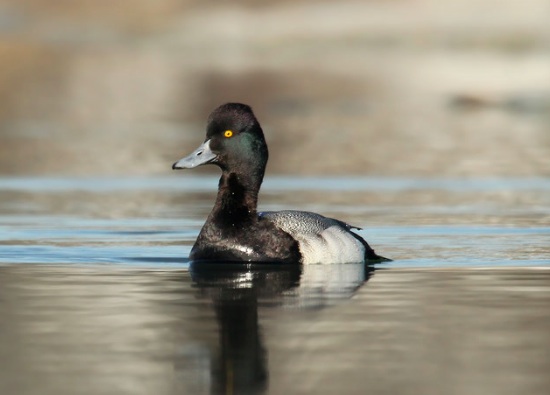
Lesser Scaup, Ryan Schain
[expand title=”Beginning Arrivals %(%span style=’font-size: 10px; vertical-align: super;’%)%%(%a href=’https://birdcast.org/news/definitions-species-arrivals-regions-and-migration-amounts/#definitions’ target=’_blank’%)%What is this?%(%/a%)%%(%/span%)%” tag=”h3″]
[table sort=”,,asc” tablesorter=”true”]
Species,Noticeability[attr style=”color:orange”],Migrants Begin Arriving[attr style=”color:green”],Rapid Migrant Influx[attr style=”color:green”],Peak,Rapid Migrant Departure,Last Migrants Depart
Harris’s Sparrow,**,6-Nov,23-Nov,15-Dec,-,-
Red-throated Loon,*,6-Nov,30-Dec,After Dec 31,-,-
Common Goldeneye,*,12-Nov,27-Nov,21-Dec,-,-
[/table]
[/expand]
[expand title=”Peaking Arrivals” tag=”h3″]
[table sort=”,,,asc” tablesorter=”true”]
Species,Noticeability[attr style=”color:orange”],Migrants Begin Arriving,Rapid Migrant Influx[attr style=”color:green”],Peak[attr style=”color:green”],Rapid Migrant Departure,Last Migrants Depart
Brewer’s Blackbird,*,15-Oct,7-Nov,After Dec 31,-,-
Common Loon,**,23-Oct,7-Nov,After Dec 31,-,-
Lesser Scaup,***,23-Oct,7-Nov,4-Dec,-,-
Canvasback,*,23-Oct,8-Nov,7-Dec,-,-
Ferruginous Hawk,*,22-Oct,8-Nov,29-Nov,16-Dec,After Dec 31
Ross’s Goose,*,18-Oct,8-Nov,11-Dec,-,-
Rusty Blackbird,*,20-Oct,9-Nov,After Dec 31,-,-
Horned Grebe,**,27-Oct,11-Nov,7-Dec,-,-
Bufflehead,***,31-Oct,12-Nov,5-Dec,-,-
Greater Scaup,*,28-Oct,13-Nov,18-Dec,-,-
Hooded Merganser,***,29-Oct,13-Nov,11-Dec,-,-
[/table]
[/expand]
[expand title=”Beginning Departures” tag=”h3″]
[table sort=”,,,,asc” tablesorter=”true”]
Species,Noticeability[attr style=”color:orange”],Migrants Begin Arriving,Rapid Migrant Influx,Peak[attr style=”color:green”],Rapid Migrant Departure[attr style=”color:green”],Last Migrants Depart
Red-winged Blackbird,**,24-Sep,13-Oct,7-Nov,19-Nov,30-Nov
Western Meadowlark,*,3-Oct,19-Oct,10-Nov,26-Nov,8-Dec
[/table]
[/expand]
[expand title=”Ending Departures” tag=”h3″]
[table sort=”,,,,,asc” tablesorter=”true”]
Species,Noticeability[attr style=”color:orange”],Migrants Begin Arriving,Rapid Migrant Influx,Peak,Rapid Migrant Departure[attr style=”color:green”],Last Migrants Depart[attr style=”color:green”]
Eastern Towhee,*,7-Sep,15-Sep,21-Oct,8-Nov,22-Nov
Common Grackle,***,26-Sep,11-Oct,25-Oct,10-Nov,20-Nov
Brown-headed Cowbird,**,12-Sep,26-Sep,25-Oct,11-Nov,22-Nov
Cooper’s Hawk,***,29-Jul,11-Sep,24-Oct,11-Nov,22-Nov
Sharp-shinned Hawk,**,2-Sep,17-Sep,28-Oct,12-Nov,22-Nov
[/table]
[/expand]
Great Plains
Friday and Saturday see moderate to heavy flights across much of the region. However, southerly flow returns quickly, and holds sway for much of the region until Wednesday. During these days mostly light movements will occur locally, with some heavier flights near the Canadian border. Tuesday night sees the arrival of a low pressure center that will spawn moderate to locally very heavy flights in the days that follow before more southerly flow returns after Friday.
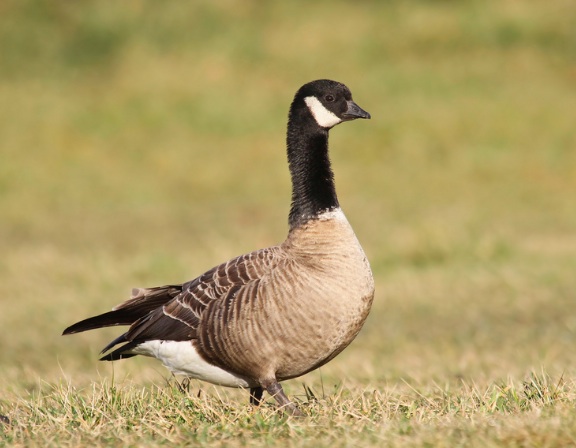
Cackling Goose, Ryan Schain
Species on the Move
[expand title=”Beginning Arrivals %(%span style=’font-size: 10px; vertical-align: super;’%)%%(%a href=’https://birdcast.org/news/definitions-species-arrivals-regions-and-migration-amounts/#definitions’ target=’_blank’%)%What is this?%(%/a%)%%(%/span%)%” tag=”h3″]
We don’t have any species to highlight here for this week.
[/expand]
[expand title=”Peaking Arrivals” tag=”h3″]
[table sort=”,,,asc” tablesorter=”true”]
Species,Noticeability[attr style=”color:orange”],Migrants Begin Arriving,Rapid Migrant Influx[attr style=”color:green”],Peak[attr style=”color:green”],Rapid Migrant Departure,Last Migrants Depart
Long-tailed Duck,*,25-Oct,7-Nov,23-Nov,9-Dec,26-Dec
Cackling Goose,***,27-Oct,10-Nov,1-Dec,-,-
Common Goldeneye,***,1-Nov,13-Nov,3-Dec,-,-
[/table]
[/expand]
[expand title=”Beginning Departures” tag=”h3″]
[table sort=”,,,,asc” tablesorter=”true”]
Species,Noticeability[attr style=”color:orange”],Migrants Begin Arriving,Rapid Migrant Influx,Peak[attr style=”color:green”],Rapid Migrant Departure[attr style=”color:green”],Last Migrants Depart
Horned Grebe,***,7-Oct,20-Oct,6-Nov,24-Nov,9-Dec
Northern Shoveler,***,11-Oct,22-Oct,6-Nov,22-Nov,5-Dec
Gadwall,***,8-Oct,20-Oct,7-Nov,20-Nov,1-Dec
Redhead,***,10-Oct,22-Oct,7-Nov,24-Nov,8-Dec
Ring-necked Duck,***,8-Oct,20-Oct,7-Nov,19-Nov,29-Nov
Whooping Crane,*,13-Oct,24-Oct,8-Nov,24-Nov,6-Dec
Common Loon,**,12-Oct,24-Oct,10-Nov,26-Nov,10-Dec
Ring-billed Gull,***,16-Jul,23-Oct,10-Nov,29-Nov,-
Canvasback,***,13-Oct,25-Oct,11-Nov,27-Nov,8-Dec
Lesser Scaup,***,14-Oct,26-Oct,13-Nov,28-Nov,11-Dec
[/table]
[/expand]
[expand title=”Ending Departures” tag=”h3″]
[table sort=”,,,,,asc” tablesorter=”true”]
Species,Noticeability[attr style=”color:orange”],Migrants Begin Arriving,Rapid Migrant Influx,Peak,Rapid Migrant Departure[attr style=”color:green”],Last Migrants Depart[attr style=”color:green”]
Field Sparrow,***,18-Sep,30-Sep,18-Oct,6-Nov,17-Nov
Song Sparrow,***,21-Sep,6-Oct,25-Oct,9-Nov,19-Nov
Franklin’s Gull,***,1-Sep,16-Sep,13-Oct,10-Nov,25-Nov
American Avocet,***,-,-,19-Oct,11-Nov,25-Nov
American Pipit,***,17-Sep,4-Oct,24-Oct,12-Nov,26-Nov
Fox Sparrow,*,2-Oct,14-Oct,30-Oct,12-Nov,24-Nov
Northern Harrier,***,24-Sep,11-Oct,29-Oct,12-Nov,21-Nov
Greater Yellowlegs,***,-,1-Aug,26-Oct,13-Nov,25-Nov
Red-winged Blackbird,***,9-Sep,22-Sep,24-Oct,13-Nov,27-Nov
[/table]
[/expand]
West
At this late date in the season, most movements in the region will be light and local. This period is no exception, and the weekend begins with light and local flights in the Desert Southwest. Movements of similar low intensity also come to the Pacific Northwest, Great Basin and northern Rockies on Tuesday. These flights continue and expand to the south and east during the remainder of the week, but intensities remain low and extents remain more local. By the end of the period, flights are primarily distributed from the Desert Southwest north and east through the central Rockies.
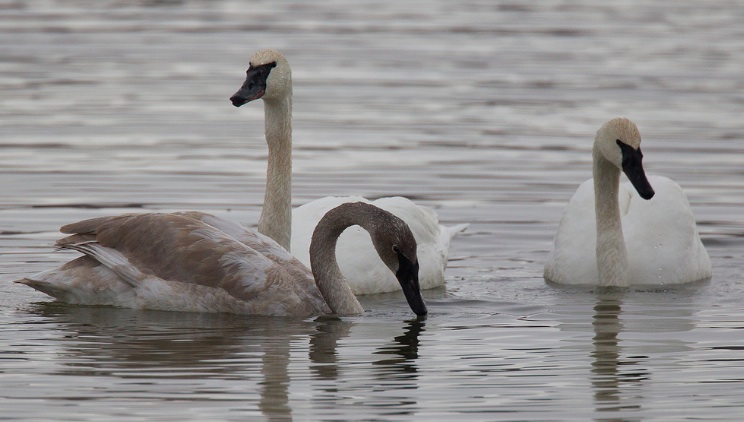
Trumpeter Swans, Chris Wood
Species on the Move
[expand title=”Beginning Arrivals %(%span style=’font-size: 10px; vertical-align: super;’%)%%(%a href=’https://birdcast.org/news/definitions-species-arrivals-regions-and-migration-amounts/#definitions’ target=’_blank’%)%What is this?%(%/a%)%%(%/span%)%” tag=”h3″]
[table sort=”,,asc” tablesorter=”true”]
Species,Noticeability[attr style=”color:orange”],Migrants Begin Arriving[attr style=”color:green”],Rapid Migrant Influx[attr style=”color:green”],Peak,Rapid Migrant Departure,Last Migrants Depart
Glaucous Gull,*,6-Nov,1-Dec,After Dec 31,-,-
[/table]
[/expand]
[expand title=”Peaking Arrivals” tag=”h3″]
[table sort=”,,,asc” tablesorter=”true”]
Species,Noticeability[attr style=”color:orange”],Migrants Begin Arriving,Rapid Migrant Influx[attr style=”color:green”],Peak[attr style=”color:green”],Rapid Migrant Departure,Last Migrants Depart
Brant,*,23-Oct,6-Nov,After Dec 31,-,-
Trumpeter Swan,*,24-Oct,6-Nov,25-Nov,-,-
Barrow’s Goldeneye,*,23-Oct,7-Nov,2-Dec,-,-
Ross’s Goose,*,24-Oct,7-Nov,26-Nov,7-Dec,14-Dec
Common Goldeneye,***,30-Oct,11-Nov,2-Dec,-,-
Common Redpoll,*,28-Oct,11-Nov,After Dec 31,-,-
[/table]
[/expand]
[expand title=”Beginning Departures” tag=”h3″]
[table sort=”,,,,asc” tablesorter=”true”]
Species,Noticeability[attr style=”color:orange”],Migrants Begin Arriving,Rapid Migrant Influx,Peak[attr style=”color:green”],Rapid Migrant Departure[attr style=”color:green”],Last Migrants Depart
Clark’s Grebe,*,7-Oct,20-Oct,6-Nov,23-Nov,-
Red-necked Grebe,*,26-Aug,20-Oct,6-Nov,22-Nov,-
Dunlin,*,22-Sep,11-Oct,6-Nov,24-Nov,8-Dec
Common Loon,**,7-Oct,21-Oct,7-Nov,24-Nov,-
California Gull,**,Before July 1,14-Jul,9-Nov,26-Nov,10-Dec
Eared Grebe,**,30-Aug,29-Sep,9-Nov,29-Nov,11-Dec
Bonaparte’s Gull,**,13-Oct,24-Oct,10-Nov,26-Nov,9-Dec
White-winged Scoter,*,20-Sep,22-Oct,10-Nov,26-Nov,7-Dec
Pied-billed Grebe,*,27-Jul,18-Oct,11-Nov,29-Nov,-
Horned Grebe,*,21-Sep,18-Oct,11-Nov,26-Nov,6-Dec
[/table]
[/expand]
[expand title=”Ending Departures” tag=”h3″]
[table sort=”,,,,,asc” tablesorter=”true”]
Species,Noticeability[attr style=”color:orange”],Migrants Begin Arriving,Rapid Migrant Influx,Peak,Rapid Migrant Departure[attr style=”color:green”],Last Migrants Depart[attr style=”color:green”]
Red-throated Pipit,*,19-Sep,2-Oct,19-Oct,6-Nov,19-Nov
Hermit Thrush,**,21-Sep,5-Oct,28-Oct,7-Nov,15-Nov
Western Meadowlark,*,10-Sep,27-Sep,22-Oct,8-Nov,6-Dec
Golden-crowned Kinglet,**,14-Sep,3-Oct,26-Oct,11-Nov,21-Nov
Chestnut-collared Longspur,*,17-Sep,3-Oct,25-Oct,12-Nov,30-Nov
[/table]
[/expand]
–––––––––––––––––––––––––––––––––––
Farnsworth and Van Doren
Scientific Team
BirdCast is made possible by the participating scientists at the below institutions, and many other contributors.