


Regional Migration Analysis: 11-18 March 2016
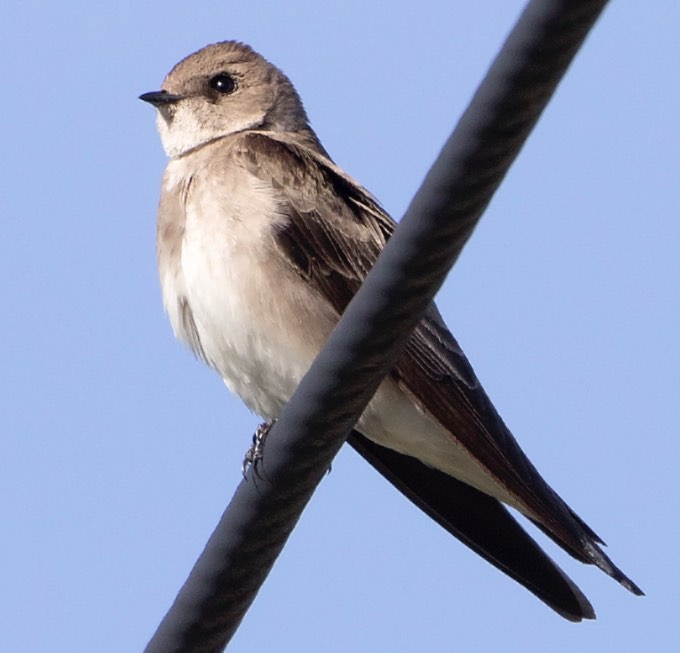
Northern Rough-winged Swallow. Bradley Hacker/Macaulay Library. 15 Mar 2016
eBird S28239965, ML 25760121
Continental Summary
Although early week rain kept most migrants in the West grounded, more favorable midweek conditions spawned light and moderate flights in California and the Desert Southwest; meanwhile, most of the period saw the East experience a dynamic weather scene in which light and moderate flights alternated with precipitation and strong storms.
Curious what birds will move next? Check out our forecast.
[animation name=”11-18-march-2016-analysis”]
Need a review of our definitions for regions, species on the move, and migration amounts? Please visit this link.
Quick Links to Regions
Upper Midwest and Northeast |
Gulf Coast and Southeast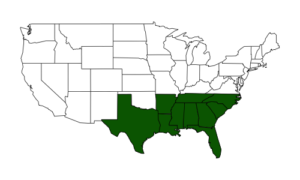 |
Great Plains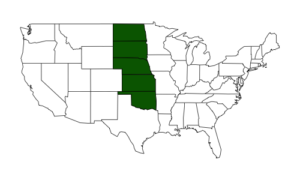 |
West |
Upper Midwest and Northeast
Scattered light to moderate movements were the norm this week across the region. Largely responsible for these patterns were several significant areas of precipitation that kept birds grounded, most notably between Saturday night and Wednesday morning. The most intense flights of the week occurred on Monday and Tuesday, in the Midwest and Ohio Valley, respectively. Note the highly localized moderate flights in coastal New Jersey and New York on Wednesday night, interestingly following the passage of precipitation in calmer than expected winds.
Top Movers
[expand title=”Increasing” tag=”h3″]
[table sort=”,desc” tablesorter=”true”]
Species,Increase from Last Week[attr style=”color:green”],% of Checklists Reporting
Eastern Phoebe,140%,14.3
Tree Swallow,88%,9.2
Osprey,117%,2.8
Blue-winged Teal,78%,2.5
Field Sparrow,65%,4.8
Brown-headed Cowbird,42%,10.9
Chipping Sparrow,120%,2.2
Pied-billed Grebe,49%,6.4
Northern Flicker,35%,15
Eastern Towhee,41%,6.2
Wood Duck,25%,14.7
Song Sparrow,21%,47.1
Golden-crowned Kinglet,78%,4
Laughing Gull,148%,0.8
Double-crested Cormorant,43%,5.3
Fox Sparrow,30%,5.5
American Robin,15%,59.3
Pectoral Sandpiper,347%,0.5
Great Egret,143%,0.7
American Golden-Plover,200%,0.2
Brown Thrasher,75%,1.5
Bonaparte’s Gull,73%,1.7
Northern Rough-winged Swallow,259%,0.2
Pine Warbler,53%,2.5
[/table]
[/expand]
[expand title=”Decreasing” tag=”h3″]
[table sort=”,asc” tablesorter=”true”]
Species,Decrease from Last Week[attr style=”color:red”],% of Checklists Reporting
Greater White-fronted Goose,-61%,0.9
Common Goldeneye,-37%,4.7
Cackling Goose,-74%,0.2
Snow Goose,-43%,2.2
Northern Pintail,-36%,3.4
Tundra Swan,-38%,2.4
Glaucous Gull,-57%,0.2
White-winged Scoter,-43%,0.8
Rough-legged Hawk,-44%,0.5
Herring Gull,-19%,12
Hooded Merganser,-19%,8.6
Redhead,-25%,4.2
Razorbill,-53%,0.1
Golden Eagle,-53%,0.1
Ring-billed Gull,-14%,21.7
American Tree Sparrow,-14%,9.5
Common Merganser,-13%,9.6
Canvasback,-24%,1.9
Bald Eagle,-13%,10.6
Iceland Gull,-30%,0.3
Short-eared Owl,-34%,0.2
American Wigeon,-13%,6.1
[/table]
[/expand]

Northern Parula. Steve Raduns/Macaulay Library. 7 Mar 2016
eBird S28026108, ML 25435171
Gulf Coast and Southeast
Precipitation bisected the region for Friday and Saturday nights, with light to locally moderate flights occurring to the east and west of the disturbance. After the passage of this disturbance, more intense flights appeared, primarily west of the Mississippi River. But widespread flights did not material, with only local light to moderate flights scattered across the region for the remainder of the period. Note, however, the input of birds from Cuba visible on the Key West radar on several nights during the past week.
Top Movers
[expand title=”Increasing” tag=”h3″]
[table sort=”,desc” tablesorter=”true”]
Species,Increase from Last Week[attr style=”color:green”],% of Checklists Reporting
Barn Swallow,98%,8
Couch’s Kingbird,121%,2.9
Chimney Swift,1360%,0.9
Scissor-tailed Flycatcher,183%,1.4
Northern Rough-winged Swallow,63%,4.5
Purple Martin,42%,8.3
Ruby-throated Hummingbird,90%,2.2
Northern Parula,31%,12
Black-necked Stilt,35%,4.2
White-eyed Vireo,31%,13.1
Yellow-throated Vireo,126%,1
Lark Sparrow,93%,1.4
Wilson’s Phalarope,170%,0.7
Golden-cheeked Warbler,605%,0.4
Great Crested Flycatcher,48%,2.9
Cliff Swallow,88%,1.1
Common Yellowthroat,28%,8.7
Louisiana Waterthrush,76%,0.9
[/table]
[/expand]
[expand title=”Decreasing” tag=”h3″]
[table sort=”,asc” tablesorter=”true”]
Species,Decrease from Last Week[attr style=”color:red”],% of Checklists Reporting
Red-throated Loon,-80%,0.2
Bonaparte’s Gull,-42%,1.6
Ring-billed Gull,-26%,10.3
Horned Grebe,-46%,1.1
American Robin,-22%,17.6
Gadwall,-32%,5
Lesser Scaup,-27%,4.5
American Pipit,-45%,1.1
Ring-necked Duck,-25%,3.7
Fox Sparrow,-52%,0.4
Great Black-backed Gull,-53%,0.5
Eastern Phoebe,-18%,19.2
Bufflehead,-26%,3.7
Rusty Blackbird,-43%,0.5
American Wigeon,-35%,2.3
Le Conte’s Sparrow,-97%,0
Yellow-rumped Warbler,-11%,37.3
Dark-eyed Junco,-23%,7.3
Black Skimmer,-31%,1.4
Long-billed Curlew,-40%,0.5
[/table]
[/expand]
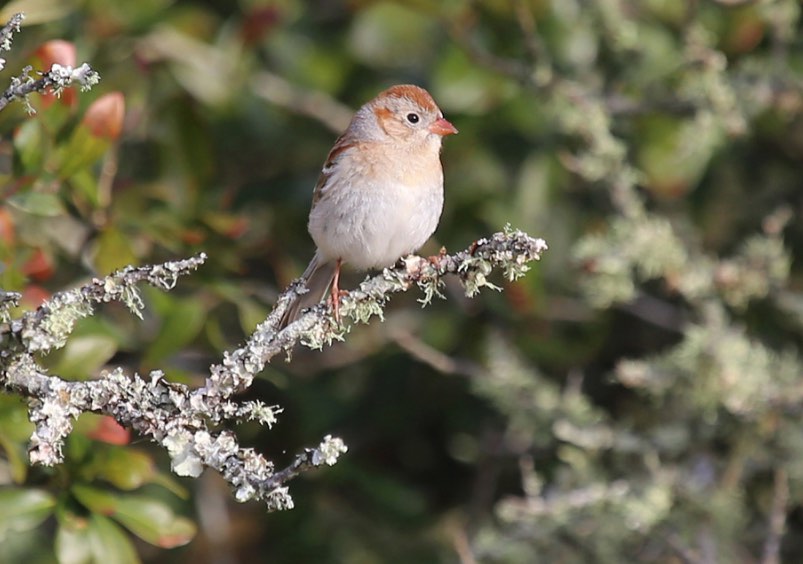
Field Sparrow. Rob Bielawski/Macaulay Library. 13 Mar 2016
eBird S28136487ML 25715601
Great Plains
Scattered light to moderate flights were the norm for the first half of the period. These movements were primarily in the central and southern Plains, particularly on Monday night as strong storms moved across the northern Plains. With the passage of these storms and the frontal boundary with which they were associated, migration shut down in northerly flow and cooler temperatures. This pattern closed out the week, with minimal to light flights returning only in the southernmost reaches of the Plains.
Top Movers
[expand title=”Increasing” tag=”h3″]
[table sort=”,desc” tablesorter=”true”]
Species,Increase from Last Week[attr style=”color:green”],% of Checklists Reporting
Blue-winged Teal,84%,12.9
Brown-headed Cowbird,58%,12
Northern Shoveler,52%,19
Eastern Phoebe,46%,20.2
Fish Crow,176%,3.7
Song Sparrow,33%,20.9
Ruddy Duck,65%,9.4
Tree Swallow,118%,3.4
Purple Martin,199%,1.8
American Coot,40%,15.2
Black-and-white Warbler,2528%,0.9
Vesper Sparrow,1680%,1.4
Field Sparrow,51%,5.4
Barn Swallow,881%,0.7
Marsh Wren,99%,1.6
Turkey Vulture,31%,10.7
Common Grackle,24%,20.7
Cedar Waxwing,30%,9.9
Eastern Meadowlark,25%,17.1
Lesser Scaup,29%,12.1
Bufflehead,33%,13.7
Wood Duck,30%,6.3
Ring-necked Duck,25%,13.8
[/table]
[/expand]
[expand title=”Decreasing” tag=”h3″]
[table sort=”,asc” tablesorter=”true”]
Species,Decrease from Last Week[attr style=”color:red”],% of Checklists Reporting
American Tree Sparrow,-40%,6.4
Evening Grosbeak,-94%,0
Ross’s Goose,-52%,0.8
Common Merganser,-37%,2.7
Rough-legged Hawk,-41%,1.2
Hooded Merganser,-43%,2.2
Bald Eagle,-25%,7.4
Northern Shrike,-51%,0.5
Lapland Longspur,-43%,0.5
Herring Gull,-32%,1.5
Common Redpoll,-22%,2.6
Snowy Owl,-56%,0.3
Common Raven,-63%,0.1
Golden Eagle,-63%,0.1
Red Crossbill,-54%,0.2
Common Goldeneye,-14%,5.6
Peregrine Falcon,-99%,0
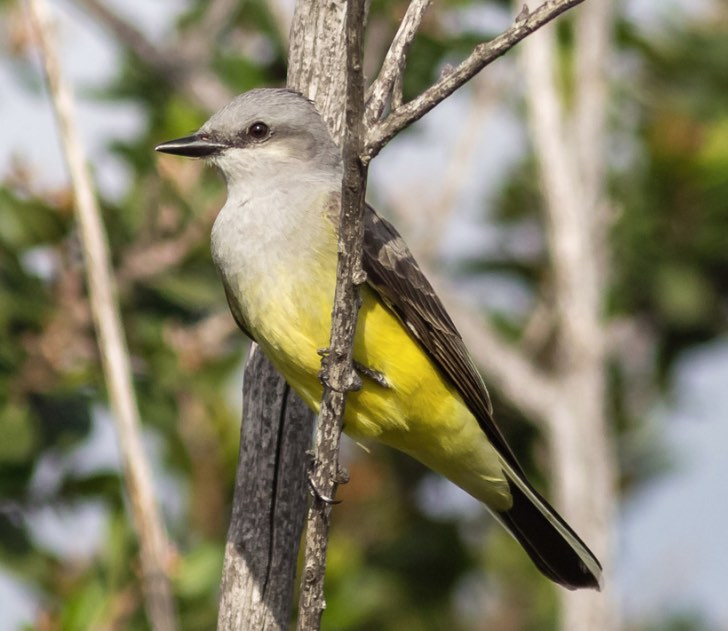
Western Kingbird. Jeff Bray/Macaulay Library.
14 Mar 2016
eBird S28225152 ML 25723981
West
Widely scattered precipitation fell across the region for the first half of the period, characteristic of a generally unfavorable suite of conditions for much movement. However, signs of changes came on Monday night, when light to moderate flights appeared in California and the Desert Southwest. The intensity of these flights increased slowly on subsequent nights through the remainder of the period, most notably with moderate flights in the Central Valley of California on Thursday night.
Top Movers
[expand title=”Increasing” tag=”h3″]
[table sort=”,desc” tablesorter=”true”]
Species,Increase from Last Week[attr style=”color:green”],% of Checklists Reporting
Red-breasted Sapsucker,147%,2.8
Turkey Vulture,31%,17.8
Band-tailed Pigeon,57%,4.4
Orange-crowned Warbler,36%,7.2
Purple Finch,77%,3.4
Pacific-slope Flycatcher,170%,1.2
Barn Swallow,59%,2.9
Rufous Hummingbird,77%,3.5
Lucy’s Warbler,65%,2.2
Golden-crowned Sparrow,38%,12.8
Western Kingbird,361%,0.9
Warbling Vireo,352%,0.8
Hutton’s Vireo,63%,4
Brown Creeper,46%,5.2
Bell’s Vireo,96%,1.2
Hooded Oriole,39%,2.3
[/table]
[/expand]
[expand title=”Decreasing” tag=”h3″]
[table sort=”,asc” tablesorter=”true”]
Species,Decrease from Last Week[attr style=”color:red”],% of Checklists Reporting
Herring Gull,-28%,1.6
American Dipper,-46%,0.3
Black-tailed Gnatcatcher,-33%,1.6
Long-eared Owl,-59%,0.1
Red Crossbill,-37%,0.6
Eastern Meadowlark,-65%,0.1
Lark Bunting,-44%,0.3
Heermann’s Gull,-29%,0.8
Hooded Merganser,-19%,3.9
Rock Wren,-26%,1.6
Northern Pintail,-16%,6.1
Brewer’s Sparrow,-28%,1.2
Bonaparte’s Gull,-32%,0.5
[/table]
[/expand]
–––––––––––––––––––––––––––––––––––
Farnsworth and Van Doren
Scientific Team
BirdCast is made possible by the participating scientists at the below institutions, and many other contributors.