
About
In its early history, the BirdCast project proposed to provide real-time predictions of bird migrations on a daily basis: when they migrate, where they migrate, and how far they will be flying. Fast forward to the present, and mission accomplished! The bird migration maps featured on this website represent the culmination of a 25-year vision and the beginnings of new inspiration for the next generation of bird migration research, outreach and education, and application.
The present-day BirdCast project, a collaboration, initially, among Cornell Lab of Ornithology, University of Massachusetts Amherst, and Oregon State University and, presently, including University of Illinois Urbana-Champaign and Purdue University, received support from the National Science Foundation and Leon Levy Foundation. Lyda Hill Philanthropies, NASA, Edward W. Rose Postdoctoral Fellowship, the Marshall Aid Commemoration Commission, and Amazon Web Services provided additional funding for developing BirdCast tools.
Core Scientific Team
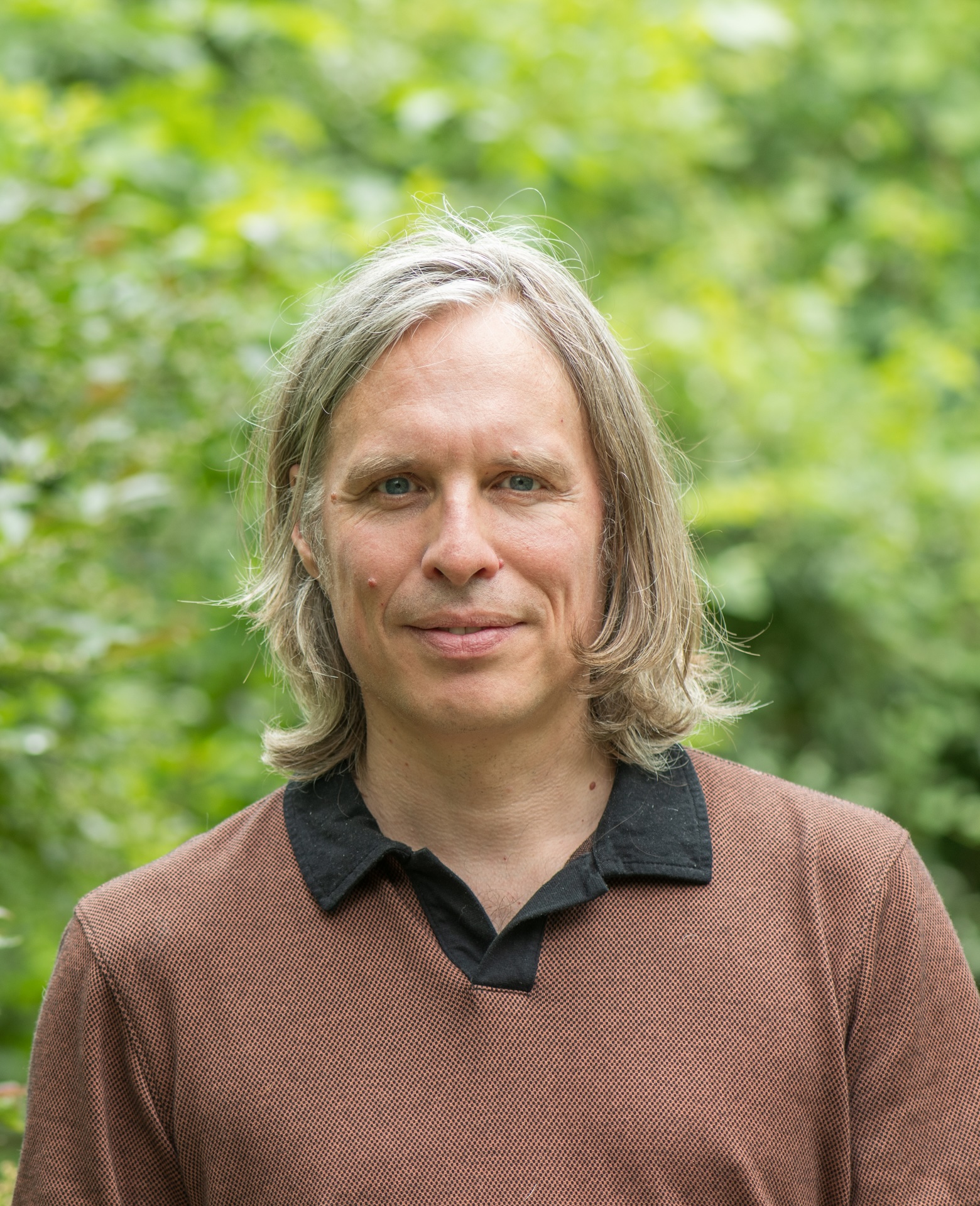
Center for Avian Population Studies, Cornell Lab of Ornithology
Adriaan Dokter is the project leader for BirdCast at the Cornell lab of Ornithology, where he also leads the BirdCast/Aeroecology research group. After receiving a Ph.D. at the Institute of Atomic and Molecular Physics in Amsterdam, he studied animal movement during postdoctoral appointments at the Cornell Lab of Ornithology, the Netherlands Institute of Ecology, the University of Amsterdam, and the Netherlands Meteorological Institute.
Adriaan’s research bridges the disciplines of ecology, computer science, physics, and meteorology. He uses weather radar networks and citizen science data to address questions in migration ecology. He also develops software tools for biologists using weather radar as a tool in their research, including the R-package bioRad for biological analysis of weather radar data.

Manning College of Information and Computer Sciences
Daniel Sheldon is a professor of computer science at UMass. He develops computational tools that turn data into knowledge and decisions, including scalable Bayesian inference, privacy-preserving analysis, and AI/ML approaches for ecology and conservation.
Dan has contributed to the science behind BirdCast since 2007. His lab pioneered machine learning methods to measure migration from historical radar data, and in 2015, he created the visualizations that became BirdCast’s first live “migration traffic reports,” precursors to today’s live maps.
Dan has led multiple NSF projects advancing the radar and migration science that supports BirdCast, including the current BirdFlow project, which uses eBird data to infer and predict bird movements.
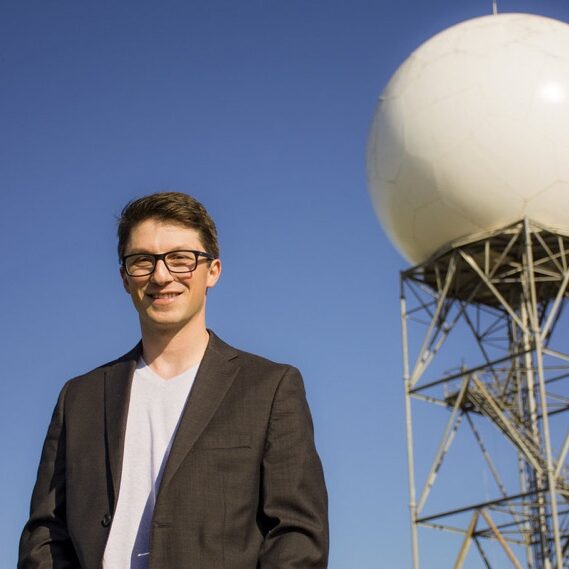
Purdue University, Department of Forestry and Natural Resources
Kyle Horton is an Associate Professor in the Department of Forestry and Natural Resources at Purdue University and leads the Purdue Aeroecology Lab. His research focuses on the movements of airborne organisms and how animals use the lower atmosphere as habitat.
He earned his M.S. in Wildlife Ecology from the University of Delaware and his Ph.D. in Ecology and Evolutionary Biology from the University of Oklahoma, and was a Rose Postdoctoral Fellow at the Cornell Lab of Ornithology.
Dr. Horton integrates weather surveillance radar and advanced computing to study bird flight behavior, develop migration forecasts, and inform conservation efforts, with particular attention to challenges such as artificial light at night.


University of Illinois Urbana-Champaign, Natural Resources & Environmental Sciences
Benjamin Van Doren is an associate professor at University of Illinois Urbana-Champaign, and was recently a Cornell Presidential Postdoctoral Fellow. He completed his graduate research at the University of Oxford studying the evolution and flexibility of avian migration.
He enjoys using a range of tools and approaches—from light-level geolocators, to radar, to genomics—to better understand the determinants of migration. Benjamin studied biology and statistics as an undergraduate at Cornell University and has been BirdCasting since 2012.
Scientific Team
BirdCast is made possible by the participating scientists at the below institutions, and many other contributors.