


29 May – 5 June 2015 Regional Migration Analysis: last gasp for spring 2015
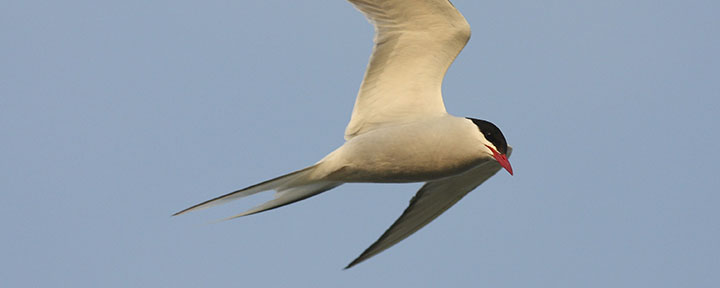
Arctic Tern © Benjamin Van Doren
Continental Summary
All but the latest of migrants already passed, this week saw in the primarily scattered light and highly localized moderate movements across the West, with late migrants featuring Olive-sided Flycatcher, Willow Flycatcher, Cedar Waxwing, and Townsend’s Warbler, while the East saw its light to moderate flights concentrated in the center of the country and featuring primarily departures of Least Sandpiper, White-rumped Sandpiper, Short-billed Dowitcher, Cedar Waxwing, Swainson’s Thrush, Tennessee Warbler, Blackpoll Warbler.
[animation name=”29-may-5-june-2015-analysis”]
Need a review of our definitions for regions, species on the move, and migration amounts? Please visit this link.
Quick Links to Regions
Upper Midwest and Northeast |
Gulf Coast and Southeast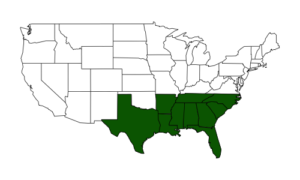 |
Great Plains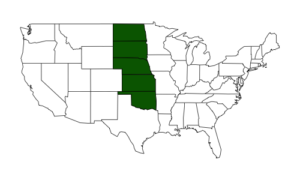 |
West |
Upper Midwest and Northeast
A cooler and soggier than normal forecast period saw even lighter and more widely scattered movements than the late date might suggest. Away from the Upper Midwest and central and upper Mississippi River valley, where some light to moderate movements occurred at various points in the week, migration was light to minimal. Additional, a strong frontal passage shut down movements as it passed, bringing drenching rains. (Note that a top mover showed up in a few odd places during this period!)
Top Movers
[expand title=”Increasing” tag=”h3″]
[table sort=”,desc” tablesorter=”true”]
Species,Increase from Last Week[attr style=”color:green”],% of Checklists Reporting
Dickcissel,17%,3
Arctic Tern,41%,0.3
[/table]
[/expand]
[expand title=”Decreasing” tag=”h3″]
[table sort=”,asc” tablesorter=”true”]
Species,Decrease from Last Week[attr style=”color:red”],% of Checklists Reporting
Blackpoll Warbler,-67%,0.9
Semipalmated Plover,-61%,1.4
Least Sandpiper,-75%,0.4
Dunlin,-65%,0.8
Black-bellied Plover,-58%,1.1
Semipalmated Sandpiper,-50%,2.6
Ruddy Turnstone,-61%,1.1
Short-billed Dowitcher,-71%,0.4
Yellow-bellied Flycatcher,-62%,0.7
Spotted Sandpiper,-27%,4.5
Swainson’s Thrush,-57%,0.5
Sanderling,-56%,0.8
White-rumped Sandpiper,-69%,0.3
Laughing Gull,-33%,3.3
Tennessee Warbler,-96%,0
Olive-sided Flycatcher,-60%,0.4
[/table]
[/expand]
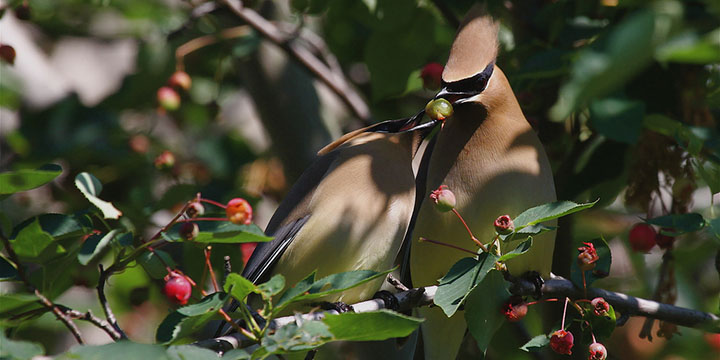
Cedar Waxwing © Ryan Schain
Gulf Coast and Southeast
Aside from the localized light to moderate flights in Texas, which were surely in association with bat and insect movements, migration was minimal to light across there region.
Top Movers
Increasing
No more!
[expand title=”Decreasing” tag=”h3″]
[table sort=”,asc” tablesorter=”true”]
Species,Decrease from Last Week[attr style=”color:red”],% of Checklists Reporting
Cedar Waxwing,-68%,0.7
Western Wood-Pewee,-93%,0
Blue-headed Vireo,-48%,0.8
Spotted Sandpiper,-61%,0.3
American Redstart,-60%,0.7
Black-throated Green Warbler,-59%,0.6
Red-eyed Vireo,-24%,10
[/table]
[/expand]
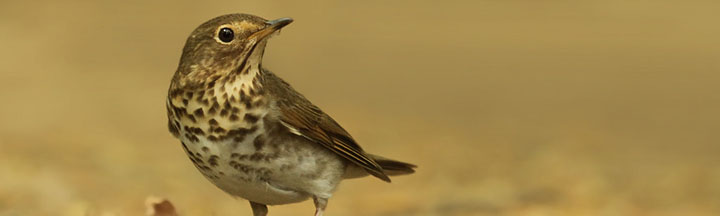
Swainson’s Thrush © Ryan Schain
Great Plains
Light to moderate movements were still evident in many of the region, though presumably containing a substantial quantity of insect biomass, particularly up to the middle of the work week. The Dakotas saw this action to begin the period, followed by several days with more extensive movements in the central Plains. By the end of the period, despite some intense precipitation associated with disturbances moving through the region, more central and southern locations saw migration activity.
Top Movers
Increasing
No more!
[expand title=”Decreasing” tag=”h3″]
[table sort=”,asc” tablesorter=”true”]
Species,Decrease from Last Week[attr style=”color:red”],% of Checklists Reporting
Tennessee Warbler,-93%,0.3
Forster’s Tern,-53%,3.2
Stilt Sandpiper,-65%,1
Dunlin,-80%,0.4
Alder Flycatcher,-49%,1.7
Swainson’s Thrush,-102%,-0.1
[/table]
[/expand]
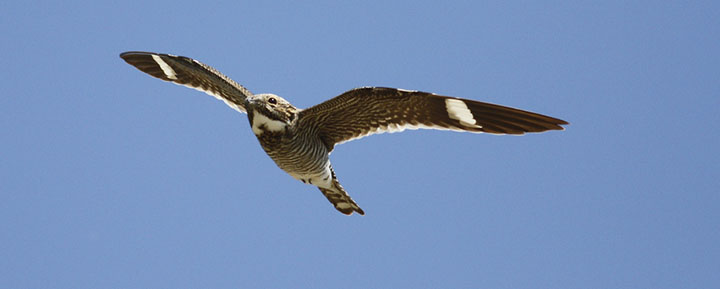
Common Nighthawk © Benjamin Van Doren
West
A generally slow week saw minimal movements locally across the southern and eastern reaches of the region. Given the late date as well as scattered widely precipitation, these movements were generally few and far between and primarily light. Some flights in the Desert Southwest and along the eastern front of the Rockies were slightly more intense.
Top Movers
[expand title=”Increasing” tag=”h3″]
[table sort=”,desc” tablesorter=”true”]
Species,Increase from Last Week[attr style=”color:green”],% of Checklists Reporting
Common Nighthawk,72%,2.7
Willow Flycatcher,14%,7.1
Cedar Waxwing,9%,12.1
[/table]
[/expand]
[expand title=”Decreasing” tag=”h3″]
[table sort=”,asc” tablesorter=”true”]
Species,Decrease from Last Week[attr style=”color:red”],% of Checklists Reporting
Evening Grosbeak,-51%,1.8
Olive-sided Flycatcher,-26%,4.2
Townsend’s Warbler,-51%,0.8
Bullock’s Oriole,-18%,13.2
[/table]
[/expand]
–––––––––––––––––––––––––––––––––––
Farnsworth and Van Doren
Scientific Team
BirdCast is made possible by the participating scientists at the below institutions, and many other contributors.