


29 May-5 June 2015 Regional Migration Forecast
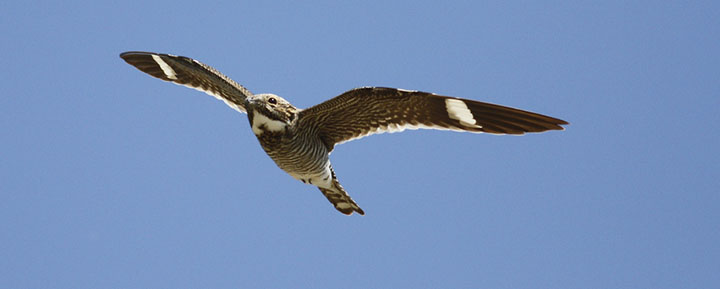
Common Nighthawk © Benjamin Van Doren
Continental Summary
As the spring migration winds down for most species, this forecast period sees early week light to moderate movements in the West that feature Common Nighthawk, White-throated Swift, Warbling Vireo, Cedar Waxwing, and Gray Catbird and mostly moderate flights in the East that feature late season shorebirds, Least Tern, Yell0w-billed Cuckoo, Acadian Flycatcher, Alder Flycatcher, and Cedar Waxwing among other late season passerine migrants.
[animation name=”29-may-5-june-2015-forecast”]
Arrows show wind speed and direction (arrow points in the direction to which wind is blowing) 100 m above ground level. Areas with southerly winds are colored red; northerly winds colored blue. Accumulated precipitation (in 6 hour intervals) is green, outlined by white. Broadly speaking, areas of the map in red will experience conditions that are favorable for migration, and areas where red and green (and red and blue) intersect and overlap may experience migrant concentrations and fallouts as migrants interact with precipitation.
We use data collected by eBird users help make more accurate forecasts. If you enjoy the predictions contained in these posts, please consider submitting your own bird sightings to eBird to even further improve the content. Every observation counts, whether it be a single bird at a feeder in your backyard, or an entire day spent in a national park. To get started with eBird, head on over to the site!
Need a review of our definitions for regions, species on the move, and migration amounts? Please visit this link.
Quick Links to Regions
Upper Midwest and Northeast |
Gulf Coast and Southeast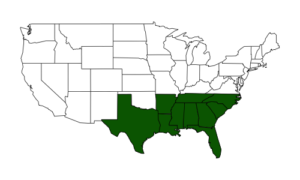 |
Great Plains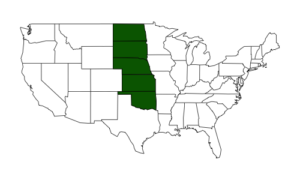 |
West |
Upper Midwest and Northeast
A last ditch pulse of moderate to locally heavy flights will occur on Friday and Saturday night across the region in advance of an approaching colder air mass. Once this frontal boundary arrives late in the weekend, migration quiets substantially until mid week. Wednesday night sees a return of more favorable conditions, but these will be increasingly local to end the week; moderate flights will follow a similar pattern of more widespread flights on Wednesday night becoming increasingly localized on Thursday and Friday.

Henslow’s Sparrow © Benjamin Van Doren
Species on the Move
[expand title=”Beginning to Arrive %(%span style=’font-size: 10px; vertical-align: super;’%)%%(%a href=’https://birdcast.org/news/definitions-species-arrivals-regions-and-migration-amounts/#definitions’ target=’_blank’%)%What is this?%(%/a%)%%(%/span%)%” tag=”h3″]
No more for this season!
[/expand]
[expand title=”Arriving” tag=”h3″]
[table sort=”,,asc” tablesorter=”true”]
Species,Begin Arrival,Rapid Influx[attr style=”color:green”],Peak,Rapid Depart
Henslow’s Sparrow,5/21,5/30,6/12,-
Dickcissel,5/20,5/31,6/18,-
[/table]
[/expand]
[expand title=”Peaking” tag=”h3″]
[table sort=”,,,asc” tablesorter=”true”]
Species,Begin Arrival,Rapid Influx,Peak[attr style=”color:green”],Rapid Depart
Alder Flycatcher,5/11,5/19,5/31,6/11
Yellow-billed Cuckoo,4/27,5/10,5/31,-
Willow Flycatcher,5/8,5/17,6/1,-
Acadian Flycatcher,4/26,5/6,6/3,-
Cedar Waxwing,5/7,5/17,6/5,-
[/table]
[/expand]
[expand title=”Departing” tag=”h3″]
[table sort=”,,,,asc” tablesorter=”true”]
Species,Begin Arrival,Rapid Influx,Peak,Rapid Depart[attr style=”color:green”]
Bank Swallow,4/16,5/1,5/17,5/29
Short-billed Dowitcher,4/30,5/8,5/18,5/29
Blackpoll Warbler,5/1,5/9,5/18,5/29
Canada Warbler,5/3,5/10,5/19,5/29
Dunlin,5/4,5/11,5/20,5/31
Common Nighthawk,5/3,5/11,5/21,5/31
Semipalmated Plover,5/2,5/10,5/20,6/1
Olive-sided Flycatcher,5/5,5/12,5/22,6/1
Mourning Warbler,5/5,5/13,5/23,6/1
Black-bellied Plover,5/5,5/12,5/22,6/2
Ruddy Turnstone,5/6,5/13,5/23,6/2
Sanderling,5/6,5/13,5/22,6/3
Semipalmated Sandpiper,5/5,5/13,5/24,6/4
Black-billed Cuckoo,5/1,5/11,5/25,6/4
Yellow-bellied Flycatcher,5/8,5/15,5/25,6/4
[/table]
[/expand]
Gulf Coast and Southeast
A patchwork of conditions across the region will make for locally moderate to heavy flights that punctuate generally light migration. The latter half of the period, beginning Tuesday, will see slightly more extensive movements; however, note that at this late date in spring migration, much larger numbers of insects and bats are likely to co occur with birds, making for apparent but not true increases in bird migration magnitudes.
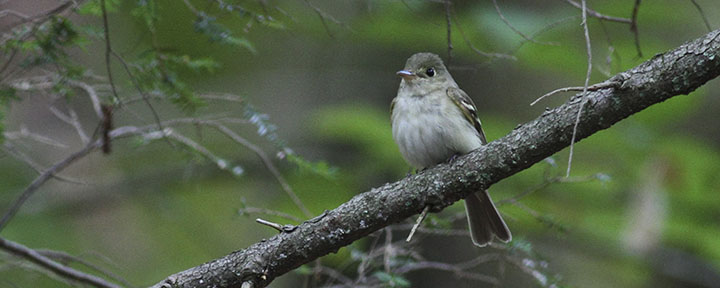
Acadian Flycatcher © Benjamin Van Doren
[expand title=”Beginning to Arrive %(%span style=’font-size: 10px; vertical-align: super;’%)%%(%a href=’https://birdcast.org/news/definitions-species-arrivals-regions-and-migration-amounts/#definitions’ target=’_blank’%)%What is this?%(%/a%)%%(%/span%)%” tag=”h3″]
No more for this season!
[/expand]
[expand title=”Arriving” tag=”h3″]
No more for this season!
[/expand]
[expand title=”Peaking” tag=”h3″]
[table sort=”,,,asc” tablesorter=”true”]
Species,Begin Arrival,Rapid Influx,Peak[attr style=”color:green”],Rapid Depart
Acadian Flycatcher,4/11,4/25,5/30,-
Yellow-billed Cuckoo,4/10,4/28,5/30,-
[/table]
[/expand]
[expand title=”Departing” tag=”h3″]
[table sort=”,,,,asc” tablesorter=”true”]
Species,Begin Arrival,Rapid Influx,Peak,Rapid Depart[attr style=”color:green”]
Semipalmated Plover,4/6,4/15,4/26,5/29
Semipalmated Sandpiper,3/28,4/14,5/13,5/29
Sanderling,-,-,4/19,5/30
[/table]
[/expand]
Great Plains
A quiet weekend start will give way to much increased activity by Sunday night, as warming temperatures and favorable winds will facilitate last ditch movements of migrants north and west to breeding areas. Moderate to locally heavy flights are likely. These movements will continue through the period, although forecast precipitation associated with a disturbance in the region will localize these movements for Wednesday, Thursday, and Friday.

Nelson’s Sparrow © Luke Seitz
Species on the Move
[expand title=”Beginning to Arrive %(%span style=’font-size: 10px; vertical-align: super;’%)%%(%a href=’https://birdcast.org/news/definitions-species-arrivals-regions-and-migration-amounts/#definitions’ target=’_blank’%)%What is this?%(%/a%)%%(%/span%)%” tag=”h3″]
No more for this season!
[/expand]
[expand title=”Arriving” tag=”h3″]
[table sort=”,,asc” tablesorter=”true”]
Species,Begin Arrival,Rapid Influx[attr style=”color:green”],Peak,Rapid Depart
Baird’s Sparrow,5/17,6/2,6/13,-
Nelson’s Sparrow,5/23,6/2,6/14,-
Sedge Wren,4/22,6/4,6/16,-
[/table]
[/expand]
[expand title=”Peaking” tag=”h3″]
[table sort=”,,,asc” tablesorter=”true”]
Species,Begin Arrival,Rapid Influx,Peak[attr style=”color:green”],Rapid Depart
Least Tern,5/4,5/14,5/30,-
Lark Bunting,4/27,5/9,5/31,-
Chuck-will’s-widow,4/15,4/24,6/1,-
Common Nighthawk,5/1,5/15,6/2,-
Bullock’s Oriole,4/23,5/1,6/3,-
Yellow-breasted Chat,4/25,5/10,6/3,-
Bell’s Vireo,4/24,5/6,6/4,-
Black-capped Vireo,4/23,5/13,6/4,-
Black-headed Grosbeak,4/26,5/7,6/5,-
Yellow-billed Cuckoo,4/30,5/14,6/5,-
[/table]
[/expand]
[expand title=”Departing” tag=”h3″]
[table sort=”,,,,asc” tablesorter=”true”]
Species,Begin Arrival,Rapid Influx,Peak,Rapid Depart[attr style=”color:green”]
Hudsonian Godwit,4/5,4/13,4/23,5/29
Semipalmated Sandpiper,4/8,4/17,5/12,5/29
Sanderling,4/24,5/4,5/16,5/29
Dunlin,4/12,5/10,5/18,5/29
Cape May Warbler,5/3,5/10,5/19,5/29
Ruby-throated Hummingbird,4/18,5/1,5/16,5/30
White-rumped Sandpiper,4/30,5/8,5/19,5/30
Ruddy Turnstone,5/4,5/11,5/20,5/30
Mourning Warbler,5/4,5/11,5/20,5/30
Canada Warbler,5/5,5/12,5/21,5/30
Olive-sided Flycatcher,5/3,5/10,5/20,5/31
Red-necked Phalarope,5/4,5/11,5/21,5/31
Alder Flycatcher,5/6,5/13,5/22,6/1
Acadian Flycatcher,4/29,5/10,5/22,6/2
Yellow-bellied Flycatcher,5/7,5/14,5/23,6/2
Scarlet Tanager,4/25,5/7,5/21,6/4
[/table]
[/expand]
West
Favorable conditions for the first part of the forecast period bring late migrants to the region, with primarily light and locality moderate flights from the central and southern Rockies to the Pacific. These movements will become increasingly localized to the northern and southern tiers of the region as the period progress, eventually evident only from the Desert Southwest. These movements will also become increasingly light, with moderate flights blinking out by mid period.

White-throated Swift © Benjamin Van Doren
Species on the Move
[expand title=”Beginning to Arrive %(%span style=’font-size: 10px; vertical-align: super;’%)%%(%a href=’https://birdcast.org/news/definitions-species-arrivals-regions-and-migration-amounts/#definitions’ target=’_blank’%)%What is this?%(%/a%)%%(%/span%)%” tag=”h3″]
No more for this season!
[/expand]
[expand title=”Arriving” tag=”h3″]
[table sort=”,,asc” tablesorter=”true”]
Species,Begin Arrival,Rapid Influx[attr style=”color:green”],Peak,Rapid Depart
Common Nighthawk,5/22,6/1,6/16,-
[/table]
[/expand]
[expand title=”Peaking” tag=”h3″]
[table sort=”,,,asc” tablesorter=”true”]
Species,Begin Arrival,Rapid Influx,Peak[attr style=”color:green”],Rapid Depart
White-throated Swift,3/1,4/4,5/30,-
Gray Catbird,5/6,5/15,5/30,-
Cedar Waxwing,5/1,5/15,6/1,-
Warbling Vireo,4/18,5/1,6/2,-
Pacific-slope Flycatcher,3/15,4/22,6/3,-
Grasshopper Sparrow,4/9,5/21,6/3,-
Olive-sided Flycatcher,4/17,5/3,6/4,-
Eastern Kingbird,5/7,5/17,6/4,-
[/table]
[/expand]
[expand title=”Departing” tag=”h3″]
None this week!
[/expand]
–––––––––––––––––––––––––––––––––––
Farnsworth and Van Doren
Scientific Team
BirdCast is made possible by the participating scientists at the below institutions, and many other contributors.